Search
for
Sort by
Community Join
150-180 / 1000+ resultscommunity Shiseido filed for this patent in May 2019. Let's get some big brain discussion on this.
The conversation discusses a patent filed by Shiseido for cloning Dermal Papilla (DP) cells to treat hair loss. The method involves using viral vectors to maintain the cells' growth-inducing properties, differing from Replicel's approach with Dermal Sheath Cup (DSC) cells.
community Growing and losing hair at the same time (24M) . Extremely confused!
A 24-year-old male experienced hair loss despite using minoxidil and finasteride, later switching to dutasteride, higher-dose minoxidil, iron supplements, and derma stamping, which initially improved his condition. However, after moving to a stressful environment and undergoing minor surgery, his hair loss rapidly increased, particularly on one side of his temple.
community My personal thoughts on DHT. belive it or not
The conversation discusses a personal theory on the role of DHT in stress and reproduction, suggesting it converts testosterone for reproductive traits. The discussion includes skepticism and mentions individual differences in physiology and neurochemistry.
community For diffuse thinners: Has it been harder to get regrowth on scalp vs hairline?
Diffuse thinning can result in varied regrowth, with some users experiencing better results at the hairline and others at the crown. Treatments mentioned include finasteride, minoxidil (oral and topical), RU58841, microneedling, and dermarolling.
community PTD-DBM Update: Q&A With Dr. Kang-Yell Choi
PTD-DBM is being explored for hair regrowth by targeting CXXC5, with clinical trials expected after pre-clinical studies. Users express anticipation and skepticism about its effectiveness.
community Any other females with no family history of hair loss?
A female experiencing premature full-blown male pattern baldness with no family history of hair loss, and other users sharing their experiences.
community Just Wanted to Let You All Know That I Started Working with a Leading Hair Cloning Lab
A user started working with a leading hair cloning lab to address their hair loss. They have a computer science background and will assist with data science.
community Shiseido's S-DSC Hair Multiplication Treatment in Japan Available to Foreign Citizens (not cheap)
Shiseido's S-DSC Hair Multiplication Treatment in Japan is available to foreigners but is expensive and not very effective. Despite past disappointments, there is hope for future treatments with more options in development beyond Minoxidil and Finasteride.

community Smp density or 2nd hair transplant?
The user is considering a second hair transplant or scalp micropigmentation to address thinning in the crown area and hide scars from a previous transplant. They have been using finasteride and minoxidil for three years but are concerned about the appearance of their donor area and the effectiveness of scalp micropigmentation.
community My understanding of how androgenetic alopecia works (plus FIN and DUT)
Androgenetic alopecia is affected by scalp DHT levels, not sensitivity, with treatments like finasteride and dutasteride aiming to optimize these levels. Personalized DHT management is crucial for effective hair growth.
community Hair Multiplication company Trichoscience purchased by RepliCel, check out their video.
RepliCel has purchased Trichoscience, and they have a video about hair multiplication. The conversation also mentions treatments like Minoxidil, finasteride, and RU58841.
community Finasteride 1mg, splitting into 0.5mg
The conversation is about managing side effects of finasteride for hair loss, with users discussing splitting 1mg pills into 0.5mg doses to reduce fatigue and other side effects. Some users experienced initial side effects like fatigue and heart palpitations, which improved over time or with dose adjustments.
community TWIST-1 and the cure: Is it really that easy?
TWIST-1 gene's role in hair loss and potential as a treatment target. Inhibiting TWIST-1 may prolong hair growth and reduce hair follicle sensitivity to DHT.
community Why not move miniaturized hair follicles somewhere else to treat them? Alternative to hair cloning?
Exploring the idea of transplanting miniaturized hair follicles to healthier areas to potentially reverse hair loss, with concerns about DHT sensitivity and scar tissue formation. The conversation also humorously considers using mice for hair growth experiments.
community Dutasteride vs. Finasteride: Some interesting data about vertex hair regrowth
community I built a free Al-powered hair transplant simulator for the community, would love your feedback!
A user created a free AI-powered hair transplant simulator to help visualize post-transplant results, seeking feedback and offering it as a tool for clinics. Users discussed its usefulness, limitations, and the requirement for email and phone verification to prevent abuse.
community can someone help me identify these pls
The user is experiencing diffuse thinning and inflammation despite using 2.5mg dutasteride daily, ciclopirox, and ketoconazole shampoos. They are considering treatments like hydroxychloroquine and JAK inhibitors due to suspected scarring alopecia and have faced challenges in obtaining a scalp biopsy.
community From bald to mostly regrown (spiro), an honest review of hair loss (no pics)
User experienced hair loss due to anorexia and stress, leading to a difficult journey with wigs and self-esteem. Hair regrowth occurred with spironolactone, but recent hair loss returned, causing uncertainty and emotional struggles.
community Dutasteride actually has different half lives depending on dose
Dutasteride's half-life varies with dosage, and lower doses can be effective with fewer side effects compared to finasteride. Some users report different side effects with dutasteride and finasteride, and extreme dosages of dutasteride are unnecessary and potentially harmful.
community Female male-pattern AGA- seeking help
A female with male-pattern hair loss (AGA) is seeking help after unsuccessful treatments with spironolactone and supplements, and is considering oral minoxidil and finasteride despite concerns about medication side effects. She has ruled out hormonal birth control and PRP/PRFM, and is looking into further medical advice due to abnormal lab results.
community OFFICIAL Multi-Center Verteporfin Trial Recruitment
Recruitment for a verteporfin trial and a separate hair cloning trial using verteporfin and other methods is underway, with locations in Jordan, NYC, Beverly Hills, and Memphis. Dr. Bloxham is conducting the hair cloning trial, and interested participants are encouraged to contact him directly.
community the "its so over / we're so back" pendulum
People with hair loss experience emotional struggles and body dysmorphia. Treatments like minoxidil, finasteride, and dutasteride are used, but results vary and can take time.
community common ideas amongst bald communities that doesnt help at all in my opinion
Balding is challenging, and relying on medications like finasteride is often seen as a better option than constantly shaving or trying to compensate in other areas. Many feel that societal expectations to "own it" or drastically change oneself to cope with baldness are unrealistic and burdensome.
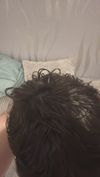
community 20-Year-Old Seeking Opinions on High Hairline and Recession
A 20-year-old male with a high hairline seeks advice on potential hair loss, noting a family history that typically doesn't progress beyond Norwood 2. A user suggests it appears to be a mature hairline rather than hair loss and advises monitoring for changes.
community Any experiences with Ptd-dbm??
The user experienced reduced hair loss using an online serum but found it too expensive and is seeking a vendor for ptd-dbm. They are also interested in KY19382 but are unable to find it.
community Norwood 1 to 3 is normal, and NOT balding
Norwood 1-3 hair loss is considered normal in Russia and not balding. Using finasteride for Norwood 1-3 is seen as unnecessary and risky.
community Man i thought progress was linear but im back to shedding right before a vacation.
The user is experiencing hair shedding despite using finasteride, minoxidil, and microneedling, and is concerned about the non-linear progress. Other users share similar experiences, suggesting shedding is normal and cyclical, with some recommending less frequent microneedling.
community please evaluate my potential routine switch
The user is considering switching their hair loss routine from taking finasteride daily to a combination of finasteride six times a week and dutasteride once a week. They are seeking advice on this potential change.
community Starting 5mg Finasteride split into 1.25mg. Is the hormonal fluctuation risk real?
An 18-year-old is considering splitting 5mg Finasteride pills into 1.25mg doses to save money, but is concerned about potential hormonal fluctuations and side effects due to his age. Users advise caution, suggest consulting a doctor, and recommend considering lower or less frequent doses.