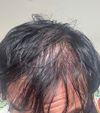
A user shared their experience with microneedling and minoxidil for hair loss, avoiding finasteride due to concerns about systemic hormone effects. They reported slight hair regrowth after one month and plan to continue the regimen, noting improvements in skin sensitivity and managing dandruff with anti-dandruff shampoo.
A 48-year-old who had been thinning since 25 and reached NW4-5 baldness saw no improvement with 1mg/day finasteride and 5% minoxidil twice a day after 8 months. After copying another person's routine, they now use 0.5mg finasteride, ketoconazole shampoo weekly, daily microneedling with 0.5mm and 1mm once a week, and apply minoxidil twice daily, resulting in baby hairs on their bald spot and temples after three months.
Hair loss treatment with latanoprost, minoxidil, and biotin showed progress. Latanoprost, a glaucoma drug, stimulates anagen phase and increases conversion of vellus hair to terminal hair.
The user is experiencing severe hair loss after surgery and stress, with thinning all over the head, including the sides and neck. They are unsure if it's due to DUPA or alopecia areata incognita, and doctors have not observed miniaturization.
Scalp Botox may help hair loss by relaxing muscles and increasing blood flow, potentially benefiting conditions other than androgenetic alopecia. DHT affects hair follicles differently, causing tension and hair loss in some areas but not others.
A 24-year-old male experiencing hair loss has been using finasteride, minoxidil, and ketoconazole shampoo without progress. He is considering switching to oral minoxidil and dutasteride, exploring dermarolling, and eliminating dairy from his diet.
The user has been experiencing continuous hair loss despite using finasteride, minoxidil, and dermastamping. They are seeking advice on what to do next.
Avixis Alfatradiol is a topical 5-alpha reductase inhibitor available in Latin America and Germany, but its effectiveness is questioned. A user reported worsened hair loss after using it and recommended finasteride instead due to its proven effectiveness and lower cost.
The user has been using topical minoxidil, finasteride, microneedling, and laser light therapy for 11 weeks to address hair thinning. They report difficulty applying the treatment due to increased hair thickness and are unsure if the results are significant.
A user experienced hair loss after taking chromium and alpha lipoic acid supplements but stopped shedding after discontinuing them. They noticed thinning around the temples and started dermarolling.
The user is using 5% topical minoxidil, a 0.5mm dermaroller, and keto shampoo for hair loss treatment, showing positive progress after two months. They plan to continue the regimen for maintenance.
A 59-year-old man with significant hair loss has seen some improvement, including reversal of Retrograde Alopecia and darkening of hair, after switching to RU58841 and a new minoxidil base solution with additional ingredients. He also changed from a derma roller to a derma stamp for application.
A potential non-invasive topical treatment targeting the WNT Signaling Pathway for hair regeneration is being researched, with positive results on human hair follicle cells. Current effective treatments for hair loss include Minoxidil, finasteride, and hair transplantation.
The user is considering using Tacrolimus Solution and topical Dutasteride to avoid shedding caused by Minoxidil, which they fear may lead to facial side effects. They are also concerned about scalp sensitivity and are exploring different treatment bases to manage seborrheic dermatitis.
Use tretinoin three times a week, dermaroll once a week, and apply minoxidil daily, but avoid using all three on the same day. Tretinoin is preferred over hydrocortisone and should not be used immediately after dermarolling.
The user treated androgenic alopecia with topical minoxidil, finasteride, vitamin D, and biotin, while also using ketoconazole shampoo for dandruff. They focus on weight training and take daily vitamin D tablets.
Excessive scalp sebum, worsened by DHT, can lead to inflammation and hair loss, with clascoterone mentioned as a treatment. Diet changes seem ineffective for scalp sebum, and treatments like minoxidil and finasteride are suggested.
The user is using finasteride, dutasteride, and topical minoxidil with tretinoin for hair loss but is concerned about the lack of growth in small hairs. Others suggest patience, as results can take up to two years, and emphasize the importance of exercise and diet.
A user shared their 11-year journey with alopecia, using finasteride, dutasteride, and a hair transplant. They encouraged others not to panic, noting that hair miniaturization can take over 15 years to complete.
A 31-year-old user shared progress pictures after 4 months on a hair loss routine. The routine includes microneedling twice a month, Hims Min/fin topical, and a collagen peptide supplement.
The conversation is about enhancing dermarolling for hair loss by using topical peptides like tb-500 or GHK-Cu to aid in healing and hair growth, and whether anyone has experienced significant results from this method.
A user shared a 9-month hair loss treatment update using scalp micropigmentation (SMP), finasteride, minoxidil, derma pen, ketoconazole shampoo, and low-level laser therapy (LLLT), with plans for a hair transplant. Another person suggested increasing the dosage of finasteride and minoxidil and using a derma roller weekly.
The post discusses a user's 2-month progress in treating hair loss using topical Du once a week, microneedling, and red light therapy. The user notes that red light therapy is primarily for face and body inflammation but also applies it to the scalp.
The post and conversation discuss the link between DHT (a hormone), scalp itchiness, and hair loss. Some users share their experiences and treatments, including the use of fluconazole, corticosteroids, and ketoconazole shampoo, with one user suspecting minoxidil as a potential cause of their symptoms.
The user has been using oral dutasteride and minoxidil for over a year without regrowth or stability, and hair loss continues. Suggestions include checking for inflammation, considering a scalp biopsy, and trying microneedling, topical anti-androgens, or a hair transplant.
The user follows an intensive hair loss protocol including dutasteride, biotin, black tea, pumpkin seed oil, peppermint shampoo, rosemary conditioner, mukemame, soy milk, lycopene, garlic, magnesium, chamomile, spicy food, citrus bergamot, zinc, multivitamins, kefir, and Greek yogurt. They plan to alternate between pumpkin seed oil and safflower oil and will share before and after pictures.
The user is experiencing scalp irritation from a compounded treatment of finasteride, minoxidil, and tretinoin. They are considering switching to a non-alcohol, propylene glycol-free formula with a lower tretinoin percentage to reduce irritation.
The user started using minoxidil foam daily after two years on finasteride and is managing seborrheic dermatitis with antifungal shampoo. They seek advice on moisturizing products that won't worsen their condition, with suggestions including gentle shampoos and light ceramide serums.
A 32-year-old male has been dealing with hair loss since 2010 and started treatment 11 months ago. He used dutasteride, finasteride, minoxidil, multivitamins, vitamin D3, PRP, and a laser cap, resulting in improved hair density despite ongoing shedding.