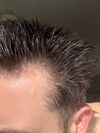
Pyrilutamide (KX-826) is discussed as an anti-androgen treatment for hair loss, with mixed user experiences. Some users report no results, while others find it mildly effective.
The conversation humorously discusses inducing goosebumps to potentially reverse hair loss, with mentions of using cold therapy and muscle exercises. It also references other unconventional ideas like removing a testicle to lower DHT.
Hair follicle stem cells remain in bald individuals, but progenitor cells do not, raising questions about hair regrowth claims by Pelage. PP405 is discussed as a potential treatment, with skepticism about its effectiveness compared to existing treatments like Minoxidil and Finasteride.
Treatments for hair loss, including microneedling (dermarolling and dermapen) and the use of minoxidil, finasteride, and RU58841. It provides detailed information about cost and usage of the various treatments, as well as potential side effects.
Ketoconazole can slightly improve hair density and is best used as an adjunct to treatments like finasteride and minoxidil. It helps with scalp health but won't stop androgenetic alopecia on its own.
Hair regrowth and gender transition using finasteride, estrogen, and spironolactone. Significant hair regrowth and personal transformation were achieved through hormone replacement therapy.
A 39-year-old experienced hair regrowth on his temples after switching from finasteride to topical RU58841 combined with 5% minoxidil. He also underwent stem cell treatment and noticed improvements, attributing the regrowth mainly to the change in treatment.
The user has been taking 2mg oral minoxidil and 1mg finasteride but has seen no hair regrowth after 8 months, leading to concerns about being a non-responder. They are considering increasing the minoxidil dosage or switching to dutasteride, while also using keto shampoo and microneedling, but remain skeptical about the effectiveness of minoxidil.
Increased hair fall after starting minoxidil, dutasteride, and biotin is normal. Hair may grow faster, and shaving your head is fine while on these medications.
User reports 3 months of microneedling, minoxidil, finasteride, biotin, and zinc for hair loss. Others comment on great progress and suggest checking back after 1 year.
Long term Finasteride users and whether or not they have noticed improvements after two years of use, with other treatments such as Minoxidil and dermarolling also discussed. Some replies suggest that improvement is possible even beyond the two year mark while others caution against believing studies backed by the Post-Finasteride Foundation.
Microneedling should target depths of 0.5mm to 1.5mm for hair loss, with weekly sessions at 1mm recommended. Combining microneedling with Minoxidil is common for improved results.
PP405 may revive dormant hair follicles but is unlikely to help with long-term baldness where follicles are replaced by scar tissue. It is seen as a potential adjunct to treatments like minoxidil and finasteride, but its effectiveness on deeply fibrotic or scarred areas is doubtful.
Hair loss treatments like finasteride, minoxidil, dutasteride, and RU58841. Users suggest hair fibers for temporary coverage and consider hair transplants for permanent solutions.
A poem humorously suggests hope for a new hair loss treatment, PP405, while users debate the effectiveness and side effects of current treatments like Finasteride. Concerns are raised about Finasteride's side effects, especially for young users, and skepticism about new treatments is expressed.
A 19-year-old reports positive hair regrowth using oral minoxidil and finasteride, with no side effects. The conversation includes advice on consulting a dermatologist and exploring alternative treatments.
Finasteride is believed to slow down hair loss significantly, but may not completely stop it for everyone. Effectiveness and duration vary by individual, with some users experiencing positive results for over 10 years, while others see less benefit.
A 23-year-old started taking 0.25 mg of Finasteride daily for hair loss after trying Minoxidil and derma rolling without success. People shared varied experiences with Finasteride, discussing potential side effects, effectiveness, and personal decisions regarding hair loss treatment.
A user discusses starting nandrolone replacement therapy to stop hair loss and improve hair health, noting its benefits over finasteride. They report halted hair loss, improved skin, increased muscle, and a calm mood after three weeks.
AH-001 is a new topical treatment designed to degrade androgen receptors, targeting the root cause of androgenetic alopecia without the side effects of oral treatments like finasteride. It has shown a strong safety profile and good local tolerability in early trials.
The conversation is about analyzing receded temple closeups for signs of fibrosis, scarring, or androgenetic alopecia (AGA). Specific treatments like Minoxidil, finasteride, or RU58841 are not mentioned in the conversation.
A 33-year-old male is experiencing thinning at the temples and hairline, with increased shedding over the past year. The user suspects androgenetic alopecia (AGA) despite AI suggesting a maturing hairline.
A 25-year-old with AGA experienced hair thinning and dandruff, stabilized with topical finasteride and minoxidil but saw minimal regrowth. They seek advice on styling and consider oral minoxidil and microneedling for denser hair.
Intradermal botulinum toxin (BTX) injections effectively treat androgenetic alopecia (AGA) by inhibiting TGF-β1 secretion from hair follicles. Further research and long-term follow-up are needed to confirm these findings.
The treatment for androgenetic alopecia involves using finasteride and minoxidil with intense exercise and cold exposure to boost metabolism and reduce androgenic effects, potentially leading to hair regrowth. This approach may activate biological pathways for improved hair and overall health.
The user experienced rapid diffuse hair thinning for five years despite no signs of AGA or miniaturization. They tried finasteride and oral minoxidil without success and have checked thyroid, iron, and vitamin D levels.
Adipose-derived stem cells with ATP improved hair regrowth in male and female mice with androgenetic alopecia. The most effective treatments were low dose stem cells with ATP for males and medium dose stem cells with non-liposomal ATP for females.
A 21-year-old male with a thyroid condition noticed his hair thinning uniformly without a receding hairline. He is considering using a 5ARI to prevent further baldness if he starts TRT.
Hair loss without a white bulb may indicate mechanical damage, anagen effluvium, alopecia areata, or traction alopecia. Seeking a specialist is recommended, but access can be difficult in smaller areas.