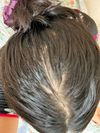
A 12-year-old diagnosed with alopecia shares their experience and current treatments, including Dermovate, an unnamed cream, and liquid iron. The community offers support and encouragement.
Hair loss treatment should target dermal white adipose tissue (DWAT) to restore hair follicles. Potential remedies include tocopherol (vitamin E), botox, rosiglitazone, niacin, kojyl cinnamate esters, and ADP355.
A 20-year-old male has been experiencing hair loss for three years due to a vitamin D deficiency and has seen no improvement after 3.5 months of taking supplements. Another person suggested that if the hair loss follows a pattern, it might be regular baldness rather than due to the deficiency.
User experienced hair thinning due to high cortisol and thyroid issues, along with insulin resistance. They are taking magnesium, zinc, vitamin D, calcium, and selenium as supplements.
There are no tests to determine genetic follicle sensitivity for hair loss, and conclusions are based on hypothetical or post-balding observations. Finasteride is mentioned as an easy, consistent treatment option compared to natural treatments.
A user's 18-month hairline progress using minoxidil, finasteride, Nizoral, microneedling, and scalp massage. They share their routine and discuss treatment effectiveness and photo order confusion.
A 20-year-old male has been using topical finasteride and minoxidil for 6 months, reducing hair fall by 60%, but is still experiencing hair loss. He is considering more powerful treatments as topical finasteride, which reduces scalp DHT by 70%, hasn't stopped his hair loss.
A 24-year-old male is experiencing a receding hairline and is advised to use topical minoxidil for hair regrowth, while being cautious about finasteride due to potential side effects. Adding ketoconazole shampoo is suggested for scalp health, and consistent use of minoxidil is recommended for noticeable results in 3-6 months.
The user feels treated better with a comb-over than when bald due to cancer. They are considering a hair transplant and using finasteride and minoxidil for hair loss.
The user has been using a hair loss treatment regimen including Minokem N, topical finasteride+minoxidil, and oral minoxidil for three months and has seen progress. However, they've also noticed an increase in grey hair, particularly on the sides of their head, and are seeking advice.
A user's decision to shave their head after experiencing hair loss since the age of 17, and discussion around the potential use of Fin for treating hair loss.
Hair loss discussion with treatments including topical minoxidil, finasteride, micro-needling, vitamins, and keto shampoo. User shares progress and seeks opinions on regrowth.
The user has been experiencing hair loss since having COVID and has low vitamin D levels; they are seeing some improvement in their crown and hairline after starting vitamin D supplements. Commenters suggest the hair loss pattern is consistent with male pattern baldness (MPD) and varies by individual.
A 29-year-old female is experiencing severe hair loss and bald patches, seeking advice on shampoos, conditioners, hair masks, or topical medications. A user suggests starting an oral supplement.
A 30-year-old with diffuse thinning and a balding crown is using a treatment regimen of a 2-in-1 pill containing finasteride, minoxidil, and biotin, along with various supplements. After two weeks, no side effects have been experienced, and updates with pictures will be posted monthly.
Ketoconazole 2% shampoo effectively regrew hair by treating scalp dermatitis and inflammation. The user also used jojoba and oat oil, Aveeno moisturizer, and hyaluronic acid for scalp care.
PP405, a topical treatment, shows promise for hair growth by activating inactive follicles, with 66% of participants experiencing positive results. The treatment is well-tolerated and may proceed directly to Phase 3 trials, offering a potential alternative to minoxidil and finasteride.
A man in his early 30s noticing hair thinning, mainly on the crown of his head. He's been using 1mg oral finasteride and keto shampoo daily for 4 months, with noticeable improvement and no side effects.
A 38-year-old male with stress-induced Telogen Effluvium is seeking advice on using oral finasteride and minoxidil, as well as vitamin regimens, for hair loss. He is considering these treatments after a dermatologist ruled out male pattern baldness and prescribed ketoconazole shampoo.
A potential non-invasive topical treatment targeting the WNT Signaling Pathway for hair regeneration is being researched, with positive results on human hair follicle cells. Current effective treatments for hair loss include Minoxidil, finasteride, and hair transplantation.
The user has been using topical minoxidil and oral finasteride for hair regrowth, noticing some improvement and baby hairs at the hairline after four months. Suggestions include continuing the current treatment, considering microneedling, ketoconazole shampoo, vitamins, and possibly RU58841, while avoiding a hair transplant.
The user experienced significant hair regrowth using finasteride, minoxidil, and a 4,000-graft hair transplant performed by Dr. Nader in Reynosa, Mexico. The results were natural-looking, and the user plans a second transplant for additional density if needed.
Hair loss treatments like finasteride, minoxidil, and hair transplants have side effects and limitations. There is hope for future advancements in stem cell therapy and hair follicle regeneration, though skepticism about their effectiveness and timeline persists.
The user has been using Minoxidil and Finasteride since late 2019 with good results but is experiencing a dry, flaky scalp and shedding hairs. They also use Nizoral, biotin, zinc, magnesium, and collagen supplements, and their dermatologist prescribed fluocinolone acetonide to reduce flaking.
A user named Medical_Opinion8120, a 23-year-old female, is experiencing hair loss potentially due to a past accutane course. She has tried minoxidil without success and is currently taking iron and zinc supplements.
The user shared progress pictures showing improved hair growth at the temples after 2.5 months using oral finasteride/dutasteride, ketoconazole shampoo, minoxidil, tretinoin, and dermarolling. The user reported no side effects from the medications and noted inconsistent microneedling.
An 18-year-old is dealing with hair loss and considering minoxidil and finasteride. Suggestions include starting finasteride, saving for a hair transplant, embracing baldness, and focusing on self-improvement.
User discusses hair loss and new haircut embracing temple recession. Others compliment the look and share similar experiences, suggesting confidence and trust in hairstylists.