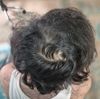
User is 16, experiencing hair loss, and using minoxidil and alfatradiol. Shedding decreased, new hairs growing on temples, but unsure if alfatradiol is effective or if future shedding will occur.
A 39-year-old experienced hair regrowth on his temples after switching from finasteride to topical RU58841 combined with 5% minoxidil. He also underwent stem cell treatment and noticed improvements, attributing the regrowth mainly to the change in treatment.
The user is experiencing hair thinning at the front of the scalp and is seeking advice on regrowing long curly hair. They are considering treatments like Minoxidil, finasteride, and RU58841 to prioritize hair regrowth.
GT20029 and CosmeRNA are both potential hair loss treatments; GT20029 breaks down the androgen receptor, while CosmeRNA prevents its production. Continuous use is needed, but less frequently than current treatments like Minoxidil and Finasteride.
PP405 shows potential for hair growth by increasing terminal hair and converting vellus hairs, but results are modest and more waiting is needed. It complements existing treatments like minoxidil and finasteride, but won't replace them.
A user's experience with microneedling monotherapy and potential treatments such as finasteride, minoxidil, Stemoxydine, rosemary oil, peppermint oil, and RU58841 for reversing hair loss.
The user is experiencing severe hair thinning and is using multiple treatments including topical finasteride, minoxidil, tretinoin, latanoprost, oral minoxidil, dutasteride, saw palmetto, and derma wounding. They are considering adding RU58841 and are contemplating a hair transplant and exosomes due to frustration with current results.
A user claims a product can treat alopecia, but others are skeptical, calling it a scam due to lack of evidence and transparency. The product is said to inhibit Type II 5-αr by 22.9%, but is considered weaker than existing DHT blockers.
The conversation discusses the potential use of verteporfin for hair loss treatment, with one user mentioning their surgeon's interest in trying it and another noting its research status and clinical use as a YAP inhibitor. Some users debate the market size, availability of generics, and the optimism in the hair loss community regarding new treatments.
A female with PCOS and androgenetic alopecia is starting treatment with oral Minoxidil, topical Minoxidil 5% with finasteride, and plans to add mesotherapy. She previously tried anti-androgenic contraceptive pills but couldn't tolerate them and is using Myo Inositol for weight management.
Hair transplants, oral finasteride, oral minoxidil, and dutasteride mesotherapy are highly effective for treating AGA hair loss. This combination can maintain and improve hair for most people, except those with very aggressive AGA.
The post and conversation discuss KX-826 (pyrilutamide) for hair loss treatment, with positive remarks about its advertising and authenticity in China. The user changed their perspective after further research and seeing genuine advertising.
A user shared their four-year experience using 0.5mg dutasteride and topical minoxidil once daily for aggressive early hair loss, maintaining their hairline and regrowing hair on the vertex. They've experienced positive social feedback and increased confidence but also deal with dry eyes from dutasteride and worry about its long-term effects and cost.
Minoxidil's effectiveness varies due to differences in sulfotransferase enzyme levels in the scalp, affecting people with conditions like ASD, liver disease, and androgenic alopecia. Treatments like topical tretinoin, microneedling, and using minoxidil sulfate instead of regular minoxidil can improve results for those with low enzyme levels.
The user has been using HIMS topical finasteride and minoxidil spray for hair loss, with positive results but still seeks improvement at the crown and corners. They are considering reintroducing derma rolling and possibly trying oral treatments like dutasteride due to concerns about shedding and irritation.
Users discuss finding reliable sources for RU58841, focusing on lab tests, batch consistency, and community reputation. Some mention using alternatives like pyrilutamide.
SCUBE3 is a promising new molecule that can restart hair growth by reawakening dormant hair follicles. Users express skepticism about its availability timeline, with some hoping for release by 2026.
Dutasteride 0.5 mg significantly reduces both scalp and hair follicle DHT, with a greater reduction in hair follicle DHT. The discussion questions which reduction is more important for androgenetic alopecia and diffuse thinning.
A poem humorously suggests hope for a new hair loss treatment, PP405, while users debate the effectiveness and side effects of current treatments like Finasteride. Concerns are raised about Finasteride's side effects, especially for young users, and skepticism about new treatments is expressed.
A female experienced hair loss due to low iron and an undiagnosed thyroid issue, specifically Hashimoto's, and saw improvement after starting thyroid medication, iron supplements, and making lifestyle changes. She emphasizes the importance of addressing the root cause and shares her journey to regrowth and emotional recovery.
The user has been taking oral minoxidil, dutasteride, and biotin for 3 months and noticed changes in hair texture, suggesting potential regrowth or stabilization. Baby hairs and increased hair density are seen as positive signs.
Adding non-prescription topicals like alfatradiol and Zix to a standard fin/min/niz regimen may help with scalp inflammation and shedding, but their long-term effectiveness varies. Zix is recommended for reducing scalp inflammation and enhancing the effectiveness of other treatments.
A trans woman is using finasteride, minoxidil, microneedling, and HRT to address hair loss, with noticeable improvement in hairline shape and presence of vellus hairs. She is considering hair transplants if these treatments don't yield desired results within a year or two.
A satirical post where someone claims to have developed a radioactive isotope scalp serum using Polonium-210 that outperforms Minoxidil and finasteride for hair regrowth. The serum reportedly stimulates DNA repair in hair follicles, leading to significant hair density increase, but the post is met with skepticism and concerns about safety.
The conversation is about personal experiences with Anagenic Pyrilutamid for hair loss and what carriers people use with it. No specific treatments or outcomes are mentioned.
The conversation discusses the potential of Replicel/Shiseido treatment for hair loss, questioning its effectiveness, whether it grows new follicles, and its market release timeline. It also compares Replicel to other competitors like Kyocera/RIKEN/Tsuji.
Autologous exosome treatment for hair loss is being discussed as an emerging option. Minoxidil, finasteride, and RU58841 are also mentioned as treatments.
A 29-year-old male shared his hair loss journey, using oral finasteride, topical minoxidil, derma rolling, and recently switching to dutasteride, oral minoxidil, and ketoconazole shampoo. He observed significant regrowth but progress slowed, hoping new treatments will enhance results.
The user recommends a thickening clay as a great pre-styling product for hair volume and texture, despite its poor hold. They also mention using finasteride and express skepticism about the effectiveness of a shampoo containing saw palmetto and caffeine.