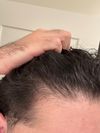
A male in his early 20s with CCCA (scarring alopecia) started treatment with Finasteride, Fluocinolone, and Doxycycline. Steroid injections were suggested but not yet done.
A 31-year-old male with androgenetic alopecia and seborrheic dermatitis is considering starting finasteride and minoxidil for hair loss, while also using ketoconazole and salicylic acid shampoos for scalp treatment. He is concerned about the timing of starting finasteride and potential side effects, and seeks advice on whether to prioritize scalp health or begin hair loss treatments simultaneously.
The user is stressed about hair loss and is using a HIMS topical treatment containing finasteride, ketoconazole, minoxidil, and biotin, but is concerned about the oily appearance it causes. They are considering switching to Rogaine (minoxidil) due to budget constraints and side effect concerns with oral finasteride.
The user has severe diffuse thinning on the scalp and is using finasteride, topical minoxidil, dermarolling, tretinoin, and Nizoral without satisfactory results. They are considering a hair transplant but are concerned about the cost and the number of grafts needed.
The conversation is about improving scalp appearance by regaining adipose tissue and making the skin look better using scalp massages and a moisturizer with hyaluronic acid, ceramides, and urea. The user is not trying to regrow hair but wants to improve the scalp's thickness and appearance.
The user is seeking Malassezia-safe treatments for hair loss and currently uses a baby shampoo, a scalp tonic with antifungal ingredients, and aloe gel. They consider using Kirkland Minoxidil 5% drops and possibly consulting a doctor about Finasteride.
A 21-year-old male with a thyroid condition noticed his hair thinning uniformly without a receding hairline. He is considering using a 5ARI to prevent further baldness if he starts TRT.
A 19-year-old female with Diffuse Alopecia was advised by a dermatologist to use vitamin supplements, a hair serum, and antifungal drops, leading to some improvement. Other users suggested treatments like minoxidil, microneedling, and consulting a different dermatologist for further advice.
The conversation discusses using isotretinoin (Accutane) to reduce scalp oiliness and manage scalp issues like seborrheic dermatitis, inflammation, and chronic itch. A user shares that taking 20mg of Accutane every other day effectively reduces oily hair and skin.
Hair loss is linked to scalp fibrosis and tension, which result from chronic mechanical stress and androgenic signaling. Treatments include blocking androgens with finasteride, promoting hair growth with topical minoxidil, and improving scalp mobility through exercises.
The user has been using minoxidil and finasteride for 7.5 months to address hair thinning, particularly at the crown and temples, and is considering additional treatments like tretinoin and dermastamping despite having chronic scalp folliculitis. They are experiencing progress but are concerned about side effects and the effectiveness of treatments on temple regrowth.
The user has been dealing with an oily scalp, seborrheic dermatitis, and hair loss for 18 months, using finasteride without improvement. Another user suggested dutasteride for reducing scalp oiliness.
The user noticed increased hair loss over the past three years and is seeking advice. A suggestion was made to consult a dermatologist or trichologist and consider blood tests, particularly for vitamin D levels, to address potential androgenetic alopecia (AGA).
The conversation is about applying tretinoin on the scalp for hair loss, with tips on mixing it with minoxidil foam and using a thin layer to avoid flaking and dryness. Suggestions include exfoliating with rosemary or coconut oil and wearing a hat for sun protection.
The user asks if finasteride can be used with the topical steroid betamethasone dipropionate to reduce hair loss and scalp inflammation. The discussion revolves around combining these treatments for better results.
A user with diffuse hair loss for a decade tried various treatments, including LLLT Helmet, supplements, topicals, and hair transplants. They found relief from scalp inflammation and itching using a topical solution made from crushed Xeljanz pills mixed with ethyl alcohol.
The user is using topical dutasteride, finasteride, minoxidil, and tretinoin but seeing no results or side effects. They also microneedle every two weeks but experience little bleeding, questioning if a thick scalp is preventing treatment effectiveness.
In this conversation, 4990 discussed various treatments for hair loss, including oral minoxidil, PRP, transplan, Jak inhibitors, Dutasteride, Finasteride, Olumiant, Ketoconazole, RU58841, microneedling, baricitinib, and CCCA. They recommended scalp biopsies in unclear cases of DUPA, twice weekly to twice daily shampooing for topical minoxidil users, and two sessions spaced one month apart with follow up at month three to determine the effectiveness of PRP treatment.
A 22-year-old male experiencing hair loss suspects androgenetic alopecia (AGA) and possibly telogen effluvium (TE), with a noted improvement in scalp itch after adopting a gluten-free diet. He is advised to consider treatments like finasteride or minoxidil and to check iron and ferritin levels.
The user experienced significant hair improvement with minoxidil and finasteride but later faced shedding and diffused thinning after developing seborrheic dermatitis. They are seeking advice after trying treatments like ketoconazole, coal tar shampoos, fluconazole, and hydrocortisone cream.
The user underwent a biopsy two years ago and was diagnosed with keratosis pilaris, leading to hair issues. They tried treatments including Minoxidil, betamethasone, lymecycline, topical Accutane, and dutasteride, as well as diet changes, without improvement in hair thickness or skin dryness.
The conversation discusses hair loss and treatments like finasteride, minoxidil, and ketoconazole shampoo. Users suggest scalp massages, warm showers, and other methods to address scalp tension and tight spots, with some mentioning the potential effects of medications like escitalopram and probiotics.
The user discusses their hair loss experience, exploring various hypotheses including thyroid levels, vitamin D, DHEA, nutritional deficiency, diabetes, seborrheic dermatitis, lack of nutrition to hair follicles, chronic inflammation, female pattern hair loss causes, cortisol, and prolactin levels. They are currently using finasteride, beta-sitosterol, and have tried topical dutasteride and microneedling therapy.
A 22-year-old male is experiencing hair loss and has been using topical minoxidil and anti-dandruff shampoo for six months without improvement. Suggestions include adding finasteride to the routine and considering treatments for potential scalp issues like seborrheic dermatitis.
A user with seborrheic dermatitis and traction alopecia is seeking alternatives to minoxidil for hair loss, considering rosemary oil for its anti-inflammatory properties. They express concerns about potential side effects and effectiveness of various treatments, including rosemary oil, caffeine, and Redensyl.
After suffering from hair loss and trying various treatments like finasteride, minoxidil, RU58841, and scalp micropigmentation without lasting success, the individual found freedom and a renewed sense of self by shaving their head and accepting their baldness. They encourage others struggling with hair loss to not waste years searching for a cure and to consider embracing a shaved head as a positive solution.
A 22-year-old male is experiencing hair loss due to seborrheic dermatitis, not male pattern baldness, and is seeking advice. Suggestions include using Nizoral, sulfate-free and ketoconazole shampoos, cutting hair short, using cold water, avoiding picking scabs, and trying selenium sulfide shampoo or finasteride.
The conversation discusses hair loss treatments, including scalp massage, and the importance of blocking DHT for hair loss management. The user shares blood test results, which appear normal, and seeks advice on effective tests and treatments, expressing a preference for natural methods over medication.
The user is experiencing hair thinning and visible scalp at 18, seeking advice on whether it's genetic or a scalpcondition. Suggested treatments include Minoxidil, finasteride, ketoconazole shampoo, and CBD oil with MCT.