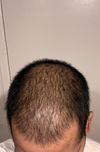
RU58841 worsened hair condition, causing thinning and unusual patterns. The user stopped using it two months ago but hasn't seen recovery, and there's speculation about androgen receptor upregulation.
A male in his early 20s with CCCA (scarring alopecia) started treatment with Finasteride, Fluocinolone, and Doxycycline. Steroid injections were suggested but not yet done.
The user has been using finasteride, dutasteride, and RU58841 for hair loss without success and feels extremely uncomfortable with their appearance, including being bald and short. They express deep unhappiness and social isolation. Suggestions from others include adopting stoicism, focusing on personal development, considering a hair system, improving fashion, working out, and seeking therapy for mental health.
An 18-year-old has been using minoxidil and finasteride for hair loss since age 15, recently adding dutasteride and GHK-Cu, but sees no significant improvement and is considering a hair transplant. Concerns are raised about using hormone suppressors at a young age, with suggestions to explore other treatments like dermarolling, diet changes, and checking for deficiencies.
The user experienced hair thinning and was diagnosed with alopecia incognito and male pattern baldness. They are using minoxidil, finasteride, and dutasteride scalp injections, reporting gradual improvement with no side effects.
The conversation is about considering pyrilutamide 1% as an alternative treatment for hair loss due to intolerance to 5-alpha reductase inhibitors. Some users suggest it might be effective, while others view it as a temporary solution.
The conversation is about managing allopregnanolone deficiency caused by 5-alpha-reductase inhibitors like finasteride or dutasteride. Specific treatments discussed for hair loss include Minoxidil, finasteride, and RU58841.
A 23-year-old is distressed about hair loss despite using dutasteride and oral minoxidil and is considering a hair transplant in Turkey. Many suggest therapy, hair systems, or acceptance, emphasizing mental health over appearance.
The "DHT itch" is real and likely due to inflammation at the hair follicle, exacerbated by increased testosterone or androgens. Treatments mentioned include dutasteride, minoxidil, finasteride, and various topical solutions.
The user has been using finasteride, dutasteride, pyrithione zinc, and oral minoxidil to treat hair loss and has seen an increase in fine hairs on the hairline but overall thinning on the top. They are considering adding zinc and Vitamin K to their regimen and are already taking hair multivitamins with collagen.
A 25-year-old male is concerned about his blood test results, particularly the low percentage of free testosterone, and is questioning whether starting finasteride for hair loss might worsen this issue. He also notes a slight vitamin D deficiency and lack of sleep before the test.
The user is experiencing significant hair loss and has tried treatments like PRP therapy, topical and oral Minoxidil, Finasteride, and dietary changes, with limited success. They are concerned about losing more hair before a scheduled hair transplant and are advised to postpone the transplant to allow medications more time to work.
A user is experiencing severe hair loss, diagnosed with seborrheic dermatitis, and is using Ketoconazole and beclomethasone. They are concerned about potential female pattern baldness and are seeking reassurance and advice.
A 24-year-old woman with AGA and TE since age 14 is questioning if her hair is regrowing or breaking. She has been using minoxidil consistently since September 2025, along with caffeine and ketoconazole shampoos, rosemary oil, and saw palmetto, and has improved her overall hair care routine.
The user has been experiencing severe scalp itching and red spots after using finasteride for two years, suspecting possible allergies or a fungal infection. Despite trying ketoconazole shampoo and stopping saw palmetto supplements, the symptoms persist, leading to increased hair loss.
Upcoming hair loss treatments for those who can't tolerate DHT blockers, focusing on Minoxidil, microneedling, and ketoconazole. Promising treatments include GT20029, PP405, KX-826, and RU58841, though RU58841 may not be safe.
The conversation discusses using finasteride, dutasteride, minoxidil, cialis, and metformin to protect hair and health. Some users caution against self-prescribing these drugs due to potential risks and complications.
Hair loss discussion includes finasteride intolerance and questioning if Pyrilutamide is an alternative. Pyrilutamide not commercially available, but may be tolerable if approved since it's not a 5aR inhibitor.
Topical melatonin may help reduce hair loss and increase hair thickness in people with androgenetic alopecia (AGA), with some studies showing positive results. It can be mixed with minoxidil for application, and its effectiveness might be enhanced when used with micro-needling, but results may vary among individuals.
Hair loss can begin in early adolescence and cause mental anguish. Treatments mentioned include eating cruciferous vegetables, engaging in physical activity, and maintaining scalp hygiene.
Probiotics like L. reuteri ATCC PTA 6475 and B. longum BB536 may improve hair growth and density by reducing inflammation and reversing DHT damage. The user is trialing these probiotics personally, ordering them from the U.S. to Canada, and plans to continue if no adverse effects occur.
The user is using a topical routine of finasteride and minoxidil, noticing increased hair growth, and is considering adding tretinoin for skin issues. Tretinoin may enhance minoxidil's effectiveness, but care should be taken to allow proper absorption to avoid unintended facial hair growth.
A 20-year-old is experiencing hair loss and has low levels of Vitamin D, B12, and iron. They are seeking advice on vitamin D supplementation, despite no family history of hair loss.
The user experienced hair thinning from chromium and alpha lipoic acid supplements, which stopped after discontinuing them. Someone mentioned this could be telogen effluvium, a temporary condition.
The user has been taking finasteride for a year without improvement and added minoxidil and dermarolling recently, but hair loss continues. Blood tests showed normal testosterone and vitamins, except for low vitamin D3 and an allergy, which doctors suggested could be causing the hair loss.
Despite using dutasteride, RU58841, minoxidil, and ketoconazole for years, the user continues to experience severe hair loss and thinning. They seek advice after multiple dermatologists confirmed androgenetic alopecia (AGA) but offered no effective solutions.
The user is experiencing hair loss without a family history and suspects stress or telogen effluvium (TE) as the cause, despite using finasteride without results. Others suggest stress, vitamin deficiencies, or other conditions could be factors, and some mention that balding can occur without a family history.
The conversation discusses hair thinning and the potential role of vitamin D deficiency in hair loss, with suggestions to take vitamin D3 supplements. The user also mentions having diffuse thinning and a slightly receding hairline.
The post and conversation discuss the unpredictable nature of diffuse thinning, a type of hair loss. Users share personal experiences, with some mentioning treatments like oral finasteride and toppik, and the need for patience with these treatments.
The user is exploring alternatives to hair transplants due to a weak donor area and is currently using finasteride, minoxidil, dermapen, low-level laser therapy, Nizoral shampoo, and a high-protein diet. They plan to switch to dutasteride and consider adding RU58841, while rejecting hair systems and considering a buzz cut.