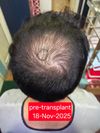
User shared progress pictures of hair regrowth on the crown/vertex after a transplant and using finasteride, Minoxidil foam, and a dermapen. They hope to fully regrow or increase density in the crown area.
The user showed progress in hair regrowth using topical Minoxidil, oral Finasteride, and derma rolling with tretinoin. They seek advice on achieving Norwood 1 and the number of grafts needed for hairline restoration.
In this conversation, 4990 discussed various treatments for hair loss, including oral minoxidil, PRP, transplan, Jak inhibitors, Dutasteride, Finasteride, Olumiant, Ketoconazole, RU58841, microneedling, baricitinib, and CCCA. They recommended scalp biopsies in unclear cases of DUPA, twice weekly to twice daily shampooing for topical minoxidil users, and two sessions spaced one month apart with follow up at month three to determine the effectiveness of PRP treatment.
Landon Donovan recently had a hairtransplant, leading to noticeable changes in his appearance. The conversation revolves around his confidence and reactions to his new look.
The conversation discusses the correct method of microneedling for hair loss, questioning whether it should be done on areas with long hair without risking hair damage, and if it's necessary for improving blood flow to existing hair. No specific treatments were mentioned.
User has been using topical finasteride and minoxidil since May, previously used a spray version since January. They are seeing vellus hairs and have added weekly microneedling to their routine.
The conversation is about a user's hairtransplant progress using 3000 grafts with DHI technique, foam Minoxidil, Tretinoin, and Dutasteride after 5.5 months. Commenters are impressed with the results, noting significant improvement.
A 21-year-old male is using finasteride, minoxidil, and had a hairtransplant to address lifelong thin, diffuse hair loss. Progress pictures show changes over two months.
A 28-year-old male shares his 7-month progress after a crown hairtransplant, using topical minoxidil foam, finasteride, and microneedling. He seeks feedback on whether his crown's progress is typical and if further thickening is expected between months 7 and 12.
A user shares optimism about combating male pattern baldness using oral and topical minoxidil, highlighting the advancements in treatments available today. Another user agrees, noting that early treatment can yield good results, and mentions the availability of affordable hairtransplants.
A 29-year-old male is considering treatments for hair loss, including Minoxidil, Finasteride, microneedling, or a hairtransplant, and is concerned about potential hair loss due to military service. He is currently at Norwood 2 and has a family history of hair loss.
The conversation discusses hair cloning progress and mentions treatments like Minoxidil, finasteride, and RU58841. Users also talk about hairtransplants and their effectiveness.
With a head full of hair, like a phoenix!
This user has experienced positive results from using topical minoxidil and oral finasteride for 12 months, followed by 5 months of only topical use, as well as microneedling before application for 4 months. They are now considering a hairtransplant in order to further enhance their results.
A user shared their 4-year hair loss journey, starting with finasteride and minoxidil, then adding dutasteride and oral minoxidil, which improved their hair. They are now considering RU58841 and a hairtransplant in the future.
The user regrew their hairline using mechanical stimulation, including a 1.5mm derma roller weekly, daily scalp massages, and other treatments like Nizoral, zinc pyrithione, fish oil, and Lipogaine The Big 5. They did not use Minoxidil or finasteride.
Minoxidil and finasteride might help with hair regrowth, but a hairtransplant may be necessary for significant improvement. The conversation humorously discusses the severity of hair loss, comparing it to various exaggerated Norwood scale levels.
The conversation discusses hair loss treatment progress 11 weeks after a crown transplant. The user is using minoxidil every two days and biotin daily, without finasteride.
The user is deciding between a hairtransplant and using minoxidil for hair loss. Another user suggests using minoxidil, finasteride, and engaging in physical activity.
A young individual experienced early hair loss and tried various treatments including Minoxidil, RU58841, micro-needling, and topical finasteride, which stopped the hair loss but did not regrow hair. Ultimately, they found a solution in a hair system, which restored their confidence and allowed them to participate in social activities again.
A user with long-term hair loss has been using topical minoxidil, finasteride, RU58841, ketoconazole, and dermastamping for 8 months. They are unsure if the new hairs are miniaturized or vellus.
The user experienced hair regrowth and improved hair density using oral finasteride and topical minoxidil, with microneedling as an additional treatment. They are considering a hairtransplant for low-density areas but are uncertain due to existing follicles.
A user proposed genetically engineering scalp stem cells to stop androgen receptors from causing hair loss. Others discussed the feasibility, existing research, and potential issues with this approach, including targeting the correct cells and unintended effects.
OP is planning a hairtransplant but has gyno surgery scheduled next month. It's recommended to wait 4-6 weeks after the gyno surgery before proceeding with the hairtransplant.
The user is seeking advice on hair loss treatments, considering options like finasteride, dutasteride, minoxidil, or a hairtransplant. They are concerned about how their mixed hair color might affect a transplant.
Two twins who used Minoxidil, finasteride and dermarollers to treat their androgenic alopecia over a 10 month time period. The user is providing details on the process they use for dermarolling.
The conversation discusses using hair follicle dermal papilla exosomes for hair loss treatment. It inquires about purchasing options for this treatment.
A user shared their 8-year journey with hair loss treatments, including oral minoxidil, dutasteride, Propecia, and a 2500 FUT hairtransplant, leading to significant hair regrowth and a healthy lifestyle. They experienced some side effects like oily skin and a higher-pitched voice but maintained high testosterone levels and a strong libido.
A 25-year-old male experienced significant hair loss due to telogen effluvium and androgenetic alopecia. He began using finasteride, minoxidil, and vitamins, seeing some regrowth but remains worried about hair density.
The conversation discusses skepticism about a new hair loss treatment called project K, which claims to replicate a chemical from UCLA research but is suspected to be a scam. The original poster plans to continue using oral minoxidil, finasteride, and dutasteride, along with microneedling, for hair regrowth.
A 51-year-old shared their hair recovery journey using finasteride, minoxidil, and dermarolling, noting significant improvement in hairline and temple areas. They emphasize consistency and patience, while another user suggests adding topical kx-826 and melatonin for additional benefits.