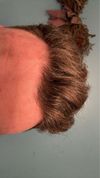
A user struggles with male pattern baldness and a persistent tingling itch on their crown, trying various treatments like aloe vera, tea tree oil, and Nizoral without success. Another user suggests the itch might be psychosomatic, linked to worrying about hair loss.
The post discusses a theory that hair regrowth after transplant is due to the angiogenesis process (new blood vessels forming), not because the transplanted hair is unaffected by DHT. The responses highlight the established belief in 'donor dominance' (the importance of the hair's origin in transplantation) and skepticism about the new theory.
An 18-year-old male switched from topical finasteride and minoxidil to oral dutasteride for diffuse hair loss and saw improvement without side effects, despite experiencing scalp itch and shedding. Commenters noted significant hair regrowth and were surprised by his young age and appearance.
Hair loss is linked to cellular physiology and the IGF-1 to TGF-B1 ratio, not just androgen sensitivity. The theory lacks evidence, while finasteride and minoxidil are effective treatments.
The user is experiencing hair loss and has been using RU58841 but is considering pyrilutamide and minoxidil, avoiding finasteride due to side effects. Another user suggests finasteride or dutasteride as essential, possibly in topical form, while dismissing saw palmetto as ineffective.
The user experienced significant hair regrowth after 5 months using finasteride, dutasteride, and oral minoxidil, despite initial side effects like erectile dysfunction, which resolved after switching from finasteride to dutasteride. The user reports full recovery of hair density and improved skin condition, though the right temple remains slightly recessed.
A user successfully reversed hair loss over 17 months using 0.5mg dutasteride and 5mg oral minoxidil daily, noting significant improvement without a transplant. Minor side effects like headaches and testicular discomfort were reported but resolved quickly.
The user has tried topical Minoxidil and oral Minoxidil for beard and scalp hair growth with minimal results, and has been on Finasteride for 7 months with stabilized scalp hair but no facial hair improvement. They are considering using a SULT1A1 enzyme booster to enhance results and are questioning its effectiveness without concurrent topical Minoxidil application.
Concerns about the long-term effects of dutasteride and finasteride on fertility, with discussions on cycling these medications to mitigate risks. The conversation highlights skepticism about study methodologies and the importance of weighing treatment risks against potential fertility issues.
The user has been using dutasteride, minoxidil, and RU58841 for two years but continues to experience excessive hair shedding, despite also taking various supplements and trying other treatments like red light therapy. They are seeking advice and sharing experiences with others facing similar hair loss challenges.
The user is experiencing hair loss with possible causes including chronic telogen effluvium, diffuse alopecia areata, and androgenic alopecia. They have tried treatments like Nizoral shampoo, minoxidil, and finasteride, and are considering a biopsy for further clarity.
The user has been using finasteride and minoxidil for over three years, switched to oral minoxidil, and recently started dutasteride and dermarolling but still experiences thin hair. They are seeking suggestions for improving their hair condition.
The conversation is about a female experiencing hair loss and seeking advice on why it's difficult to regrow hair. Specific treatments like Minoxidil, finasteride, or RU58841 are not mentioned.
The treatment for androgenetic alopecia involves using finasteride and minoxidil with intense exercise and cold exposure to boost metabolism and reduce androgenic effects, potentially leading to hair regrowth. This approach may activate biological pathways for improved hair and overall health.
A 26-year-old man shared his positive results after 10 months of treating male pattern baldness using a regimen that includes Estradiol Enanthate, DHPA, Bicalutamide, Dutasteride, oral and topical Minoxidil, and a dermaroller. He experienced mild gynecomastia and reduced body hair as side effects but was satisfied with the outcome.
The user experienced significant hair shedding despite long-term use of finasteride and minoxidil, considering switching to dutasteride and increasing minoxidil dosage. Suggestions included trying topical minoxidil and adding a topical antiandrogen, but avoiding RU58841.
A 21-year-old male is using a topical treatment for hair loss, including Dutasteride, Minoxidil, Tretinoin, Ketoconazole, and Hydrocortisone, along with derma rolling. He reports no side effects from the treatment and seeks feedback on its effectiveness for hair regrowth.
The conversation discusses hair regrowth progress using dutasteride 0.5 mg and oral minoxidil 2.5 mg over seven months. Users debate the effectiveness, with some noting slight improvements and others suggesting alternative treatments like finasteride.
Choosing between two hair loss treatments, with a preference for a higher concentration of RU58841 and 5% minoxidil, avoiding oils like castor and argan that may hinder absorption.
A user named "EgyptStar81" who has been dealing with hair loss since age 15 due to genetics, chemotherapy and finasteride/minoxidil treatment. Possible solutions such as dutasteride, oral minoxidil, hair transplants and extensions were suggested.
A 24-year-old male experiencing hair loss has been using finasteride, minoxidil, and ketoconazole shampoo without progress. He is considering switching to oral minoxidil and dutasteride, exploring dermarolling, and eliminating dairy from his diet.
The conversation is about someone seeking a doctor in the EU who prescribes spironolactone or bicalutamide for female pattern hair loss, as they are having difficulty finding treatment options beyond Minoxidil in Austria. They are asking for recommendations and are open to direct messages for assistance.
A user applied the 8T3 product for hair loss, targeting LPP and AGA, and plans to update on its effectiveness. The product uses a saline buffered phosphate vehicle, suitable for those intolerant to ethanolic vehicles.
The user has tried various treatments like Dutasteride, RU58841, Minoxidil, Finasteride, Spironolactone, Pyrilutamide, and Ketoconazole for hair loss without success and is considering a scalp biopsy to diagnose another condition. Others suggest consulting a dermatologist and possibly getting a biopsy, as the issue might not be typical male pattern baldness.
Scalp tension potentially affecting hair loss, and potential treatments for male pattern baldness such as Minoxidil, Finasteride and RU58841. Evidence from a study was discussed which suggests that the cause of MPB lies within the follicle itself and is not dependent on its surrounding environment.
Switching from finasteride to dutasteride led to hairline regression and scalp issues for some users, prompting a return to finasteride. Users reported better maintenance and regrowth with finasteride compared to dutasteride, despite using oral minoxidil throughout.
A user is seeking help to purchase and ship Alpecin DMG to the United States due to issues with eBay sellers. They prefer Alpecin DMG over minoxidil because of concerns about minoxidil's effects on insulin production, as they have diabetes.