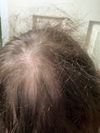
A 25-year-old male experienced significant hair loss due to telogen effluvium and androgenetic alopecia. He began using finasteride, minoxidil, and vitamins, seeing some regrowth but remains worried about hair density.
MCL-1 protein may help maintain hair follicles in the growth phase and prevent miniaturization. There is interest in experimental treatments like exosomes, peptides, or stem cell serums to upregulate MCL-1 for hair loss, especially for those not using minoxidil or finasteride.
The user is experiencing hair loss at the hairline and is using finasteride, but considering minoxidil due to lack of improvement. Replies suggest that minoxidil may be more effective for hairline maintenance, especially when used in combination with finasteride.
A 20-year-old male has been experiencing hair loss for three years due to a vitamin D deficiency and has seen no improvement after 3.5 months of taking supplements. Another person suggested that if the hair loss follows a pattern, it might be regular baldness rather than due to the deficiency.
A 19-year-old male with a family history of balding is using finasteride to thicken his hair and is considering whether to add minoxidil. Users suggest continuing finasteride for several months before deciding on minoxidil.
Missing dutasteride for up to 50 days likely won't cause significant hair loss if used for over six months, as it provides long-lasting DHT suppression. Continuing other treatments like minoxidil and scalp care is recommended during any break.
The user experienced significant hair loss after missing doses of oral minoxidil while continuing topical minoxidil and dutasteride. They are hopeful about regrowing lost hair by maintaining consistent treatment.
RU-58642 is a powerful anti-androgen that was not developed further, possibly due to safety concerns or financial reasons. RU58841 is a topical alternative, but it is less effective than finasteride and dutasteride, and its long-term effects are not well-studied.
A 16-year-old diagnosed with male pattern baldness (MPB) was prescribed hair vitamins, vitamin D, a non-ketoconazole shampoo, and redenysl + serum, with a suggestion for GFC or IHRF treatments. Some users recommended minoxidil, ketoconazole, and derma stamping, while others advised against certain treatments until the age of 18.
A 24-year-old male experiencing diffused thinning discusses his DHT levels and hair density issues. He has not used finasteride or dutasteride and is considering AR inhibitors.
Oral minoxidil combined with isotretinoin may improve hair loss treatment effectiveness. Tretinoin is known to increase the absorption of topical minoxidil.
A 20-year-old is experiencing severe diffuse thinning and shedding despite using oral minoxidil for 12 months and dutasteride for 8 months, after previously trying finasteride. They are frustrated with the lack of improvement and considering trying RU58841.
Androgenic alopecia (AGA) might have evolved to reduce prostate cancer risk by increasing UV exposure to the scalp, but this theory is debated. Treatments like minoxidil and finasteride are used for AGA, though the exact causes and evolutionary reasons for hair loss are unclear.
A user's extreme regimen for hair loss, which includes taking oral and topical medications such as minoxidil, dutasteride, cyproterone acetate and bicalutamide, but still experiencing miniaturization. Suggestions were made to try other treatments such as RU58841 and Pyrilutamide, while also considering mental health treatment and advice on lookmaxxing.
The conversation discusses using 2-deoxy-d-ribose (2DDR) for hair regrowth, with users sharing mixed experiences and side effects like hair loss in new areas and increased anxiety. The original poster plans to continue testing and comparing it to minoxidil, noting potential instability in 2DDR formulations.
The user reports losing a significant amount of hair when applying RU58841 and Minoxidil but loses much less hair when massaging or brushing without these treatments. They are concerned about the increased hair loss associated with these products.
KX-826 Phase II results show that a 0.5% concentration performs better than 1% for treating male pattern baldness. Concerns about receptor upregulation from long-term DHT antagonism were mentioned.
A user in their early 20s is concerned about minor hair thinning and is considering a hair loss regimen involving PRP sessions, mesotherapy with dutasteride injections, and low-dose finasteride. They dislike minoxidil due to its greasiness and prefer a routine that is easy to maintain.
A user is experiencing worsening hair loss despite using dutasteride, oral minoxidil, ketoconazole, and dermarolling. They are advised to reduce dermarolling frequency and depth to avoid damaging hair follicles.
PP405 is a safer alternative to JXL069 for hair loss treatment because it penetrates the skin effectively and degrades in the blood, avoiding systemic toxicity. JXL069, when forced into the body, can cause dangerous side effects like lactic acidosis due to its inability to degrade safely.
The user stopped oral minoxidil due to side effects and is now using dutasteride mesotherapy and plans to start oral dutasteride. They are concerned about potential hair shedding and wonder if dutasteride alone will be effective.
A user reversed hair loss using 10% sulfur soap, which reduced scalp inflammation and possibly demodex mites. The user did not use finasteride or minoxidil, suggesting inflammation may contribute to hair loss.
RU58841 was the only treatment that slowed hair loss and reduced irritation for a DUPA sufferer after trying finasteride, minoxidil, and dutasteride with no success. The user continues using 6mg oral minoxidil, 0.5mg dutasteride, and an 8% RU58841 solution.
A 15-year-old experiencing severe diffuse thinning plans to use minoxidil, dermarolling, and possibly ketoconazole, with hopes to later incorporate finasteride. Concerns about starting finasteride too young and the need for a dermatologist consultation are discussed.
A 21-year-old male has been experiencing hair thinning and receding since age 18 and is considering treatments like Minoxidil, finasteride, and RU58841. He regrets not starting treatment earlier.
Maintaining good hair density is more important than preventing a receding hairline, as it can enhance a mature look. Treatments discussed include finasteride, minoxidil, dutasteride, and RU58841.
The user has been using finasteride for over two years with mixed results and is considering starting dutasteride and oral minoxidil, though both are hard to obtain. They are also contemplating a hair transplant in the future due to diffuse thinning.