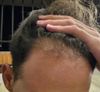
The conversation is about hair loss affecting motivation to work out. The original poster is using dutasteride and minoxidil and is considering a hair transplant.
A user shared their hair regrowth success using microneedling with a dermaroller every 6 days and minoxidil, recommending betadine (povidone-iodine) before microneedling to sterilize the scalp and enhance results. Another user noted the potential risks of iodine toxicity.
PP405 is discussed as a potential adjunct therapy for hair loss, with skepticism about its effectiveness and trial results. Users mention combining it with finasteride and minoxidil for better results, while others debate the root causes of hair loss and the limitations of current treatments.
A user tried a Korean hair loss shampoo and treatment set, noting it improved scalp and hair quality but lacked ingredient details. Other users expressed skepticism about its effectiveness, suggesting it might not significantly impact hair loss.
The user wants to donate plasma to save for a hair transplant but can't take finasteride or dutasteride due to plasma center restrictions. They are considering using minoxidil and biotin instead and are seeking advice on alternative treatments.
The conversation discusses sourcing pyrilutamide from China for hair loss treatment, highlighting its potency compared to other AR antagonists like bicalutamide and RU58841. The user expresses interest in trying pyrilutamide despite mixed results in clinical trials.
People discussed their intense hair loss treatments, including the use of dutasteride, RU58841, minoxidil, tretinoin, essential oils, microneedling, and various topical sprays. Some users reported success with these methods in preventing hair loss and stimulating hair growth.
Ashwagandha is generally considered safe for hair while on Dutasteride, as its effects on testosterone are minimal and it may reduce anxiety. Some users report positive effects on hair thickness and anxiety reduction when using ashwagandha alongside finasteride.
The user has been using oral finasteride and minoxidil for hair loss since October 2024, with noticeable progress, and is considering switching to a new regimen including dutasteride, minoxidil, and biotin. They are seeking advice on the new treatment plan and its potential effects.
The user applies a topical solution containing minoxidil, finasteride, dutasteride, retinoic acid, and hydrocortisone to address scalp inflammation and is considering adding cetirizine to the mix. They are calculating the correct amount of cetirizine to add to their formula and have paused this approach to retry oral minoxidil.
The user updated their hair loss treatment to include daily dutasteride, oral minoxidil, topical dutasteride with minoxidil and tretinoin, and RU58841. Commenters feel the extensive treatment is unnecessary for the user's level of hair loss.
Topical Dutasteride is more effective than topical Finasteride for treating AGA in men, with fewer side effects. Mesotherapy with Dutasteride, administered every 3 months, shows promising results for hair regrowth and maintenance without daily routines or significant side effects.
A 30-year-old male with thinning hair and an itchy, oily scalp found that hydrocortisone cream eliminated dandruff and itching and seemed to thicken his hair. He avoided minoxidil and finasteride due to potential side effects and noted that Nizoral and Head & Shoulders worsened his symptoms.
A 28-year-old male reports progress in hair regrowth using 5mg Minoxidil and 0.5mg Dutasteride, noting improvement in the crown area. Another user shares similar positive results since starting treatment in January.
The user is seeking advice on improving their hairline, currently using dutasteride 0.5mg/day and oral minoxidil 5mg/day for 14 months. They want to avoid a hair transplant and are concerned about thin hair and receding temples.
Fluridil, a non-steroidal anti-androgen approved for alopecia in parts of Europe, is noted for its low side effects but is not commonly discussed. The user is inquiring if anyone prefers it over other anti-androgens like Spiro or RU58841.
The post discusses a hair loss treatment regime using Nizoral, a laser helmet, dermaroller, bentonite clay mask with essential oils, and ketoconazole shampoo. The user avoids finasteride and minoxidil due to concerns about side effects and pet safety.
A user is seeking non-transplant hair treatments in Seoul, such as scalp detox, PRP, and exosomes, before considering a future transplant with Dr. Zarev. They want to explore options that improve hair health without undergoing a transplant immediately.
Dutasteride can lead to increased cholesterol and liver fat. The user is reconsidering its use due to high cholesterol and lipid levels despite a healthy lifestyle.
The conversation is about gathering serum DHT data from individuals taking dutasteride to investigate its efficacy, especially in cases with unexpectedly low DHT reduction. The aim is to explore potential genetic factors affecting drug metabolism.
The user has been using Dutasteride and oral Minoxidil for hair loss but hasn't seen desired results and is considering Advanced PRP with autologous exosomes. Some users suggest these treatments are scams, while others discuss increasing Dutasteride dosage or exploring other options like low-level laser therapy.
A user expressed concern that minoxidil might have poisoned their cat, leading to heart and lung issues, but others suggested it was unlikely due to minimal exposure. Some users recommended switching to oral minoxidil or using protective measures like a bonnet to prevent potential contact with pets.
People are discussing the anticipated release of PP405 phase 2a results, expected by the end of March, with some skepticism about its effectiveness. There is cautious optimism due to past experiences with similar treatments like Breezula, despite concerns about the lack of presentation at the AAD 2026 conference.
A user did not respond to finasteride, dutasteride, and oral minoxidil for hair loss after four years of treatment and is considering scalp micropigmentation (SMP). Other users suggest the hair loss pattern may indicate alopecia areata and recommend seeing a dermatologist.
Some individuals experience hair loss despite using treatments like 2.5 mg dutasteride, finasteride, and minoxidil, suggesting sensitivity to DHT or other factors. Various treatments and lifestyle changes are discussed, but results vary, and some consider hair transplants or other solutions.
The post discusses using 2% ketoconazole shampoo as a competitive androgen receptor antagonist for hair loss, applied for 1.5 hours daily. The user questions its effectiveness and potential benefits compared to finasteride and minoxidil.