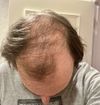
Hair loss progress discussed with 4.5 months on topical fin (0.025% liposomal). User uses rosemary oil for scalp health, and others think there might be some thickening or maintenance.
The user is experiencing scalp irritation and hair thinning, possibly due to stress, with red patches on the face and dry skin. They are considering seeing a dermatologist and have used tea tree and rosemary oil.
People are discussing hair loss treatments, including minoxidil, finasteride, and RU58841, to turn vellus hairs into terminal hairs. Some users also mention using antibiotics, oral minoxidil, dutasteride, DHT blockers, biotin, and natural remedies like onion juice and seeds to improve hair growth.
A user shared a new hair loss treatment protocol including topical dutasteride, latanoprost, caffeine, minoxidil, tretinoin, and triamcinolone acetonide. Others discussed the effectiveness and availability of these treatments, with some suggesting simpler oral alternatives.
The user is experiencing hair loss and has tried natural remedies like hibiscus shampoo and an oil mixture with coconut oil, curry leaves, fenugreek seeds, and castor oil, but saw no lasting improvement. They are advised to consult a dermatologist and consider treatments like finasteride, minoxidil, and Nizoral shampoo.
The user emphasizes hydration, androgen receptors, and a 7-day ejaculation recovery period for appearance enhancement. They suggest Minoxidil, finasteride, and RU58841 for hair loss, along with a diet rich in animal fats, specific exercises, and fasting.
The user shared their hair regrowth progress using a regimen including omega-3, flaxseed, EGCG, green tea, zinc, copper, probiotics, microneedling, topical finasteride, and minoxidil. Other users expressed skepticism about the effectiveness of the regimen, suggesting more proven treatments or considering a hair transplant.
A 24-year-old male with androgenetic alopecia is using a treatment of Dutasteride 0.5 mg, oral Minoxidil 2.5 mg, L-cysteine, and a Ketoconazole/Caffeine/CBD shampoo. He's considering using a dermaroller to improve results, taking biotin and iron vitamins, and quitting nicotine due to its potential link to hair loss.
The conversation discusses Kevin's accurate information on hair loss treatments and highlights Dr. Bloxham's ongoing work with Verteporfin on FUT scars, suggesting people follow Dr. Bloxham's YouTube for updates. It also thanks Haicafe and Melvin from the hair restoration network forum for their contributions.
The conclusion of the conversation is that the user has decided to embrace their hair loss and has buzzed their head. They plan to continue their current hair loss treatments until they run out of stock. They also mention having dandruff and will continue medication for that.
A 26-year-old is experiencing worsening hair thinning despite using dutasteride 0.5 mg and oral minoxidil 5 mg, alongside ketoconazole for seborrheic dermatitis. Users suggest patience, as results may take 12–18 months, and consider increasing the dutasteride dosage or consulting a dermatologist.
A 26-year-old is experiencing hair thinning and has received conflicting diagnoses of androgenetic alopecia and telogen effluvium. They are considering treatments like dutasteride, oral and topical minoxidil, and are unsure whether to start treatment or pursue further diagnosis like a scalp biopsy.
The user experienced hair loss issues after switching from finasteride to dutasteride and back, with stress and seborrheic dermatitis affecting hair quality. They plan to continue finasteride, treat seborrheic dermatitis, and monitor nutrient levels, considering low-dose oral minoxidil if safe.
The conversation is about a hair loss treatment regimen that includes finasteride, dutasteride, oral minoxidil, Dermapen, quercetin, N-acetyl L-cysteine, biotin, millet seed extract, MSM, OPC, green tea extract, high-dose vitamins B1-B12, boron, and silica. The user is seeking advice on additional treatments.
A user's experience using dutasteride, minoxidil, ketoconazole, vitamin D, scalp massage, exercise, and avoiding vaping and 2-in-1 shampoo/conditioner to treat hair loss; they also discussed the side effects of finasteride.
Anti-hair loss shampoos, like the one with rosemary, quillaja, and jaborandi extracts, mainly support scalp health but are not effective for hair regrowth compared to treatments like finasteride or minoxidil. Ketoconazole 2% is noted as the only effective anti-hair loss shampoo, while others are often considered scams.
The post is about a user's hair loss progress using Minoxidil and dutasteride treatments. The conclusion is that the user has seen positive results after 5 months of treatment and has no regrets.
The conversation discusses using a mixture of 4% peppermint oil in jojoba oil to reduce flaking and dandruff caused by 5% Minoxidil lotion. The user reports significant improvement after one application of the oil mixture.
A user experienced hair thinning after taking Accutane and having a B12 deficiency. They are currently using minoxidil and beclomethasone dipropionate lotion for treatment.
The user "OP" shared their hair loss journey, detailing their treatment regimen, which includes topical minoxidil, dutasteride, various vitamins, keto shampoo, derma rolling, and oils. They experienced significant shedding around month 6 but believe it has stopped, with hair regrowth resuming.
The conversation is about a user's positive experience with hair loss treatment after 1.5 months, using topical finasteride, minoxidil, keto shampoo, and minoxidil shampoo, despite the drying effect of keto shampoo and a change in hair texture due to accutane. Responses include congratulations, personal experiences with hair loss treatments, and a mention of accutane's negative impact on hair.
The user shares a hair loss routine involving finasteride, B-Complex vitamins with biotin, pumpkin seed oil, apple cider vinegar, aloe vera, honey water, olive oil, and tea tree oil. They emphasize avoiding shampoo and using natural rinses to maintain scalp health and promote hair growth.
The user experienced severe dandruff and hair loss, trying various treatments including oils, vitamins, and minoxidil. They found success by simply dampening their scalp with water twice a day, which improved their hair's appearance and eliminated psoriasis.
The user saw hair regrowth after inconsistently using treatments like microneedling, peppermint and rosemary oils, ketoconazole shampoo, zinc pyrithione shampoo, and scalp massages, but stopped minoxidil due to heart palpitations. They plan to start a consistent treatment with a minoxidil and finasteride topical solution and will share results in six months.
The post discusses an 11-month hair loss treatment journey using dutasteride, minoxidil, nizoral, and 1.5mm derma rolling. The responses inquire about the frequency of derma rolling and express optimism for further progress.
The user experienced eyebrow hair loss and tried various treatments, including Minoxidil, a Capsaicin-based product, Latanoprost, Bimatoprost, Castor Oil, and Travoprost. Despite initial setbacks and a brutal shedding phase, they eventually saw positive results with Travoprost, encouraging others not to give up on treatments.
Vitamins and minerals like vitamin E, zinc, and iron may aid hair growth, especially in cases of deficiency. Pumpkin seed oil, saw palmetto, horsetail, and AminoMar show some promise for improving hair health and count.
Onion juice is discussed as a potential treatment for hair growth, with many positive user comments. Other treatments mentioned include Minoxidil, finasteride, and RU58841.
The user shared their three-month progress on minoxidil and finasteride for hairline growth, also using nizoral shampoo, dermastamping, and scalp massage. They noticed significant improvement after quitting vaping.
A popular Ayurvedic herb, referred to as the "King of Hair," may be as effective as Minoxidil for hair health. Some users are hesitant to switch from Minoxidil without human studies, while others report positive effects when using the herb alongside Minoxidil.