Search
for
Sort by
Community Join
720-750 / 1000+ resultscommunity Is shedding a good sign for antiandrogens?
Shedding may indicate potential regrowth when using KX-826, similar to Minoxidil and finasteride. Users report improved hair quality and minor side effects like slight headaches.
community Interested about what other adjunct therapies people are trying & whats working?
The conversation discusses alternative hair loss treatments beyond the commonly used Minoxidil and Finasteride. One user is trying diclofenac gel, caffeine + antioxidant serum, finasteride, ketoconazole shampoo, and has stopped using Minoxidil due to ineffectiveness, while another user has adopted lifestyle changes like exercise, diet, stress reduction, and topical caffeine, along with scalp massages and microneedling.
community My eyelashes and eyebrows on oral min
User Crazy-Signature930 shares progress on oral minoxidil for eyelashes and eyebrows. Others comment on the impressive results and ask about side effects and duration of use.
community Inflammation's surprising role in shrinking hair follicles and AGA
Inflammation plays a significant role in hair follicle miniaturization and androgenetic alopecia, with treatments like ketoconazole shampoo, minoxidil, and finasteride being used to address it. Users discuss the benefits of anti-inflammatory treatments and peptides like KPV, alongside traditional hair loss treatments, to improve scalp health and hair quality.
community Protective effects of taurine on human hair follicle grown in vitro. - PubMed
Taurine promotes hair survival and protects hair follicles. Users discuss trying topical taurine for hair growth.
community Hair restoration : Minox + Fin
community What is everyone's assessment of pyrilutamide 1.0% topical as a adjunct treatment?
community Recovered from 9th month brutal shed, now thinking of microneedling to boost the hairline
community Pyrilutamide real life results?
The results of using Pyrilutamide, a hair loss treatment available on the gray market, and other treatments such as Minoxidil, Finasteride and RU58841.
community ecklonia cava?
The conversation discusses using ecklonia cava as a natural alternative to finasteride for hair loss. Users share their experiences and opinions on its effectiveness.
community 7.5 months of oral finasteride 1mg(Dec13). Is this regrowth?
community 1 month after switching to topical Dut
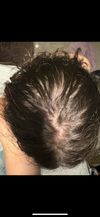
community Trying to identify area of treatment with topical fin
The user is considering using topical finasteride for thinning hair around the middle part, vertex, and crown, and is unsure if the whole scalp is thinning. Another user suggests oral finasteride is more effective than topical, and recommends consulting a dermatologist for proper treatment.
community Is it normal that fin tingles in the mouth?
A user experienced a tingling sensation in their mouth after taking a cut finasteride pill, possibly due to inactive ingredients like mannitol or sodium lauryl sulfate. Tingling is not a common side effect or typical allergy sign, but monitoring for unusual reactions is advised.
community Tressless Pyrilutamide data analytics – Frustrated with lack of data, so I did something about it!
This user has conducted data scraping of 365 Reddit posts on the hairloss drug Pyrilutamide over the last year to analyse efficacy and side effects. The findings, which are available in a 19 page report with graphs, suggest that 22% of Pyrilutamide users experience positive results while 63% experience symptoms. A larger analytics project is proposed for other drugs with enough demand.
community Has anyone tried exosome treatment?
Exosome treatment for hair loss, derived from umbilical cord stem cells, is being considered as an option before a hair transplant. Users discuss the need for ongoing maintenance and share experiences with different exosome sources, including plant-derived options.
community New Study: PP405, developed by Pelage Pharmaceuticals, can reactivate dormant hair follicle stem cells and stimulate natural hair growth by 20%
PP405, developed by Pelage Pharmaceuticals, can reactivate dormant hair follicle stem cells and increase hair growth by 20% in eight weeks, unlike minoxidil or finasteride. However, skepticism remains about its effectiveness and availability, with concerns about funding and the timeline for broader access.
community Potential pp405 info next week at masters of athetics
Discussion on hair loss treatments, focusing on pp405, with skepticism about its effectiveness and concerns about its association with the cosmetic industry. Users also mention treatments like Minoxidil and Finasteride.
community "Unlimited" hair follicles for HT?
Hair loss discussion mentions Verterporfin for scar-free healing and hair follicle regeneration. Human study expected within 2 years.
community 8 month progress (topical min + fin)
community M21 one year progress fin only
A 21-year-old shares their one-year progress using finasteride for hair loss, experiencing initial shedding but eventual regrowth, especially on the crown. They consider switching to dutasteride due to continued hair loss at the front temple and mid-scalp areas.
community We need to create a Discord KX-826 Monotheray group:
The conversation is about starting a Discord group for people using KX-826 as their only treatment for hair loss, excluding those who are not serious or use multiple treatments. Someone agrees with the idea but mentions "GP :3," which is unclear.
community Dr Bekir Bek 852 grafts hair transplant
community Can anyone share their experience using GHK-Cu Copper or AHK-Cu Copper?
The conversation is about experiences with GHK-Cu Copper and AHK-Cu Copper for hair regrowth and thickening. One user expressed skepticism about its effectiveness.
community Is this front of hair from minoxidil?
community Finasteride gives me seb derm. Thoughts on zinc or other options?
A user with diffuse hair loss after taking accutane, which might have triggered genetic predisposition to AGA; their experience taking finasteride and experiencing side effects of increased oil production, increased sex drive, worsening hair texture; they are considering zinc supplementation with finasteride or other treatments such as alfatradiol or spironolactone.
community 10 weeks progress post. Excited with the early results so far, can’t believe it!
The user is excited about their hair regrowth after 10 weeks using oral finasteride, topical minoxidil, ketoconazole, dermarolling, and vitamin D. They've seen significant hair thickening and believe minoxidil and dermarolling are the main contributors to their progress.
community Minoxidilmax vs Morr-F
The user is considering two hair loss treatments: Minoxidilmax Maxogen-x, which contains Minoxidil, Finasteride, Azelaic Acid, ABN Complex, Retinoic Acid, Fluocinolone, and Caffeine, and Morr-F, which contains only Minoxidil and Finasteride. They are asking for others' experiences with these brands.
community For diffuse thinners: Has it been harder to get regrowth on scalp vs hairline?
Diffuse thinning can result in varied regrowth, with some users experiencing better results at the hairline and others at the crown. Treatments mentioned include finasteride, minoxidil (oral and topical), RU58841, microneedling, and dermarolling.