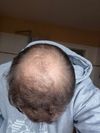
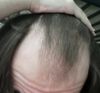
White peony root extract is discussed as a potential treatment for hair loss. The conversation questions if anyone has tried it or researched its use in traditional Chinese medicine.
A user was frustrated with delays in getting finasteride for hair loss, was prescribed minoxidil, and found a vitamin B7 deficiency. They are questioning if the deficiency could cause receded temples and considering finding a new dermatologist.
A female user discusses hair loss possibly caused by wearing a hijab, considering treatments like derma stamping, hair serum, Nizoral shampoo, rosemary/castor oil, and possibly a hair transplant. Others suggest traction alopecia from hijab use and recommend consulting a dermatologist, with treatments like spironolactone and minoxidil.
Injectable GHK-CU and BPC157 were discussed for hair loss, but users did not notice significant hair changes. BPC157 was noted to help with shoulder issues.
A 46-year-old man is using minoxidil, finasteride, and derma rolling for hair regrowth but is unsure of the results and considering a hair transplant. Many suggest he looks good bald and recommend continuing treatment or trying scalp micropigmentation.
Male pattern baldness (MPB) may be an early warning sign for type 2 diabetes due to its association with insulin resistance. Treatments discussed include testosterone therapy and finasteride, which affects hormone levels related to hair loss and insulin sensitivity.
The conversation discusses the tension theory of baldness, suggesting that over-developed masseter muscles may harm hair follicles. Botox injections to relax these muscles reportedly led to an 18% increase in hair count in men with AGA.
Clascoterone 5% solution is discussed as a potential new treatment for hair loss, offering an alternative for those who can't use finasteride or need additional options beyond minoxidil. Concerns about cost, effectiveness, and safety compared to existing treatments like RU58841 and finasteride are highlighted.
The user shared their 9-month progress using topical finasteride and minoxidil, a Capillus laser cap, and a dermastamp for hair loss. They noted improvements and emphasized the importance of consistency for better results.
Treating hair loss with finasteride, dutasteride and minoxidil, as well as micro-needling, potentially using research chemicals such as Pyril and Senzu Beans.
The user is using a routine involving microneedling, Minoxidil with tretinoin, a red light cap, scalp massages, Nizoral shampoo, and essence oil shampoo to address hair loss, with visible progress noted. They are considering topical finasteride or dutasteride if progress slows but are cautious due to past side effects.
The user shared progress pictures showing improved hair growth at the temples after 2.5 months using oral finasteride/dutasteride, ketoconazole shampoo, minoxidil, tretinoin, and dermarolling. The user reported no side effects from the medications and noted inconsistent microneedling.
The conversation discusses the progress of Clascoterone (Breezula) for hair loss treatment, noting that COVID-19 delayed female trials by three months but Phase III trials for males are proceeding with a Special Protocol Assessment filed with the FDA. Users express hope for Breezula as an alternative to existing treatments like finasteride and minoxidil, despite concerns about its potential high cost.
PP405 is discussed as a potential treatment for hair loss, with excitement about its promise but skepticism about its current effectiveness. Users mention combining it with treatments like minoxidil, finasteride, and microneedling, but emphasize it is not a cure.
A breakthrough in hair follicle cultivation using induced pluripotent stem cells (iPSCs) has been achieved, producing large hair follicles suitable for transplantation. Clinical trials for this hair multiplication technology are planned in partnership with Yinguan Biotechnology.
The conversation discusses the effectiveness and safety of hair loss treatments, specifically RU58841 and Pyrilutimide (Pyril), with users sharing that Pyril was no more effective than a placebo and expressing concerns about the safety of RU58841 based on personal experiences and the lack of pharmaceutical interest.
PP405 is a potential hair loss treatment undergoing trials, with discussions on its effectiveness and comparison to existing treatments like finasteride and minoxidil. There is skepticism about its status as a cure, with hopes for future advancements in genetic treatments like CRISPR.
The conversation discusses using a TCA 35% chemical peel on the scalp to potentially improve hair growth by addressing fibrosis and enhancing the effectiveness of topical treatments. The user also mentions trying microneedling and other methods like topical metformin and dutasteride for hair regrowth.
The user experienced hair repigmentation and attributes improvements in hair and overall health to a carnivore diet, Boron, and Selenium supplementation. They stopped using finasteride after 20 years, noticed increased testosterone and libido, and observed hair regrowth with RU58841.
Hair loss treatments, including finasteride and minoxidil, as well as vitamins, supplements, and scalp biopsy. A joke was made about Feline Pattern Baldness in cats.
The user is considering using topical finasteride for thinning hair around the middle part, vertex, and crown, and is unsure if the whole scalp is thinning. Another user suggests oral finasteride is more effective than topical, and recommends consulting a dermatologist for proper treatment.
The conversation is about someone planning to use cb-03-01 for hair loss because they experience side effects with other treatments like finasteride, minoxidil, and RU58841. They have not found progress pictures online and are considering sharing their own experience with cb-03-01, which is expensive.
Scalp massages may help with hair loss, but results require significant time and effort, and benefits stop when massages stop. Some users combine massages with topical minoxidil and finasteride for better results.
The conversation is about comparing the effectiveness of fluridil and clascoterone in preventing hair loss and inquiring about their use as standalone treatments. There is a question about the concentration of the fluridil brand for efficacy.
The conversation is about hair loss treatments, specifically Pyrludimide (KX-826) and Breezula (clascoterone), with the user unable to tolerate finasteride and dutasteride. The user plans to use these treatments alongside minoxidil, considering the efficacy and availability of each option.
Baldness is difficult to cure because current treatments like finasteride, dutasteride, and minoxidil only prevent hair shedding, and new developments are mostly ineffective. Botox shows potential in aiding skin regeneration and hair growth, but maintenance therapy with treatments like dutasteride and minoxidil may still be necessary.
The conversation is about seeking updates on new hair loss treatments, specifically mentioning scube3 and GT20029, with one person mentioning HMI_115 as showing promising results.
Using a combination of micro-needling and exosome injections as a potential treatment for male pattern baldness, which could result in 50% or more regrowth.