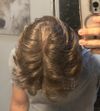
Dermmatch is wind and water proof, but requires more hair to look good. Using both Dermmatch and hair fibers together can provide better coverage and a more natural look.
Yunce Medical, a Chinese company, is developing hair multiplication technology similar to Stemson Therapeutics, with potential for quicker availability due to favorable regulations. Users express skepticism and hope for future advancements in hair loss treatments.
A 31-year-old male shared his 4.5-month progress using finasteride, topical minoxidil, and dutasteride mesotherapy for hair loss, showing significant improvement in crown density and overall hair texture. He reported no side effects and plans to continue the treatment to assess further results.
Eucapil is discussed as a potential hair loss treatment with some believing it to be effective, though its efficacy compared to finasteride is debated. It is considered an anti-androgen treatment, often used alongside other treatments like minoxidil and finasteride, but lacks independent studies to fully support its effectiveness.
Pelage Pharmaceutical raised $120 million to continue research on PP405, a promising hair loss treatment that showed a 20% increase in hair density in 31% of men during a Phase 2a trial. The treatment was well-tolerated, with no systemic absorption, and Phase 3 trials are planned for 2026.
The conversation discusses the effectiveness of a new hair growth serum called HERBACLE, which claims to be the world's first, but lacks reviews and is doubted by users. One user notes that its ingredients are similar to those in The Ordinary's Multi-Peptide Serum for Hair Density.
The conversation discusses hair loss treatments, specifically the progress made with Pyrilutamide over 15 months. One person suggests using oral Minoxidil or Dutasteride, but another mentions experiencing negative side effects from oral Finasteride.
The conversation discusses the tension theory of baldness, suggesting that over-developed masseter muscles may harm hair follicles. Botox injections to relax these muscles reportedly led to an 18% increase in hair count in men with AGA.
Breezula (clascoterone) initially performed better than finasteride for hair loss but then effectiveness decreased almost back to baseline after 6 months, raising questions about its strength.
A 35-year-old is considering Breezula, Pyrilutamide, or topical finasteride/dutasteride to protect against hair loss while on testosterone replacement therapy (TRT). They currently use finasteride, oral minoxidil, and dutasteride but experienced increased hair shedding with TRT.
Pumpkin seed oil is discussed as a potential treatment for hair loss, but the study cited is criticized for using a product with multiple ingredients, making it unclear if pumpkin seed oil is effective. The conversation concludes with skepticism about the study's validity and mentions that pumpkin seeds might help with DHT blocking.
New product Tomorrowlabs HSF targets hair loss through HIF pathway indirectly by removing scalp iron. Minoxidil and Stemoxydine also relate to HIF pathway.
PP405 is criticized for overhyped claims and cherry-picked data, with doubts about its effectiveness compared to minoxidil and finasteride. Many users express skepticism, emphasizing the need for more comprehensive trial results.
Pelage is moving to Phase III clinical trials for PP405, a hair loss treatment, with results to be presented at a medical meeting. Users express skepticism and hope, comparing it to existing treatments like Minoxidil and finasteride, while discussing the potential for new hair growth in previously bald areas.
A 19-year-old male has been using topical finasteride and minoxidil for 8 months with no progress and is considering seeking a second opinion due to potential misdiagnosis. The discussion revolves around whether the hair loss is due to male pattern baldness, alopecia areata, or a vitamin deficiency.
Dutasteride mesotherapy involves micro injections every 3 months to reduce side effects compared to regular finasteride. The discussion focuses on its effectiveness and safety for hair loss treatment.
The user is looking for a PG-free solvent in the UK or EU to make their own pyrilutamide solution for hair loss and is currently using finasteride, considering minoxidil. They hope pyrilutamide will help stabilize their hair loss.
Clascoterone, an acne treatment that blocks DHT, is being developed for scalp use against hair loss. The conversation also mentions Minoxidil, finasteride, and RU58841 as treatments.
The conversation discusses why CB-03-01, a potential hair loss treatment, isn't widely discussed despite evidence of its effectiveness and safety. Some users mention other treatments like melatonin, procianidin b2, and RU58841, debating their effectiveness and safety.
The post and conversation are about the high cost and skepticism surrounding pyrilutamide as a hair loss treatment, with comparisons to minoxidil, finasteride, and RU58841. The original poster defends pyrilutamide's effectiveness and criticizes others for dismissing it without proper understanding.
A 30-year-old woman with androgenetic alopecia is considering bicalutamide to slow hair loss but is concerned about its impact on muscle growth due to its anti-androgen effects. Alternatives suggested include dutasteride, spironolactone, RU58841, and minoxidil, with concerns about bicalutamide's side effects.
Exploring treatment options for male pattern baldness, including minoxidil, finasteride, and RU58841, with a focus on Eucapil, a topical agent. The post also discusses research from various sources about the efficacy of these treatments.
The conversation is about using Biolabshop's RU58841 product, which includes GHK-Cu and melatonin, to improve hair quality and combat hair loss. The user has previously used finasteride, minoxidil, and Anageninc’s RU58841 with success and seeks feedback on the new product, especially from those on anabolic steroids or hormone treatments.
The user is experiencing hair thinning and shedding despite no family history of male pattern baldness. They are considering starting treatments like Minoxidil or finasteride.
Verteporfin treatment shows promise for hair regeneration and reducing scar tissue in hair transplants. Some users plan to try verteporfin with hair transplants, and it may also be combined with PRP in future experiments.
CB-03-01, also known as Breezula, is being considered as an alternative to DHT blockers for hair loss. Users are discussing its effectiveness, potential regrowth, side effects like scalp irritation, and hormonal impacts.
The conversation discusses the lack of public information on the chemical structure of PP405, a hair loss treatment, and the challenges of synthesizing it without a patent. It also explores a patent related to hydrogen-based topical formulations for reducing oxidative stress and inflammation.
The conversation discusses the use of Dutasteride scalp injections (mesotherapy) for hair loss. Users are sharing their experiences and seeking information on its effectiveness.
A user shared a list of natural supplements they tried that did not stop their male pattern baldness (MPB), including vitamin D, biotin, and various oils. The conversation includes skepticism and jokes about one of the methods, injecting jellyfish mucus into testicles, and mixed opinions on the effectiveness of natural treatments.