A user experienced severe scalp itching with MPB and found Nizoral ineffective. A doctor diagnosed seborrheic eczema and prescribed Betacap, which relieved the itching.
A 21-year-old experiencing hair loss and depression is planning to start finasteride treatment and is asking for others' experiences. Another user responds positively, stating that finasteride has helped alleviate their depression caused by hair loss.
VDPHL01 shows faster and stronger hair growth compared to standard minoxidil, with no major side effects reported. Users discuss combining it with other treatments like dutasteride and finasteride for better results, while expressing skepticism about the effectiveness of PP405.
PP405 may induce new hair growth but cannot revive completely dead follicles, and its effectiveness on hairlines is uncertain. It is expected to be available by mid-2028, but users are advised to manage expectations and consider using other treatments like minoxidil and finasteride.
GT20029 and PP405 are discussed as potential alternatives or complements to finasteride for hair loss treatment. GT20029 is entering phase 3 trials, while PP405 is seen as promising for regrowing hair and possibly eliminating the need for other treatments.
A user experienced a painful rash from both liquid and foam minoxidil, suggesting an allergy to minoxidil itself. They are seeking others with similar experiences.
The user cannot tolerate oral finasteride and is considering topical finasteride, minoxidil, microneedling, and RU58841 as alternative treatments for hair loss. They seek advice on whether these options are worth trying.
The conversation is about using vitamin C and Magnesium L-Threonate for hair growth by reducing DHT binding to dermal papilla cells. The original post about vitamin C's pH levels and sebum control was possibly removed by a moderator.
The user's 42 month experience using finasteride for hair loss, their opinion on minoxidil use and the potential of pyrilutamide and another Chinese drug as treatments.
A user is concerned about using Alpicort, which contains Prednisolone and Salicylic Acid, for male pattern baldness. They are unsure if it will help or worsen their condition and are seeking advice.
Anxious_Bee_67's 4 month progress with a hair loss treatment regimen of 1 mg oral finasteride once a day and topical minoxidil twice a day, which has brought "hope" to others who are fighting the Norwood Reaper. Replies include encouragement for further progress and advice on other treatments that can be used in conjunction with the current ones.
Diffuse hair loss is often linked to genetics but can also be due to health issues like thyroid problems and low vitamin or iron levels. Treatments include finasteride, minoxidil, and dutasteride, with some seeing improvements after addressing health issues.
Alfatradiol helps reduce hair shedding and itching, and is effective for mild hair loss. Users combine it with treatments like fluridil, minoxidil, and sometimes consider finasteride.
Bovine colostrum is being discussed for its potential in hair regeneration, with some users noting that oral consumption may not be effective due to stomach acid destroying exosomes. The conversation also touches on ethical concerns about sourcing colostrum.
KX-826 is being discussed for hair loss treatment, with users debating between 0.5% and 0.9% solutions and foam. Some report side effects like headaches, while others see no changes; it blocks androgen receptors without reducing DHT levels.
The user is seeking affordable alternatives for oral finasteride and minoxidil in the UK due to high costs. They have been using these treatments from Sons with positive results.
A 22-year-old male has been using oral finasteride (1.2mg) and oral minoxidil (2.5mg) daily for 3.5 months, along with vitamin D, fish oil, iron, and biotin, and reports significant hair growth without side effects. The user plans to continue the treatment and is considering cutting hair to assess progress more accurately.
The user reported hair regrowth after using 1 mg finasteride daily for 4 months, foam minoxidil twice daily for 6 months, and 5000 mcg biotin daily for 4 months. Commenters are impressed with the results and some are considering starting finasteride after seeing the progress.
The conversation discusses the theory that finasteride-induced erectile dysfunction (ED) is related to blood flow rather than hormonal changes. The user suggests that lowering LDL cholesterol aggressively might improve ED symptoms for those on finasteride.
The conversation discusses GT20029, a compound by Kintor Pharma that degrades androgen receptors and is in trials, with potential as a hair loss cure. Another promising treatment mentioned is an antibody that blocks prolactin and has shown positive results in macaques.
User shares 4-month progress using finasteride, minoxidil, and microneedling for hair loss. Others discuss body hair, hair transplant possibilities, and user's treatment response.
A 21-year-old male is experiencing hair thinning and has undergone PRP treatment while considering finasteride but is concerned about its side effects. A user suggests that PRP is ineffective without finasteride and advises against using biotin.
A user shared their 5-month progress in treating hair loss using HIMs topical finasteride and minoxidil, micro-needling with a 1.5mm needle, and RU-58841. The post includes progress pictures showing improvement from a NW7 hair loss stage.
A phase 3 trial for Breezula (clascoterone solution) to treat male pattern hair loss has been listed, with 726 participants and a completion date of January 2025. Other treatments mentioned include Aneira Pharma's combination of minoxidil and latanoprost, Triple Hair's combination of minoxidil, latanoprost, and finasteride, and a new microneedling and LLLT device called StimuSIL.
Topical finasteride may have higher systemic absorption and lower efficacy when using a Propylene Glycol/Ethanol formulation compared to the hydroxypropyl chitosan (HPCH) formulation. The safety profile of topical finasteride relies heavily on the HPCH formulation, and using standard solutions might lead to different pharmacokinetics.
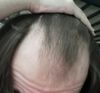
The conversation discusses using P5P (Vitamin B6) supplements to reduce elevated Prolactin levels and concerns about its potential effect on increasing DHT levels. The user is not currently using finasteride or any anti-androgens.
The user is experiencing progressive hair thinning despite using finasteride and dutasteride. A biopsy confirmed male pattern baldness, and minoxidil was suggested as an additional treatment.
The user has been using finasteride for six months to address hair loss and is considering adding minoxidil to improve hair thickness. They are also using microneedling, peppermint oil, saw palmetto, biotin, and vitamin D supplements.
Minoxidil is commonly used for male pattern baldness, but Procapil is considered to have fewer side effects and be more effective. The user seeks information or experiences regarding Procapil.