Search
for
Sort by
Community Join
330-360 / 1000+ resultscommunity Is this hierarchy of topical anti androgens accurate?
User on fin, minox, and ketoconazole seeks to add another topical anti-androgen. Hierarchy of effectiveness: 1. RU55841, 2. Fluridil - Eucapil, 3. CB-03-01 - Breezula, 4. Ketoconazole; alfatradiol suggested as addition.
community Will Pelage include Norwood 7 hair loss in PP405 phase 3 trials to see its true regenerative potential?
Norwood 7 hair loss is often excluded from trials to ensure treatments appear more effective and to reduce costs. Some believe treatments effective for Norwood 5 could work on Norwood 7, but companies prioritize market readiness.
community KX-826 Phase II Results Just Dropped (Male AGA) – Key Takeaways
KX-826 Phase II results show that a 0.5% concentration performs better than 1% for treating male pattern baldness. Concerns about receptor upregulation from long-term DHT antagonism were mentioned.
community can someone help me identify these pls
The user is experiencing diffuse thinning and inflammation despite using 2.5mg dutasteride daily, ciclopirox, and ketoconazole shampoos. They are considering treatments like hydroxychloroquine and JAK inhibitors due to suspected scarring alopecia and have faced challenges in obtaining a scalp biopsy.
community Anyone familiar with Dr. Behnam’s stem cell + prp treatment?
community Clascoterone powder already available?
Clascoterone powder is now available, but it's expensive and not widely discussed due to past ineffective results at higher concentrations. Users are skeptical about its effectiveness and are seeking reliable sources.
community PP405 (Everychem 3HP) Anecdotes - Please assemble and share your story
PP405 (Everychem 3HP) may help with hair regrowth, with mixed user experiences. Users often combine it with minoxidil and finasteride, but there are concerns about its efficacy and side effects.
community GT-20029 should be much more superior than finasteride
GT-20029 is discussed as a potential hair loss treatment, with concerns about its safety and systemic absorption compared to finasteride. Users express skepticism about its effectiveness and safety, noting that it may not surpass existing treatments like finasteride and minoxidil.
community This sub finasteride so much more complicated than it needs to be.
Take 1mg finasteride daily as the standard approach; adjust only if side effects occur. Many users experiment unnecessarily with doses and methods, complicating treatment.
community I built a tracker for every hair loss treatment in clinical development
A user created a tracker for hair loss treatments in clinical development, including compounds like Dermaliq, RU58841, and Pyrilutamide. The tracker updates with new information and allows filtering by conditions like androgenetic alopecia (AGA) and alopecia areata (AA).
community PP405 is a game changer. One for the history books. Era defining moment and Pelage know it
PP405 is considered a potential new treatment for hair loss, compared to finasteride and minoxidil. There is skepticism about its effectiveness in humans, with anticipation for more information from an upcoming conference.
community How many years can we expect PP405 to be on the market
PP405 is expected to be on the market between 2027 and 2030, with phase 3 trials starting in 2026. There is skepticism about its fast-tracking due to its cosmetic nature, and it may appear on the gray market sooner.
community 4 years of fin+min, 6 months of dut+min progress
community Has redensyl, procapil and baicapil worked for anyone?
Exploring treatments for hair loss, such as finasteride, minoxidil, RPB (an unknown acronym), vitamin D levels, and derma rolling.
community Pelage Pharmaceuticals’ PP405 and its Impact on Follicular Regeneration to be Presented at the American Academy of Dermatology (AAD) Annual Meeting 2026 28th march
Pelage Pharmaceuticals' PP405 aims to treat hair loss by reactivating dormant hair follicle stem cells, showing promising results in early trials. The company plans to present their findings at the American Academy of Dermatology Annual Meeting in 2026.
community Topical Prednisolone as hair loss treatment?
A user is concerned about using Alpicort, which contains Prednisolone and Salicylic Acid, for male pattern baldness. They are unsure if it will help or worsen their condition and are seeking advice.
community Is it possible/legal to buy clascoterone in Spain?
The user has tried various hair loss treatments, including topilutamide, alfatradiol, pyrilutamide, and topical spironolactone, but experienced headaches. They are inquiring about the availability and legality of clascoterone in Spain.
community RU-58441 Janoshik test result of Made-In-China Supplier
A user ordered RU58841 from a Chinese supplier, found it to be less than 99% pure, and plans to try a different seller next time. Concerns were raised about impurities, but the user believes they are likely inactive fillers rather than harmful substances.
community PELAGE PHASE 2 TRIALS FOR PP405 - Volunteers Needed
PP405 is a topical gel being tested for hair regrowth in adults with androgenetic alopecia. Volunteers aged 18-55 are needed for a 16-week trial in several US locations.
community Learn the difference between male pattern baldness and diffuse thinning, and see a doctor to diagnose which you have. Otherwise, you may waste money on HIMS 3-in-1 and risk heart or sexual side effects, just cuz a guy w/ probably biotin deficiency thinning got great results here...
Male pattern baldness and diffuse thinning can both be forms of androgenetic alopecia (AGA), and it's important to consult a doctor for proper diagnosis. Treatments like Minoxidil, Finasteride, and biotin are discussed, but their effectiveness varies, and side effects are a concern.
community Has anyone actually bought raw Clascoterone (CB-03-01) from Made-In-China? The prices are tempting, but am I crazy for considering this?
The conversation discusses the potential risks and considerations of purchasing raw Clascoterone powder from Made-In-China to create a DIY topical solution for hair loss. Concerns include fake products, low purity, and contamination, with a request for experiences and advice on reliable suppliers.
community People who suffered from fin sides, what treatment are you doing now?
community TGF-Beta. Good or Bad? Help for treatment investment
TGF-B affects hair growth, both causing stem cell division and death depending on amounts. Amplifica's treatment injects Scube3 to increase TGF-B for hair growth.
community So was the Grey Market Breezula fake all along?
Breezula's effectiveness may depend on the vehicle used for its application, with concerns about the grey market version's formulation. Phase 3 results are promising, but skepticism remains about the grey market product's authenticity and effectiveness.
community Are there any active Group Buys (dischord or other forums) for HMI 115?
Hair loss discussion includes treatments Minoxidil, Finasteride, and RU58841. HMI 115 shows anecdotal success in Phase I trial, users seek group buy for research chemical.
community Thinking about my making own CB-03-01 (Breezula). Thoughts?
The user experienced side effects with both oral and topical finasteride and is considering making their own hair loss treatment using CB-03-01 (Breezula) mixed with minoxidil due to fewer reported side effects. They plan to use a lower concentration than what was used in trials.
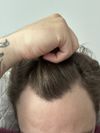
community Norwood scale ? 28m
A 28-year-old is assessing their hair loss on the Norwood scale, considering adding topical minoxidil and dermastamping to their current regimen of oral finasteride and minoxidil. They feel their hair loss is worsening and seek opinions on their condition.
community Shower thought: at least this might be the last year we don't have Phase 2 results.
New hair loss treatments, including Breezula, VDPHL01, and PP405, are nearing Phase 3 trials, offering hope for effective solutions. Current treatments like finasteride and minoxidil remain effective, but early intervention is crucial.
community Binding affinity does not equal potency for anti androgens? Comparing pyrilutimide to cb-03-01
Pyrilutimide and CB-03-01, two treatments for hair loss, have similar clinical trial results despite different binding affinities to androgen receptors. Factors other than binding affinity, like the time a drug stays bound to the receptor, may influence their effectiveness.