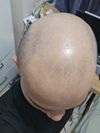
User suggests rotating scalp 180 degrees to address hair loss. Others discuss sanity, ethics, and similar procedures like scalp reduction and hair transplants.
Scientists discovered a potential baldness treatment from hairy moles, which can be injected like Botox. Users discussed the treatment's implications, including its safety and effectiveness.
Hair regrowth treatment involving 3aHSD enzyme shows 6% improvement in 18 weeks. Sulforaphane, L-Menthol, and Dexpanthenol are potential ingredients for new hair loss solution.
PP405 is a new hair loss treatment showing early promise with a 20% hair density increase, but skepticism exists due to past failures of similar treatments like Pyrilutamide, RU58841, and Bimatoprost. Users debate its potential effectiveness, with some hopeful due to Google's involvement, while others urge caution without more evidence.
Exploring hair loss treatments beyond DHT, including Minoxidil, pyruvate, Gt20029 targeting androgen receptors, and vasodilators. Other options like Kx826, adenosine signaling, growth factor topicals, and microneedling are also discussed.
High frequency ultrasonography and HR-MRI can help identify hair shedding causes like inflammation and fibrosis. The conversation discusses the potential of using these technologies to evaluate treatments like Verteporfin for hair regeneration.
The conversation discusses managing seborrheic dermatitis (sebderm) and male pattern baldness (MPB) with treatments like finasteride, coal tar shampoo, Nizoral, and oral minoxidil. Users suggest dietary changes, regular shampooing, and using antifungal products to control sebderm before considering minoxidil.
Treatments used to prevent and treat male pattern baldness, the difficulty in finding a permanent cure for hair loss, and the potential financial motivations of companies not wanting to find a cure.
The conversation is about seeking updates on new hair loss treatments, specifically mentioning scube3 and GT20029, with one person mentioning HMI_115 as showing promising results.
Concerns about the long-term effects of dutasteride and finasteride on fertility, with discussions on cycling these medications to mitigate risks. The conversation highlights skepticism about study methodologies and the importance of weighing treatment risks against potential fertility issues.
Exploring future hair loss treatments, including immunosuppressants for hair transplants and hair cloning, with a focus on leveraging research from other medical fields. Current treatments like finasteride and minoxidil are effective for most, but there's a call for more funding and innovation in the hair loss industry.
The conversation is about finding the best method to lower scalp prolactine, with suggestions like P5P and Melatonin. The user also mentions HMI115 as a potential treatment and seeks feedback from those who have tried these methods.
People often notice and analyze others' hairlines due to their own insecurities about hair loss. Treatments mentioned include finasteride, minoxidil, dutasteride, and red light therapy.
The conversation humorously suggests that the hair loss industry, referred to as "Big Bald," deliberately delays a cure to profit from ongoing treatments like minoxidil, finasteride, and dutasteride. Participants debate whether a cure would be more profitable than current treatments, with some suggesting that the industry prefers continuous treatments for sustained profit.
The conversation is about whether vellus hair should be included in hair fall counts, with data showing daily hair loss. The consensus is that shedding, including vellus hair, is normal and within physiological limits.
Male pattern baldness (MPB) may be influenced by androgen receptors in scalp hair follicles and potentially poor blood flow. Transplanted hair is not immune to DHT, and factors like inflammation and scalp tension might also contribute to hair loss.
A 29-year-old considering hair loss treatment received advice to explore a theory on androgenic/anabolic balance and was encouraged to read a beginner's guide for better recovery chances. The user expressed gratitude and willingness to try the suggested approach.
The conversation is about baricitinib, a medicine that can help with hair loss, and why it isn't more popular or widely discussed. No specific experiences with the treatment were shared.
The conversation discusses severe hair shedding and thinning, with the original poster using finasteride, oral minoxidil, and other supplements without improvement. The discussion highlights the possibility of telogen effluvium and the importance of addressing potential underlying health issues, such as stress and gut health, rather than assuming diffuse unpatterned alopecia (DUPA).
A user discusses their habit of analyzing others' hair due to their own hair thinning at 18. Another user mentions starting finasteride in 2010 and still having a full head of hair.
Hair systems are effective for hair loss, offering benefits over treatments like finasteride. Personal choice and confidence in appearance are emphasized.
The user is considering starting minoxidil and finasteride for hair loss at Norwood 2 or 2.5. Another user suggests consulting a dermatologist and possibly using finasteride to prevent progression and minoxidil for regrowth, with dutasteride as an alternative.
The conversation discusses hair loss treatments, specifically mentioning Minoxidil, finasteride, RU58841, and TB-500 Thymosin Beta-4. It critiques the credibility of biohacking claims.
Han Bio plans to start clinical trials for a new hair multiplication technology this year, which could significantly reduce the cost and time of hair transplantation. The technology uses a single hair strand to cultivate enough cells for 30,000 hair strands.
The conversation discusses skepticism and mixed opinions about a hair loss theory, mentioning treatments like Minoxidil, finasteride, RU58841, and Procyanidin B2. There is criticism of a content creator named HairCafe and the difficulty in obtaining effective sulforaphane supplements.
The conversation discusses using Bimatoprost for eyebrow regrowth and its potential use on the hairline, with concerns about cost and side effects. Alternatives like topical Minoxidil are mentioned, but the user is worried about aging and acne.
The conversation discusses the difference in attitudes toward hair loss treatments, with a focus on lifestyle changes and hair transplant surgery in Hong Kong, as opposed to treatments like minoxidil, finasteride, and microneedling discussed on 'tresless'. The user is now using finasteride and minoxidil and considering microneedling.
The conversation discusses the potential of a new hair loss drug, CB-03-01, with users sharing their experiences and seeking advice on dosages and application methods. One user mentions using topical finasteride, minoxidil, dermarolling, and a clean diet for hair maintenance but is interested in CB-03-01 due to side effects from finasteride.