Search
for
Sort by
Community Join
240-270 / 1000+ resultscommunity Anyone have experience with natural DHT blockers?
The conversation is about using natural DHT blockers like pumpkin seed oil and saw palmetto extract for hair loss. The user has been using minoxidil, derma rolling, vitamin D, and biotin but is considering finasteride next.
community Minoxidil Sandalore Procapil on ebay, link below. What do you think?
The conversation discusses a hair regrowth treatment containing Minoxidil, Procapil, Sandalore, and caffeine. The focus is on evaluating the effectiveness of this product available on eBay.
community Is this product a good add on to RU? Im desperate for regrowth and cant use Fin.
The user is seeking advice on adding CB 03-01 to their hair loss treatment, which includes RU58841, Fluridil, Minoxidil, and Pantostin, but cannot use finasteride.
community Approach: starting with dut then came om finestride
The user initially used dutasteride, minoxidil, and vitamins, then switched to finasteride but experienced side effects and hair loss. They found better results with a natural supplement containing stinging nettle and beta-sitosterol, reporting thicker hair without side effects.
community Anyone who’s experimented with 2-deoxy-D-ribose?
Minoxidil, finasteride, and RU58841 are discussed as treatments for hair loss. User feedback suggests 2-deoxy-D-ribose is ineffective.
community Beneficial supplement (my experience)
The user shares their experience with hair loss treatments, specifically finasteride, and discusses the side effects like lowered libido and motivation. They recommend trying tyrosine to counter these effects, noting it improved their libido and energy levels.
community Stemoxydine carrier for finasteride
User wants to mix finasteride into stemoxydine instead of minoxidil. Seeks stemoxydine brand recommendations for mixing in the UK.
community Pumpkin Seed Oil Orally: Safer than Fin with promising results?
community BPC-157 and Angiogenesis. Bro-Science-Execution-Plan
BPC-157 may promote hair growth by increasing angiogenesis, similar to how Minoxidil works, though no direct research confirms this yet. Users report combining BPC-157 with Minoxidil and finasteride for better results, but concerns about long-term safety exist.
community Cell senescence-targeted treatment for hair loss, has anyone tried any products/enzymes etc. that use this theory
DHT causes hair loss by driving cells into senescence, and a polyphenol in black chokeberry may reverse this. A product using this theory is being considered for use alongside finasteride, minoxidil, and microneedling.
community Making minoxidil + azelaic acid type recipes?
The conversation is about making a hair loss treatment combining minoxidil with azelaic acid, retinol, and caffeine, similar to the product Xandrox. The user has tried Xandrox but switched to Kirkland minoxidil for cost reasons and is seeking advice on creating a similar mixture.
community Creatine paired with finasteride
community Rosemary oil, peppermint oil, mucuna pruriens - two weeks in
A user who is trying alternative treatments, such as mucuna pruriens dissolved in water/alcohol and a blend of jojoba oil, rosemary oil, and peppermint oil, for hair loss. Other users have shared anecdotal evidence, discussed the potential effectiveness of certain treatments, and questioned the time sensitivity of experimenting with new treatments.
community This Cheapie Amazon Minoxidil Has Worked Wonders For Me
A user switched from Kirkland minoxidil to a cheaper Amazon brand called Adellina, which includes Biotin, Ginseng extract, and Collagen, and saw significant hair growth within a week. They also transitioned from oral to topical finasteride after achieving their hair growth goals.
community So what other supplements should you take alongside finasteride.
The conversation discusses using finasteride for hair loss and considers additional supplements like vitamin D3, melatonin, zinc, biotin, and minoxidil. There is debate over zinc's effectiveness, with some suggesting it may not be beneficial for hair loss.
community pyrilutamide solution progress log
A 28 year old using a hair loss prevention protocol to restore thinning hair, which includes finasteride, dutasteride, minoxidil, stemoxydine, alopecin, nizoral shampoo and microneedling; the user is now adding pyrilutamide solution to the regimen with the hope of improving their results. RU58841 was also ordered but not yet used.
community New & Improved Hair Growth Stack for Maximum Results
A user shared a hair growth stack using minoxidil sulfate, valproic acid, bimatoprost, blue copper peptide, and other ingredients, emphasizing a gel-based formula for better skin tolerance. Another user suggested adding a 5-alpha-reductase inhibitor like finasteride or dutasteride for more effective long-term results.
community Anyone have an opinion on this: Promotion of Hair Growth by Rosmarinus officinalis Leaf Extract. They aimed to find out if Rosemary Oil is able to inhibit activity of 5α-Reductase.
Rosemary Oil may inhibit the activity of 5α-Reductase, potentially promoting hair growth. Specific treatments discussed include Minoxidil, Finasteride, and RU58841.
community is this hyper responding? oral fin and min combi pill
A 42-year-old experienced significant hair regrowth after 12 weeks on an oral combination of finasteride (1 mg) and minoxidil (2.5 mg), with noticeable improvements and no side effects. The user is considering continuing the treatment for a year due to the unexpected positive results.
community what are the best multivitamins for hairloss?
The conversation discusses which vitamins to take alongside 0.5mg finasteride for hair loss, with suggestions including a multivitamin, iron, zinc, B12, vitamin D, Nutrafol, collagen, vitamin C, saw palmetto, and magnesium. Nutrafol is noted for its benefits but also criticized for containing too much biotin.
community CB-03-01: I need help
The user stopped using finasteride and RU58841 and is considering CB-03-01 for androgenic alopecia but is concerned about the cost and effectiveness, especially at a lower dose than in clinical trials. They are also using minoxidil, micro-needling, and nizoral shampoo but are unsure about the correct application method for CB-03-01.
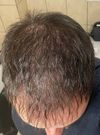
community Any experiences with fin/dut alternatives?
The user is exploring alternatives to finasteride and dutasteride due to concerns about side effects, and is using rosemary and jojoba oil, ketoconazole, minoxidil, microneedling, multi-peptide serum, saw palmetto, and stinging nettle for hair loss. They are also considering CB 03 01 and spironolactone.
community Turkey? Fin? Min? Fin+Min? Biotin? Keto? Saw? Dut? Nut?
The conversation humorously discusses various unconventional and satirical hair loss treatments, including Minoxidil, RU58841, dutasteride, and microneedling. It also mentions bizarre suggestions like topical sharpie, spray paint, and Nutella.
community CB-03-01 users come forward!
The conversation discusses the potential of a new hair loss drug, CB-03-01, with users sharing their experiences and seeking advice on dosages and application methods. One user mentions using topical finasteride, minoxidil, dermarolling, and a clean diet for hair maintenance but is interested in CB-03-01 due to side effects from finasteride.
community Best supplements whilst using fin?
For hair loss, recommendations include using finasteride along with supplements like saw palmetto and zinc. Other treatments mentioned are Minoxidil and RU58841.
community Alternative to minoxidil that's not bad for the heart
A 25-year-old man with mild hair loss is using a topical finasteride treatment, biotin and ajuga reptans supplements, ketoconazole shampoo, and microneedling for hair growth. Due to a heart condition, he can't use minoxidil and is seeking alternative hair growth treatments, considering both medicinal and natural remedies like rosemary oil.
community Fucking Broccoli! Is this where it's at?
The user has been using finasteride and minoxidil for hair regrowth, with positive results, and recently added daily broccoli consumption, noticing improved hair thickness. Another user suggests that leg exercise, not broccoli, might be contributing to the hair improvement.
community Adding ru58841 powder into minoxidil bottle ? Is it a thing ?
Adding RU58841 powder to Minoxidil solution for hair loss treatment. Users recommend Actifolic as a source for RU58841 powder.
community Bee venom better than minoxidil?
Bee venom at 0.001% concentration was more effective than 2% minoxidil in promoting hair growth in mice, possibly due to increased growth factors and reduced inflammation. Caution is advised due to potential allergic reactions and the reliance on animal data.