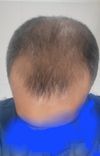
The user is seeking alternative hair loss treatments due to side effects from finasteride and minoxidil. They are inquiring about the availability of gt20029 from u-lab.
Kintor edited their Amazon page, removing claims that KX-826 provides "real" visible results from clinical experiments. The discussion includes treatments like Minoxidil, finasteride, and RU58841.
The conversation discusses using topical dutasteride from minoxidilmax for hair loss and the possibility of crowdfunding for DHT blood tests to check if the treatment goes systemic. The user plans to post before and after pictures.
Progesterone, hydrocortisone butyrate, and estrone base are discussed as treatments for hair loss. Topical progesterone and dutasteride are suggested to potentially reverse androgenic alopecia.
KY19382, a promising compound for hair loss, is not widely discussed or used. One user is currently testing it and plans to share results in a few weeks.
The post discusses the completion of the HMI-115 Australian Phase 1 Trial for hair loss treatment. The user speculates about the potential early release of the trial results.
PP405 is a promising new treatment for hair loss that activates dormant stem cells in hair follicles, potentially bypassing the effects of DHT. It is currently in phase 2 trials and could be available between 2027 and 2030, but it is not considered a definitive cure.
The user shared their positive 5-month results using finasteride, minoxidil, derma rolling, and supplements like biotin, zinc, iron, and vitamin C. They provided before and after photos and mentioned applying minoxidil even when derma rolling.
The user experienced significant hair regrowth using finasteride and minoxidil. They plan to switch to dutasteride for its potency after confirming their body's tolerance to DHT blockers.
B-complex vitamins may improve hair appearance but have limited impact on hair loss. Some users also use minoxidil and finasteride for hair loss treatment.
The conversation discusses a user's experiment of "burning the scalp" to treat hair loss, with mixed opinions on its effectiveness. Some suggest returning to proven treatments like finasteride and minoxidil, while others note slight improvements in hair density.
The user has been using MinoxidilMax Latanoprost 0.01% and noticed an increase in hair density after years of stability on finasteride and minoxidil. They are seeking help to find a higher dosage of Latanoprost or a reliable source to purchase the powder to make their own, without a prescription or high cost.
PP405 is discussed as a potential hair loss treatment, but its effectiveness and safety are uncertain. Some users express skepticism, while others are hopeful, comparing it to existing treatments like Minoxidil and Finasteride.
The conversation discusses a clinical trial for Setipiprant in the US, starting June 29th, with eligibility excluding recent users of minoxidil or finasteride. It encourages informed decision-making before signing up.
The user is using 1mg oral finasteride, 1.25mg oral minoxidil nightly, and ketoconazole shampoo weekly for hair loss, reporting no side effects. They self-prescribed after inconsistent use of topical minoxidil, using Lonitab from Intas pharmaceutical.
Rating treatments for hair loss, with the help of GPT-4, according to efficacy, evidence and tolerability; a combination of chemicals from research papers, custom compounds, and some suggestions from other users were included.
The conversation is about managing side effects of finasteride for hair loss, with users discussing splitting 1mg pills into 0.5mg doses to reduce fatigue and other side effects. Some users experienced initial side effects like fatigue and heart palpitations, which improved over time or with dose adjustments.
A 16-year-old started using ketoconazole 2% and redensyl for hair loss, as minoxidil and finasteride are not recommended until age 18. They are seeking feedback on whether the treatment is effective or maintaining their hair.
The conversation is about the lack of discussion on Low-level laser light therapy (LLLT) laser caps for hair loss. One user questions their effectiveness, and another asserts they don't work.
The conversation is about the importance of acting quickly against hair loss. The user shares their experience with androgenic alopecia and mentions using finasteride without improvement.
Comparing the effectiveness of RU58841, Pyrilutamide and CB-03-01 as treatments for hair loss, with people discussing different aspects such as binding affinity, time of inhibition, safety data and cost.
Hair follicle stem cells remain in bald individuals, but progenitor cells do not, raising questions about hair regrowth claims by Pelage. PP405 is discussed as a potential treatment, with skepticism about its effectiveness compared to existing treatments like Minoxidil and Finasteride.
KX-826 is undergoing Phase III trials in China as a potential treatment for male pattern baldness, with some users considering it as an alternative or addition to finasteride and dutasteride. Opinions on its effectiveness vary, with some users reporting positive results and others finding it expensive and ineffective.
The user is experiencing diffuse thinning and inflammation despite using 2.5mg dutasteride daily, ciclopirox, and ketoconazole shampoos. They are considering treatments like hydroxychloroquine and JAK inhibitors due to suspected scarring alopecia and have faced challenges in obtaining a scalp biopsy.
The user experienced noticeable hairline regrowth after starting finasteride for crown hair loss, despite scalp irritation from topical minoxidil. They are impatient for crown results.
The user is experiencing progress in hair growth using 0.5mg Finasteride, 5mg Minoxidil, and 1mg Biotin daily but is also developing gynecomastia. They plan to continue the treatment for six months unless the side effects worsen.
The conversation is about someone planning to start finasteride for hair loss and wanting to interpret pre-treatment blood panels to assess the risk of side effects like gynecomastia. They list various tests to measure hormone levels and other health indicators.
ET-02, a new hair loss treatment, shows promising results with a 6-fold increase in hair count, potentially outperforming minoxidil by activating stem cells in hair follicles. Further trials are ongoing to confirm its efficacy and safety, with potential market release in the future.