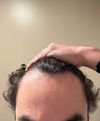
The conversation is about using micro needling and PTD-DBM for hair loss treatment. The user applies PTD-DBM drops on weekdays and performs micro needling weekly.
The conversation is about hair loss treatments, including minoxidil, finasteride, dutasteride, tretinoin, stemoxydine, adenosine, castor oil, baicalin, and bimatoprost. The user shares their nightly and morning routines and discusses the role of DHT in hair loss.
Follicum discovered that their drug FOL-005 increased hair count by 12 hairs per cm2 in patients with less than 255 hairs per cm2 and is planning a phase 2b trial. They are currently fundraising for the trial, and the drug may also be effective for women.
The conversation is about a user trying a 0.2% Alfatrafiol treatment for hair loss, combined with Kx826, Minoxidil, microneedling, and ketoconazole. The user reports reduced itching and discusses sourcing the treatment.
The user is exploring hair loss treatments, including Patented Growth Factors (PGF) and a serum with Copper Peptide, Ceramides, Amino Acids, and Caffeine, while expressing concerns about the cost and effectiveness of PGF. They are also considering starting finasteride due to doubts about PGF's long-term viability and are seeking experiences from others who have used these treatments alongside antidepressants.
A Swiss product called Redensyl, which is supposed to target hair follicle stem cells and has recently been marketed in Europe. The post inquires if anyone has had any experience with the product.
The user received a Fagron TrichoTest indicating that Finasteride, Dutasteride, and Minoxidil are not effective for them, recommending Latanoprost, Spironolactone, IGrantine-F1 TM, and Trichoxidil instead. Other users expressed skepticism about the test's validity and suggested sticking with proven treatments like Finasteride and Dutasteride.
The conversation is about a user preparing to join the ABS-201 clinical trial for hair loss treatment, which involves a prolactin inhibitor. The user plans to update others on their progress if enrolled.
Alfatradiol is considered a mild treatment for hair loss, often used alongside other treatments like finasteride, minoxidil, and dutasteride. Users report it helps maintain hair but is not effective for regrowth on its own.
A 33-year-old man experienced diffuse thinning and hair shedding due to sleep deprivation and low testosterone. After starting hCG treatment, he noticed hair regrowth on his temples.
The user is seeking advice for the best topical treatment to combat their ongoing hair loss, despite already using oral dutasteride, RU-58841, and minoxidil. They are considering adding CB-03-01 or topical Spiro to their regimen to lower testosterone levels at the follicles.
A 24-year-old shared three months of progress using dutasteride, minoxidil, and biotin for hair loss. The post includes progress pictures and discusses the effectiveness of these treatments.
A user from Iran reports hair growth in bald spots after using a domestic tonic containing Anageline, Trichogen, Aminexil, Caffeine, Saw Palmetto, and B vitamins, alongside Finasteride, but without Minoxidil. They prefer the tonic over Minoxidil as it doesn't make their hair greasy or cause hair fall.
A peptide-based delivery system for finasteride shows promise in reducing systemic side effects while maintaining hair growth effectiveness. Combining this with other treatments like minoxidil and RU58841 could enhance results with lower systemic absorption.
The conversation discusses the difficulty of applying tretinoin 0.025% cream on the scalp and considers switching to a gel for easier application. It also mentions that a liquid solution, ideally combined with minoxidil, may be more effective for hair treatment.
The conversation humorously discusses hair loss treatments, mentioning Minoxidil, finasteride, and RU58841. It jokingly suggests the creation of a new chemical called RU99999.
The user experienced hair thinning from chromium and alpha lipoic acid supplements, which stopped after discontinuing them. Someone mentioned this could be telogen effluvium, a temporary condition.
The conversation is about using Vitamin B5, B6, and Biotin for hair health, with a focus on whether to take these supplements separately when using topical finasteride products. One user dismisses the effectiveness of multivitamins.
Clascoterone (Breezula) shows promising hair growth results, but skepticism remains due to past disappointments with new treatments. It may be a good alternative for those who can't tolerate finasteride or dutasteride, and can potentially be combined with them and minoxidil for better results.
Sons are offering free Biotin capsules, Thickening Clay, or Conditioner for hair care testing to UK men. Interested individuals can apply to receive these products without purchase.
The conversation discusses disappointment in Verteporfin for hair loss treatment, with a mention of an upcoming trial by Dr. Bisanga. No specific treatments were confirmed as used by the original poster.
Sons offers free Biotin capsules, Thickening Clay, or Conditioner to UK men for hair care testing. Interested individuals can apply online to receive these products.
Finasteride is effective for DHT/AR-driven hair loss but not for chromosome 20-driven cases, where treatments like minoxidil, prostaglandin analogs, and low-level laser therapy may be more beneficial. Genetic testing can help determine the underlying cause of hair loss to tailor treatment effectively.
Tretinoin combined with minoxidil is effective for hair loss and can be used once daily. The user seeks a compounding pharmacy to mix these without finasteride.
A quercetin-encapsulated and polydopamine-integrated nanosystem (PDA@QLipo) shows promise for treating androgenetic alopecia by reshaping the perifollicular microenvironment, outperforming minoxidil in hair regeneration. The nanosystem promotes cell proliferation, hair follicle renewal, and recovery by scavenging reactive oxygen species and enhancing neovascularity.
Kintor Pyrilutamide treatment, a potential hair loss treatment that may become available to the public soon. People have been experimenting with using it in topical form, with mixed results and no reported side effects.
Hair loss discussion includes Amplifica, a new treatment by Dr. Rassman and Dr. Plikus using molecules from hairy moles. No progress updates mentioned.