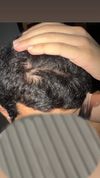
The conversation discusses the effects of Pyrilutamide on hair growth after two months, with one person noting that while new hair regrowth isn't apparent, existing hair appears longer and thicker.
PCOS female visited doctor for hair loss concerns, prescribed spironolactone and minox 5%. Doctor advised against finasteride or dutasteride, user considering self-medication with dutasteride.
The conversation is about experiences with Dutasteride Mesotherapy and its symptoms compared to oral dutasteride. Users discuss the effectiveness and side effects of this treatment for hair loss.
The user has been using finasteride and minoxidil, then switched to dutasteride and minoxidil for six months without significant results, noticing thinning after increasing creatine dosage. They plan to consult a dermatologist to explore potential causes beyond androgenetic alopecia.
Pyrilutamide phase 3 results showed little to no significant hair regrowth, but may be sufficient for maintaining current hair density. The user is unsure due to lack of recent discussions on pyrilutamide.
Kintor's Pyrilutamide (KX-826) showed hair growth in Chinese Phase III trials but did not significantly outperform placebo. The treatment was safe with no major adverse reactions reported.
The user has been using pyrilutamide 0.5% for over 7 weeks, alongside dutasteride, and noticed some hair improvement, particularly at the temples. They plan to continue and possibly try a 1% solution, with no shedding or side effects reported.
A 25-year-old switched from finasteride to dutasteride, experiencing significant hair regrowth and improved hair quality after 6 months, taking it three times a week. The user stopped finasteride entirely, citing dutasteride's longer half-life as more effective.
Monthly microneedling combined with low-dose topical dutasteride shows promising results for hair density and thickness with minimal side effects, especially in the frontal area. Despite its effectiveness, it is not widely discussed or used due to availability and cost concerns.
The user is using dutasteride, estradiol cypionate, microneedling, oral minoxidil, and plans to add ketoconazole for hair regrowth. They are questioning if the improvement is due to actual regrowth or just better photo angles.
The user reported early stage diffuse hair thinning and increased DHT levels after 4 weeks on Finasteride and 8 weeks on Finasteride plus 4 weeks on Dutasteride, despite the medications being authentic and stored properly. They are considering increasing their Dutasteride dosage due to the lack of side effects and are unsure if the treatment is helping their hair.
The user switched from finasteride to dutasteride for hair loss treatment, also using topical minoxidil, micro needling, keto shampoo, and PRP sessions. They've seen improvements, with reduced hair shedding and new hair growth, especially at the hairline.
A 19-year-old is using oral dutasteride, topical minoxidil, and dermastamping to address hair loss and enhance facial hair growth, experiencing minimal side effects and increased body hair. They report positive results in hairline thickness and temple closure.
The GT20029 tincture, a topical androgen receptor degrader, showed significant hair growth and good safety in a China Phase II trial for male androgenetic alopecia (AGA), with the 1% dose twice weekly identified as optimal. The company plans to initiate Phase III trials in China and Phase II in the U.S., and the treatment also shows promise for acne.
The user had a successful hair transplant with 4,000 grafts and uses 0.5 mg oral dutasteride and topical minoxidil to maintain results. They report minimal side effects and are pleased with the outcome.
The conversation discusses concerns that Anagenic's version of GT20029 might not be as effective or safe as Kintor's, with comparisons to issues faced by pyrilutamide. The chemical structure of the drug has been published.
The conversation discusses the comparison of Pyrilutamide Phase II US trial results with 1 mg finasteride for hair loss treatment. It mentions that the total hair count increase in the US trial was not as good as the China trial.
Taking dutasteride with a meal containing fat may improve absorption, but consistency in routine is more important than timing. Minor variations in absorption won't significantly affect efficacy due to dutasteride's long half-life.
The user switched from finasteride to dutasteride and noticed some hair density improvement after a year, despite initial shedding. Their regimen includes dutasteride, oral and topical minoxidil, Nizoral shampoo, and biotin with vitamin D.
The user has been experiencing prolonged hair shedding despite using Dutasteride, Minoxidil, and topical Finasteride, with blood tests showing high free testosterone and low SHBG. Suggestions include adjusting Minoxidil dosage, considering topical anti-androgens like RU58841, and addressing metabolic factors to increase SHBG.
A user discusses making DIY dutasteride capsules from powder bought from China, using a mix of MCT oil and propylene glycol. Others warn about the risks of incorrect dosing, potential degradation, and the possibility of receiving fake products.
The user has been using a hair loss treatment regimen including RU58841, minoxidil, and dutasteride, but still experiences hairline recession and fatigue despite high testosterone levels. They are considering adjusting their dutasteride dosage due to concerns about libido and energy levels.
A 23-year-old is considering finasteride for hair loss but is concerned about worsening pre-existing mild gynecomastia. They plan to start with a low dose and monitor symptoms, seeking advice from others with similar experiences.
The user aims to achieve a hypertrichosis look and has used topical Minoxidil for 20 years, now trying oral Minoxidil in a low dose. They seek alternatives to Minoxidil to avoid side effects.
A 29-year-old male on 1 mg Finasteride for 3 months has experienced a significant increase in testosterone and estradiol levels, with no major side effects except slightly oilier skin and increased emotional sensitivity. The user is concerned about these hormonal changes and seeks advice, as their general practitioner is not knowledgeable about the issue.
Dutasteride, at 1 mg daily, was used for hair regrowth, with initial shedding and side effects like watery semen and increased libido. The user previously tried finasteride and minoxidil but switched to dutasteride for stronger, sustained results.
The conversation is about gathering serum DHT data from individuals taking dutasteride to investigate its efficacy, especially in cases with unexpectedly low DHT reduction. The aim is to explore potential genetic factors affecting drug metabolism.
The user is experiencing diffuse thinning and inflammation despite using 2.5mg dutasteride daily, ciclopirox, and ketoconazole shampoos. They are considering treatments like hydroxychloroquine and JAK inhibitors due to suspected scarring alopecia and have faced challenges in obtaining a scalp biopsy.
The user diagnosed with DUPA tried treatments like dutasteride, finasteride, RU58841, and minoxidil without success and is considering a hair system. They hope for a future cure, possibly with PP405, and others suggest options like scalp biopsy and SMP.
New potential hair loss treatment uses molecules from hairy moles to stimulate follicle growth. Topical solution requires less frequent application, like Botox injections a few times per year.