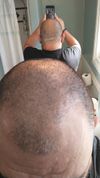
Minoxidil, PRP, low-level light therapy, stem cell therapy, mesotherapy, Acell, and microneedling are discussed as treatments for thickening fine hairs in NW5 hair loss sufferers. A hair transplant may be necessary for significant improvement.
The conversation is about skepticism regarding new hair loss treatments until they are FDA approved. People have been joking about treatments being 5-7 years away for decades.
The user, Salty-Peace-577, shared their 5-month update on using 0.5mg oral finasteride and 2.5mg oral minoxidil for hair loss. They experienced significant hair growth, particularly in their eyebrows, and shared their regimen and tips for hair growth. Some users in the conversation also discussed the side effects they experienced with different dosages of the medications.
The user is seeking advice on effectively applying a liposomal solution of Minoxidil and Finasteride for hair loss, specifically targeting the roots without wasting the product. They find it challenging to use only 1 ml to cover thinning areas on the front and crown.
A European individual planning to go to China is seeking information on how to participate in HMI-115 trials for Androgenetic Alopecia. They've tried contacting Mrs. Yang and Mr. Wang for assistance but haven't received a response.
The user is experiencing a greasy and dandruff-prone scalp from using RU58841 with glycerin and is seeking alternative carriers for seborrheic dermatitis. They are also using dutasteride 0.5mg.
The conversation discusses the potential of a new hair loss treatment, GT20029, which may prevent hair loss by destroying androgen receptors on the scalp. Users express hope for the treatment's success and speculate on its usage routine, effectiveness, and possible side effects.
Pelage Pharmaceuticals announced positive Phase 2a trial results for PP405 in hair loss therapy. The conversation discusses the delay in publishing full results and the need for further trials and approvals.
The conversation discusses potential future hair loss treatments, including SCUBE3, hair follicle cloning, and GT20029, with mentions of past disappointments like CosmeRNA and hopes for treatments like Verteporfin for infinite donor hair.
The conversation discusses using peptides BPC-157 and TB-500, combined with microneedling, to potentially enhance hair regrowth. The user plans to try BPC-157 due to its lower cost and reports of hair growth, despite limited human trials and concerns about side effects from other treatments like minoxidil and finasteride.
The user reports significant hair regrowth after 90 days using oral finasteride, minoxidil, and biotin. Another user comments on the impressive progress and predicts even thicker hair in a year.
A 26-year-old male experienced significant hair regrowth using a 4-in-1 topical treatment from Hims, which includes minoxidil, finasteride, ketoconazole, and biotin, over four months. The user reported increased body and beard hair, skin changes, and no negative sexual side effects, while others noted the rapid and impressive results as atypical.
Verteporfin is being explored for its potential to improve hair transplant outcomes by reducing scarring and increasing donor hair follicles. There is skepticism about the results, with some claiming misleading presentation of evidence.
The conversation discusses hair loss treatments, specifically mentioning Minoxidil, finasteride, and RU58841. It also references Epibiotech's hair multiplication and cell therapy as potential solutions.
People are discussing making their own PP405 for hair loss treatment using JLX069 and DMSO. There is skepticism about the safety and effectiveness of this homemade solution, with some users expressing concerns about potential risks.
The conversation discusses hair regrowth progress after 2.5 months using pyrilutamide and minoxidil. Participants note visible improvement in a short time.
Lichen Planopilaris (LPP), a form of permanent hair loss, which can be mistaken for seborrheic dermatitis and is characterized by scalp itching, burning, redness, and dandruff. Treatment options discussed include steroidal creams, finasteride, minoxidil, and RU58841.
Mixing RU58841 with cetosomal minoxidil is discussed due to scalp irritation from ethanol PG vehicles. A mixture of the two turned bright pink when left to dry.
The user experienced increased hair density after starting 1mg finasteride in February and 2.5mg oral minoxidil two months ago, along with 10mg biotin daily. They initially used topical minoxidil but switched to oral due to application difficulties and have seen improvements without significant side effects.
BlueMagic Clinic is praised for communication and follow-up, while Smile Hair Clinic is noted for consistent results and visible doctors. Both clinics have mixed reviews, with some users advising against them due to concerns about quality and aftercare.
A user experienced reduced stress and improved hair appearance after getting a buzzcut while using finasteride, minoxidil, and microneedling. The user feels the haircut and treatments may have improved hair quality and filled in patchy areas.
Topical melatonin may help reduce hair loss and increase hair thickness in people with androgenetic alopecia (AGA), with some studies showing positive results. It can be mixed with minoxidil for application, and its effectiveness might be enhanced when used with micro-needling, but results may vary among individuals.
A user is seeking advice on purchasing RU58841 from Biolab Shop in Poland and is looking for trustworthy sources that deliver to Germany from Europe or China. They are interested in the product's composition and user experiences.
The user is using Finasteride gel and considering adding Redensyl to their routine, along with weekly microneedling, but is hesitant to use Minoxidil due to its initial shedding phase. They seek advice on the safety and ideal routine for combining these treatments.
Hair loss treatments discussed include Minoxidil, Finasteride, and RU58841. Topical and oral spironolactone show potential in improving hair growth when combined with topical Minoxidil.
The conversation is about a user trying a new hair loss treatment, Ruxolitinib, alongside their existing regimen of finasteride, minoxidil, ketoconazole shampoo, and microneedling. They plan to apply Ruxolitinib to their temples daily for 1-2 months.