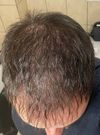
Actifolic RU-58841 powder and GhK-Cu peptide were tested and found to be accurate. The user is satisfied with the product's authenticity for hair loss treatment.
Oleic acid and microneedling are being explored for hair regrowth, but results are mixed. Addressing DHT and fibrosis is crucial, with treatments like finasteride, minoxidil, and scalp massage also discussed.
Bimatoprost 1% and 3% solutions showed better hair regrowth than minoxidil 5%. The user plans to test a homemade bimatoprost solution on their scalp and share results.
User discusses a promising topical Procyanidin B2 treatment for hair loss. Users share mixed experiences and mention effective treatments like finasteride, minoxidil, and LLLT.
Bryan Johnson used a customized hair restoration formula from Roots byGA, which includes Minoxidil, Cetirizine HCl, Latanoprost, Dutasteride, Melatonin, Caffeine, Tretinoin, Vitamin D3, and Vitamin E. Many users are skeptical of the effectiveness and uniqueness of the treatment, suggesting that standard treatments like Minoxidil and Dutasteride are more reliable.
The user is addressing hair loss with finasteride, dutasteride, oral and topical minoxidil, dermarolling, and shampoos. They are considering adding essential oils to improve circulation.
Topical estradiol may help with hair loss but can have systemic effects, like reduced testosterone production. Using estrogen blockers can have negative side effects, such as joint pain and reduced sex drive.
Essential oils like rosemary, thyme, lavender, and cedar wood in a carrier oil may effectively treat alopecia areata and potentially male pattern baldness by stimulating the scalp similarly to minoxidil. The user plans to try this routine and share results.
A user shared their experience with hair loss treatments, including finasteride, topical finasteride, derma rolling, melaleuca oil, caffeine powder, topical vitamin D, keto shampoo, and revive shampoo. They also changed their diet to address psoriasis and leaky gut.
Prostaglandin balance affects hair loss, particularly in conditions like Lichen Planopilaris, where an imbalance can lead to hair follicle damage. Treatments mentioned include prostaglandin analogs and Pioglitazone HCL, with a focus on maintaining prostaglandin equilibrium for potential hair regrowth.
The user is exploring hair loss treatments in China, currently using finasteride and minoxidil, and is concerned about seborrheic dermatitis. Clinics are recommending selenium sulfide, doxycycline, and mesotherapy ampoules like PT88/PT66 or SP88/SP66, but the user is unsure about their effectiveness.
The conversation discusses hair loss treatments, specifically mentioning Minoxidil, finasteride, RU58841, and TB-500 Thymosin Beta-4. It critiques the credibility of biohacking claims.
Microneedling aftercare involves using saline water instead of sea water, and avoiding hyaluronic acid due to its potential pro-inflammatory effects. Users suggest using jojoba oil as a carrier for essential oils like rosemary and lavender, and combining microneedling with minoxidil for better hair regrowth results.
A stem cell and adenosine triphosphate cocktail showed promising results in hair regrowth for male and female mice, with potential for future clinical trials. Users humorously reacted to the success in mice, expressing hope for human application.
Rotenone, a natural plant extract, may promote hair growth by increasing LDH activity and blocking MPC in the scalp, but it carries risks due to its toxicity. The suggested formulation includes Barbasco extract, DMSO, propylene glycol or PEG-400, ethanol, and a carrier oil.
The conversation is about starting a hair loss treatment using a topical solution containing RU58841, Minoxidil, and Copper Peptides. The user plans to test the product and share updates on its effectiveness.
A user is treating hair loss with oral finasteride, topical minoxidil, and tretinoin mixed with moisturizer for easier scalp application. They also plan to use a derma pen weekly.
Discussing and researching different treatments for hair loss, including RU58841, Dutasteride, Spironolactone, Retin-A, Stemoxydine (Neogenic), Copper peptides, Superoxide Dismutase, NANO, and Eucapil.
The user "Zealousideal-Pack340" shared their 5-month results on a natural hair loss treatment protocol, which included massages, vitamins, green tea, and pumpkin seeds. Some users suggested using medications like finasteride and minoxidil for better results, while others criticized the effectiveness of natural remedies. Overall, there was no clear consensus on the progress of the user's hair regrowth.
A 43-year-old male with advanced hair loss is experimenting with alternative treatments, including red light therapy, microneedling, scalp massages, an oil mix, and ketoconazole shampoo, after previously experiencing side effects from finasteride and minoxidil. He noticed some minor changes with red light therapy but remains skeptical about significant improvement.
The conversation is about the best vehicle for RU58841, comparing trichosol and Garnier/Vichy Stemoxydine, avoiding propylene glycol (PG) or ethanol due to previous scalp damage. The user is also seeking sources for these products in the EU.
The post discusses using Sandalore as a potential hair loss treatment, emphasizing precise measurements and safe handling. The user compares Sandalore's effects to Minoxidil and mentions preparing a solution with ethanol and DMSO.
The user is exploring alternatives to finasteride and dutasteride due to concerns about side effects, and is using rosemary and jojoba oil, ketoconazole, minoxidil, microneedling, multi-peptide serum, saw palmetto, and stinging nettle for hair loss. They are also considering CB 03 01 and spironolactone.
Crushing spironolactone pills and combining them with minoxidil for topical application may be effective for hair loss, with the addition of finasteride suggested. Adding rosemary and peppermint oils can help mask the unpleasant smell.
A 20-year-old is using dutasteride, minoxidil, finasteride with stemoxydine, alfatradiol, ketoconazole shampoo, and dermapen for hair loss and is considering mixing these treatments to save time. They are also contemplating a hair transplant that requires 3500 grafts.
The user shared their experience with CB-03-01 (Breezula/Clascoterone) for hair loss, noting reduced shedding and improved hair appearance but experiencing significant sleep disturbances and low energy due to HPA axis suppression. They decided to stop using it due to these side effects and are waiting for GT20029 as an alternative.
Microneedling and tretinoin may enhance minoxidil absorption for hair loss, but evidence on their effectiveness is limited. Iron supplements and broccoli sprouts are suggested for enzyme activation, but their impact on hair is unclear.
The conversation discusses experiences with hair loss treatments containing RootBioTec and Anagain. Users share their results and compare these treatments to Minoxidil, finasteride, and RU58841.
The conversation discusses a user's plan to inject NAD+ and GHK-Cu into their scalp to improve hair health, with concerns raised about the risks of infection and necrosis. Alternatives like finasteride, dutasteride, microneedling, oral minoxidil, and scalp massages are suggested.
The conversation is about creating a topical hair loss treatment with B6, zinc, and azelaic acid, which is claimed to inhibit 90% of scalp DHT. One user is skeptical about the effectiveness of this treatment and its comparison to other treatments without side effects.