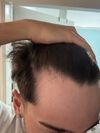
The user experienced reduced hair loss using an online serum but found it too expensive and is seeking a vendor for ptd-dbm. They are also interested in KY19382 but are unable to find it.
The conversation discusses concerns about Dr. Rassman's topical Finasteride, specifically whether it is liposomal or glycol-based. Dr. Rassman insists on providing the correct liposomal formulation and urges patients to contact him if they receive the wrong product.
A 23-year-old has been using finasteride, dutasteride, and spironolactone to combat hair loss and hormonal acne, with mixed results and concerns about side effects. The user is experimenting with spironolactone despite its potential risks, hoping for skin and body hair improvements.
A user is seeking a pharmacy to compound a topical solution containing Minoxidil, Finasteride, Alfatradiol, Melatonin, Latanoprost, and either RU58841 or Pyrilutamide. They prefer a professional compounding lab over DIY methods.
The "DHT itch" is real and likely due to inflammation at the hair follicle, exacerbated by increased testosterone or androgens. Treatments mentioned include dutasteride, minoxidil, finasteride, and various topical solutions.
Hair loss treatments, specifically the use of finasteride, microneedling and potentially oral minoxidil. People discussed their experiences with finasteride, its effects on sexual behaviors, as well as potential solutions such as tadalafil or using other growth factor signal peptides for hope in curing male pattern baldness.
The conversation discusses using tretinoin with topical minoxidil for hair regrowth, despite previous non-response to minoxidil and concerns about oral minoxidil's heart risks. The user is also on dutasteride and is considering a hair transplant if other options fail.
Topical finasteride is considered a safer option for hair regrowth with fewer systemic side effects compared to oral finasteride. Some users report similar efficacy and side effects between topical and oral treatments, while others prefer topical due to reduced systemic exposure.
A user is seeking advice on a new topical hair loss treatment containing Minoxidil 3%, Finasteride 0.3%, Progesterone 1%, Hydrocortisone butyrate 0.1%, and Ketoconazole 0.5%. They are concerned about the systemic absorption of Finasteride and plan to do blood tests and a spermiogram before starting.
The conversation is about a user considering reducing their dutasteride dose due to side effects like lower libido and watery semen. They plan to use dutasteride mesotherapy every three months to maintain hair while reducing systemic DHT suppression.
The conversation discusses the potential risks and considerations of purchasing raw Clascoterone powder from Made-In-China to create a DIY topical solution for hair loss. Concerns include fake products, low purity, and contamination, with a request for experiences and advice on reliable suppliers.
Hair loss discussion mentions using estrogen mixed with growth stimulants like oral minoxidil for scalp hair growth. Idea proposed for an artificial SARM-estrogen that only affects hair without body side effects.
An experiment to determine the effectiveness of Pyrilutamide in reducing hair loss, using a regimen of Minoxidil and Finasteride, with promising results. The conversation also suggests comparing this to RU58841 as an alternative.
A user is seeking feedback on a homemade topical finasteride formula for hair loss, consisting of 7.5 mg of finasteride, propylene glycol, ethanol, and distilled water. They aim to achieve a 0.0125% solution by applying 2 ml daily.
The conversation discusses affordable options for topical Finasteride, including products like Morr F, 82F, and Essengen 6 Plus, with concerns about availability and cost. The user is seeking effective and convenient solutions, considering options like compounding pharmacies and homemade solutions.
A 23-year-old is using 2.5 mg dutasteride, 5 mg oral minoxidil, RU58841, a laser cap, and PRF injections for hair loss. They are hesitant about microneedling due to concerns about RU58841 absorption and are considering other treatments.
User experienced feminizing side effects from finasteride and tried RU, alfatradiol, and finasteride without success. They are now considering treatments like Stemoxydine, Zix, Minoxidil, Dermarolling, Eucapil, and a hair transplant.
A 20-year-old noticed hairline changes after using testosterone and started finasteride to address it. They are considering using minoxidil but are advised to monitor progress on finasteride first before adding it.
A user shared their positive experience with the telehealth service DocBright, highlighting its affordability and effectiveness in prescribing finasteride, oral minoxidil, and ketoconazole. They noted the service's unique ability to provide a prescription at age 17 but criticized the unprofessional communication with the dermatologist.
Microneedling before applying topical finasteride or dutasteride may enhance their effectiveness by increasing local absorption in the scalp, despite concerns about systemic absorption. Users discuss combining this method with oral treatments and minoxidil, noting potential benefits and side effects.
Treatments for hair loss, focusing on Fluridil/Topilutamide (Eucapil), Finasteride and RU58841 (Alfatradiol). The user reported that the Fluridil seemed to work well but had side effects of testicle ache, decreased mood and sex drive.
Topical dutasteride, particularly at 0.05%, shows greater hair density improvement than oral finasteride over 24 weeks, though hair thickness gains are similar. Some users report side effects with topical treatments, but others find them effective for maintaining hair without significant systemic absorption.
A user experienced accelerated hairline recession after adding dutasteride to their regimen of topical finasteride and minoxidil, despite reduced hair shedding. They were informed that ELISA testing for DHT levels can be highly inaccurate.
A user is seeking alternatives to finasteride for hair loss during a planned break for family planning reasons. They inquire about pyrilutamide, cosmern, and other potential future treatments.
A 37-year-old man with hair loss and erectile dysfunction is seeking advice on switching from a minoxidil and finasteride spray to pills. He mentions using topical treatments and considering pills like dutasteride, minoxidil, and biotin.
Natural alternatives like omega-3, green tea, and pumpkin seeds are suggested for reducing DHT levels, but their effectiveness is questioned. Topical minoxidil and ketoconazole shampoo are recommended, with some users also considering low-dose finasteride and saw palmetto.
The user started shedding hair after beginning testosterone replacement therapy (TRT) despite using dutasteride and minoxidil, and added RU58841 to address the shedding. They reduced their TRT dose and hope RU58841 will stop the shedding quickly.
Switching from topical to an oral combo pill (1.2 mg finasteride, 3 mg minoxidil, vitamins) improved hair thickness without noticeable side effects. The user appreciates the convenience of a single daily pill over twice-daily topical applications.
A user is considering switching from finasteride to a combination capsule of dutasteride, oral minoxidil, and biotin for hair loss, but is unsure about the credibility and cost. Other users suggest getting separate prescriptions for better control and cost-effectiveness.