Search
for
Sort by
Community Join
420-450 / 1000+ resultscommunity Thoughts and Opinions on upcoming hairloss treatments?
The conversation is about optimism for new hair loss treatments like Stemson's bioengineering, osteopotin, SCUBE3, GT20029, and Verteprofin, and inquires about other notable treatments.
community 2-Deoxy-D-Ribose official Product
2-Deoxy-D-Ribose is discussed as a potential hair loss treatment, but skepticism exists due to lack of human testing. The original poster uses a combination of topical Minoxidil, oral Finasteride, topical RU58841, and other treatments, reporting some hair regrowth but not significant results.
community Check your vitamin d3 levels!!!
community Community ranking on what new drugs/studies we are most hopeful about?
community Are we underestimating systemic absorption with homemade/generic Topical Fin? (HPCH vs. PG/Ethanol formulations)
Topical finasteride may have higher systemic absorption and lower efficacy when using a Propylene Glycol/Ethanol formulation compared to the hydroxypropyl chitosan (HPCH) formulation. The safety profile of topical finasteride relies heavily on the HPCH formulation, and using standard solutions might lead to different pharmacokinetics.
community Epibiotech will now offer off-the-shelf allogeneic hair multiplication treatment in South Korea
Epibiotech will offer off-the-shelf allogeneic hair multiplication treatment in South Korea, using dermal papilla cells from donors to grow hair in balding areas. This method is cheaper and less invasive than traditional hair transplants.
community Expectations control for SCUBE3
SCUBE3, a protein linked to hair growth in moles, was discovered over 25 years ago and is being developed by Amplifica for potential hair loss treatment. Concerns exist about SCUBE3's association with cancer, as it is a protein that promotes cell growth, which could potentially trigger cancer development if used for hair growth therapy.
community Creatine and Hair Loss: Are the studies misleading?
community Blood test results and balding
The user has been using topical Minoxidil and finasteride for 5 months without seeing regrowth, despite ideal blood test results. They are seeking advice on what to do next due to frustration with continued hair loss.
community After the blood test I saw I had a severe Vitamin D deficiency.I had androgenic alopecia so I started with minoxidil and finesteride topically along with vitamin D and biotin.
The user treated androgenic alopecia with topical minoxidil, finasteride, vitamin D, and biotin, while also using ketoconazole shampoo for dandruff. They focus on weight training and take daily vitamin D tablets.
community Protein's role in hair growth is more nuanced than just quantity
Protein's role in hair growth is complex, with specific amino acids like cysteine being crucial for effective hair growth. Users discussed using l-cysteine supplements, noting reduced hair loss and faster growth, though some experienced digestive issues.
community Interesting / Relevant Information
The conversation provides scientific sources on hair loss treatments like finasteride, minoxidil, and others, aiming to help individuals make informed decisions about their treatment options. It also discusses phytochemicals as alternative treatments due to concerns about side effects from drug-based therapies.
community Non fin/min way to ONLY maintain?
community i analysed diets in japan and korea , they cover sufficient amount of minerals needed for hair loss.
Japanese and Korean diets provide sufficient minerals like folate, B12, vitamin D, zinc, iron, and copper, which may reduce androgenic alopecia. High soy consumption, containing phytoestrogens, might also contribute to lower hair loss in these regions.
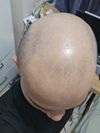
community Is my hair condition still worth treating?
A 29-year-old considering hair loss treatment received advice to explore a theory on androgenic/anabolic balance and was encouraged to read a beginner's guide for better recovery chances. The user expressed gratitude and willingness to try the suggested approach.
community Personal results (1mg finasteride + 10.000mcg biotine) after almost 3 years. Not as impressive as some here, but maybe provides a more realistic view.
Jericho1017 shared their hair regrowth results after nearly 3 years using 1mg finasteride and 10,000mcg biotin daily, with noticeable improvement after 1.5 years and no significant side effects except for watery semen. Some users suggested adding minoxidil and microneedling to improve results, but Jericho1017 is currently content with their progress and not looking to add more treatments.
community Anyone have PRP/Exosome results to share?
Considering alternative treatments to hair loss, such as platelet-rich plasma (PRP) and exosome therapy, instead of using medications like minoxidil, finasteride/dutasteride.
community [HELP!] TOPICAL FINASTERIDE BLOOD TEST DONE! [0.025% vs 0.015%]
User experienced good results with topical finasteride, noting reduced DHT and increased testosterone. They plan to revert to a lower dosage after observing slight libido reduction.
community biotin leads to acne and sebum on scalp ??
User is experiencing increased sebum, dandruff, and acne after taking a supplement containing biotin, iron, zinc, and calcium pantothenate along with finasteride. They are questioning if biotin is the cause and whether they should stop taking it.
community PP405 (Everychem 3HP) Anecdotes - Please assemble and share your story
PP405 (Everychem 3HP) may help with hair regrowth, with mixed user experiences. Users often combine it with minoxidil and finasteride, but there are concerns about its efficacy and side effects.
community RU58841, 8% HPLC-MS done by jano, they legit
The conversation is about testing the effectiveness of RU58841 for hair loss, with the user planning to increase their dose to 30 mg per day along with 20 mg of Minoxidil. The test results showed approximately 70 mg/ml, which the user considers a good result.
community Mineral deficiencies vs MPB vs Thyroid
The user experienced hair improvement using a topical finasteride, minoxidil, and tretinoin combo, along with supplements like zinc, copper, magnesium, vitamin D3, K2, iodine, and boron. They believe these changes are due to addressing mineral deficiencies and possibly thyroid issues, despite skepticism from others.
community Hair thinning and gut health
The conversation discusses hair thinning potentially linked to gut health issues and suggests biotin as a possible treatment. It also mentions that hair thinning could be due to male pattern baldness (MPB).
community Selling KY19382 powder a novel activator of Wnt/β-catenin signaling
The conversation is about selling KY19382 powder, a novel activator of Wnt/β-catenin signaling, and Kolliphor EL liquid for vehicle formulation. The seller offers worldwide shipping.
community 4.5 months on 1mg fin/6%min/2.5mg biotin hybrid progress
A 25-year-old male experienced hair regrowth after 4.5 months using a chewable treatment with 1mg finasteride, 6% minoxidil, and 2.5mg biotin, despite initial shedding and acne from accutane. Opinions on progress vary, with some noticing thicker hair and others seeing no difference or thinning.
community Alternatives/unorthodox hairloss protocols to the big three
The conversation discusses alternative and unorthodox hair loss treatments, including RU58841, nandrolone, and dianabol, as well as theoretical approaches involving high doses of estrogen and selective estrogen receptor modulators. These methods are considered extreme and potentially harmful but are explored for those unable to tolerate traditional 5-alpha reductase inhibitors.
community Is LockLab.co Sketchy? Different then online.
Users are concerned about inconsistencies in the packaging and form of a Minoxidil, finasteride, and Biotin blend from LockLab.co, with some receiving capsules and others tablets. Despite reassurances from customer service about changes due to maintenance, users remain skeptical about the product's authenticity and effectiveness.
community Finasteride and hormonal tests
A user has been taking finasteride 1mg for 10 years without side effects but is concerned about high estradiol levels affecting weight loss. Another user suggests using estradiol blockers under medical supervision to manage the levels.
community Is this broscience? From More Plates, More Dates
The conversation discusses whether finasteride's reduction of DHT and increase in scalp testosterone contribute to hair follicle miniaturization. Some participants argue testosterone does not cause miniaturization, while others suggest that even with reduced DHT, other androgens like testosterone may still contribute to hair loss.