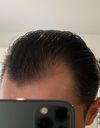
User decides to accept baldness due to mental health issues with finasteride. Others suggest considering hair systems, topical finasteride, or RU58841 as alternatives.
Topical treatments like minoxidil and finasteride are preferred for hair loss due to ease of use and natural appearance. Hair systems are considered high-maintenance and less genuine.
A 27-year-old shared progress pictures 4 months after a hair transplant, expressing satisfaction with the results and improved self-esteem. They have been using finasteride for nearly a year and minoxidil for 3 months, with significant reduction in hair loss.
The user is seeking advice on hair transplant techniques and surgeons to reshape a natural widow's peak into a more rounded hairline, preferring long hair transplants with minimal scarring and maximum density. They are currently using finasteride and oral minoxidil, which have not been effective, and are considering various surgeons primarily in English-speaking countries and the EU, excluding Turkey.
The user is using multiple topical treatments including Minoxidil, RU58841, and Spironolactone, along with supplements, to address hair loss and is considering starting oral Minoxidil. They plan to begin oral finasteride soon after experiencing side effects from topical dutasteride.
The conversation is about using micro needling and PTD-DBM for hair loss treatment. The user applies PTD-DBM drops on weekdays and performs micro needling weekly.
A user shared their 5-month hair transplant progress, having undergone a procedure with 4100 grafts at MedBlue in Istanbul for $3,600. They started taking oral minoxidil and finasteride daily after the transplant and use topical minoxidil with microneedling every two weeks, reporting positive results and no unwanted hair growth.
Gene editing for hair loss is not yet viable due to technological and economic challenges. Current treatments like Minoxidil, finasteride, and hair transplants remain the most practical options.
The conversation discusses the frustration of having excessive body hair while experiencing scalp hair loss, with mentions of treatments like finasteride, minoxidil, and hair transplants using body hair. Users share experiences and advice, noting the role of genetics and DHT in hair growth patterns.
New hair loss treatments include Breezula, PP405, ET-02, KX-826, GT20029, VDPHL01, and CosmeRNA, with some showing promise in reactivating stem cells and reversing greying. Breezula and VDPHL01 are highlighted as potential add-ons or alternatives to current treatments like finasteride and minoxidil.
A 20-year-old is using minoxidil, finasteride, tretinoin cream, and microneedling for hair loss but sees no improvement in the crown area and is considering a hair transplant. Users advise patience with finasteride and suggest trying a low-dose oral minoxidil if no progress is seen.
A user shared their positive hair transplant results after 19 months without using finasteride or minoxidil, only vitamins. Some responses suggest concern over future hair loss without prevention treatments, while others congratulate or express jealousy.
Some prefer hair systems for better appearance and confidence, while others find them costly and inauthentic. Alternatives like minoxidil, finasteride, and hair transplants are also considered.
The conversation discusses the possibility of transplanting leg and arm hair to the scalp for hair loss treatment. Minoxidil is mentioned as a potential aid for hair growth, but concerns about the effectiveness and appearance of body hair on the head are raised.
A 17-year-old is addressing hair loss with finasteride, topical minoxidil, and microneedling. They are considering adding GHK-Cu to their regimen, but others advise caution with finasteride due to age.
The user had a hair transplant in 2020 and later learned they needed to continue medication for hair loss. They shared a 5-month timelapse video of their hair regrowth using topical finasteride/minoxidil, microneedling every 3 weeks, and ketoconazole.
A 30-year-old man shares his successful hair loss protocol, which includes finasteride, Nizoral shampoo, low-level laser therapy, microneedling, and past use of oral minoxidil. He plans to consider dutasteride and possibly hair transplants in the future, while advising caution with crown transplants before age 35.
The user shared their positive experience with a 1,500 graft FUE hair transplant at NewHair Institute in Korea, highlighting the natural design by Dr. Jino Kim and the supportive staff. They experienced minimal discomfort and swelling, and appreciated the thorough aftercare and communication.
A user successfully stopped balding by switching from topical to oral minoxidil, finasteride, and biotin, noting significant improvement after a year. They emphasize the importance of oral finasteride and consistent use for hair regrowth.
A 21-year-old is experiencing aggressive hair loss despite using minoxidil, dutasteride, and GFC, and is seeking advice on whether to switch treatments or consider a hair transplant. Suggestions include continuing current treatments, checking for underlying health issues, and considering alternatives like RU58841 or microneedling.
The user is using topical minoxidil and oral finasteride for hair regrowth, with plans for a future hair transplant. They are considering additional treatments like dermastamping and exploring options for dutasteride, which is unavailable in their country.
The user is experiencing hairline recession and plans to use minoxidil, finasteride, and biotin for a year, considering a hair transplant if needed. They seek advice on their treatment plan and additional ways to support hair growth.
The conversation discusses impressive hair regrowth results using finasteride, minoxidil, and microneedling over 20 months. Some users suspect a hair transplant or hair system, while others inquire about specific product details and side effects.
The post and conversation are about skepticism towards HairClone's crowdfunding campaign for a hair loss cure, with users expressing doubt and calling it a scam. Specific treatments mentioned include Minoxidil, finasteride, and RU58841.
Yokohama University and Dr. Fukuda plan human hair multiplication trials in 2023. Users express hope for future hair cloning treatments over current hair transplants.
Hair loss treatments like finasteride, minoxidil, and hair transplants are more accessible and effective now. Concerns about side effects and skepticism about new treatments like hair cloning and GT20029 remain.
User experienced hair thickening and slight regrowth using RU58841, Fin, DUT, and Minoxidil. They plan to get a hair transplant in Turkey for further improvement.
The user is considering a hair transplant at 25 after experiencing hair loss despite using finasteride, minoxidil, and recently starting dutasteride. They are advised to continue DHT blockers post-transplant to prevent further hair loss and are considered an ideal candidate for a transplant.
A 22-year-old is using finasteride, minoxidil, and biotin to regrow hair after shaving it off due to a bad haircut. They are open to staying bald if the treatment doesn't work and are not considering a hair transplant due to cost.
Hair loss treatments, ranging from topical minoxidil and finasteride to taking hormones such as estradiol or nandrolone, as well as a controversial suggestion of an orchiectomy. A hair system is also mentioned as an alternative solution.