GeneTherica is discussed as a source for RU58841, with ordering possible via WhatsApp. The conversation focuses on the legitimacy of this supplier for hair loss treatment.
BionicBell discussed using Bimatoprost, a medication typically for eyelash growth, for hair loss and mentioned a compounding pharmacy that can mix it with other ingredients like minoxidil and finasteride. They are seeking advice on using topical finasteride for female pattern baldness and are considering a custom foam combination to maximize hair growth results.
Finasteride and dutasteride are discussed for hair loss, with concerns about their effects on neurosteroids and potential side effects like depression. Alternatives like topical estrogen and lifestyle changes are considered, with varying opinions on mental health and hair regrowth.
The conversation discusses hair regrowth treatments, including stem cell exosomes, PRP, and PP405. Users question the effectiveness of the treatments and mention finasteride and minoxidil.
A user seeks advice on treatments for his mother's hair loss, considering Minoxidil, Finasteride, and shampoos. The mother is being monitored for breast cancer, which may be relevant.
Hormone replacement therapy with spironolactone and estradiol significantly improved hair thickness and growth, surpassing previous treatments like dutasteride, finasteride, and minoxidil. The user experienced regrowth in receded areas and a more youthful appearance.
The conversation discusses a 20-year-old transgender female's one-year experience with hair loss treatments, including Estradiol HRT, oral Finasteride, Bicalutamide, and Cyproterone. Specific treatments used for hair loss are oral Finasteride and potentially Estradiol as part of hormone replacement therapy.
The conversation discusses Scube3, a seemingly new and obscure treatment for hair loss, with limited information available and a link to a patient intake form.
The conversation is about a hair loss treatment regimen that includes finasteride, dutasteride, oral minoxidil, Dermapen, quercetin, N-acetyl L-cysteine, biotin, millet seed extract, MSM, OPC, green tea extract, high-dose vitamins B1-B12, boron, and silica. The user is seeking advice on additional treatments.
27-year-old female experiences aggressive hair thinning and hirsutism despite normal testosterone levels. Spironolactone and 2% minoxidil were ineffective; high DHEA sulfate levels may be the cause.
A gel of keratin microspheres promotes hair follicle growth, showing similar effectiveness to minoxidil in mice. The treatment activates hair growth pathways and reduces inflammation, with potential applications in drug delivery for hair-related disorders.
The conversation discusses hair regrowth using dissolvable microneedles loaded with rapamycin and epigallocatechin gallate nanoparticles. Specific treatments mentioned include Minoxidil, finasteride, and RU58841.
Some actors are believed to use treatments like finasteride, minoxidil, or hair transplants to maintain their hair, while others are thought to have naturally good genetics. Opinions vary on whether celebrities like Brad Pitt have natural hair or use enhancements.
The conversation discusses a new model for understanding androgenetic alopecia (AGA), linking it to dietary and lifestyle factors similar to PCOS, and highlighting the role of DHT, vascular damage, and inflammation. Treatments mentioned include Minoxidil, finasteride, and RU58841.
The conversation discusses using T3 (triiodothyronine) as a topical treatment for hair growth, with some users noting it showed promising results in studies but lacked follow-up. Users express interest in trying T3 due to its potential effectiveness compared to Minoxidil.
The conversation is about identifying nutritional factors that should be checked and supplemented to address diffuse hair loss, including Vitamin D, Biotin, Vitamin C, Vitamin B, Iron, Zinc, Protein, and Omega-3. No specific treatments were mentioned.
The user has high DHT levels despite using dutasteride, which may not be effective due to potential damage or spoilage. They are considering a hair transplant if DHT levels don't decrease after two years.
Finasteride can reduce DHT in the genitalia, potentially causing side effects like reduced erections and penile fibrosis. Using PDE5 inhibitors like Tadalafil or Sildenafil may help maintain penile health and prevent fibrosis.
Androgenetic alopecia is affected by scalp DHT levels, not sensitivity, with treatments like finasteride and dutasteride aiming to optimize these levels. Personalized DHT management is crucial for effective hair growth.
The user experienced new hair growth after switching from oral finasteride to topical RU58841 with minoxidil and undergoing stem cell therapy. They noticed new hairs at the hairline and temples, but are unsure which treatment is responsible.
The user has DUPA and suspects autoimmune activity as a cause. They have tried various treatments including finasteride, minoxidil, dutasteride, pyrilutamide, estrogel, hydrocortisone, and clobetasol, and are now seeking a long-term immunosuppressant.
A user on finasteride for 8 months shared bloodwork results showing increased testosterone and estradiol levels, with concerns about high LH. Responses advised monitoring for symptoms but noted levels are within reference ranges.
A treatment containing Wnt and Follistatin was found to be safe and effective for hair regrowth in a Phase 1 clinical trial. Specific treatments discussed include Minoxidil, Finasteride, and RU58841.
Exosome treatment for hair loss, derived from umbilical cord stem cells, is being considered as an option before a hair transplant. Users discuss the need for ongoing maintenance and share experiences with different exosome sources, including plant-derived options.
SCUBE3 is available online but poses risks like tumor promotion and high costs. Users advise against using it due to health concerns and inefficacy as a standalone treatment.
The user is considering a hair transplant to increase hair density after using finasteride and minoxidil for two years. They prefer a natural hairline and are unsure if a transplant is suitable for overall thinning.
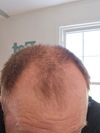
A 43-year-old male seeks advice on hair regrowth options, considering treatments like Minoxidil, finasteride, and RU58841, or possibly a hair transplant. He has low testosterone and a family history of balding.