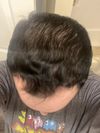
The conversation discusses whether bleaching hair is safe while using oral minoxidil for hair loss. The user is concerned about potential negative effects on hair health.
The user is considering starting minoxidil or getting their scalp checked for permanent scarring due to noticing thinner hair after bleaching. They are seeking advice on hair loss remedies.
A user's concern with their hair thinning while using dutasteride and oral minoxidil, which was switched from finasteride and topical minoxidil after 13 months. The conversation includes advice surrounding potential results, specific treatments used, and side effects.
The user experienced significant hair regrowth using 1mg oral finasteride, topical minoxidil, keto shampoo, and monthly derma stamping. Results appeared after about four months, with noticeable temple hair lightening.
A user is experiencing accelerated hair loss and is struggling to maintain their mohawk. They are seeking alternatives to Minoxidil and Finasteride, considering a hair transplant, and looking for a doctor in Berlin who can prescribe Finasteride.
A 28-year-old man with hair loss is seeing regrowth in his temple area after 2 months of treatment with Dutasteride, a 1.5mm Dermaroller, topical Minoxidil, and Biotin supplements. He also notes an unexpected positive side effect of Dutasteride clearing up his light facial acne.
A user who has been using finasteride and minoxidil for 4-5 months with 5000 IU of vitamin D daily to treat their hair loss, resulting in impressive progress. Other users have given advice about adding Vitamin K2 to the regimen.
The conversation is about trying unconventional treatments for hair loss, such as green tea, coffee, cocoa, multivitamin pills, red wine, onion, honey, herbs, and hydrogen peroxide. The user is seeking feedback on these methods to avoid ineffective ones.
The user experienced significant hair regrowth using oral finasteride and topical minoxidil, but switching between oral and topical minoxidil led to hair loss and uncertainty about future treatment. They are considering sticking with oral minoxidil and finasteride, possibly adding dutasteride or opting for a hair transplant.
The user has been using Finasteride, Minoxidil, and Biotin for hair regrowth since March 2024, with slow but steady progress. Suggestions include becoming 100% consistent, considering RU58841, and exploring oral Minoxidil.
A 32-year-old woman reported significant hair regrowth after 103 days of using 5% minoxidil once daily, along with biotin, iron supplements, and a balanced diet. She observed many new baby hairs and no bald spots, aiming for denser and longer hair while maintaining her regimen.
A 32-year-old is happy with hair regrowth after 4 months using oral finasteride and topical minoxidil, with noticeable improvement in the last month. Others suggest continued use could lead to full coverage.
Hair loss, and treatments such as finasteride and oral minoxidil being discussed. Some people shared stories of their personal experiences while others gave humorous replies.
A user reporting an extended shedding period of 9 months while using finasteride and minoxidil, and other users offering advice on treatments such as dutasteride, multivitamin, biotin, rosemary oil, Kiel's magic elixir, hair extensions, changing hair color, healing crystals, and seeing a dermatologist.
Increased Malassezia and Cutibacterium in the scalp microbiome are linked to higher sebum production and inflammation in androgenetic alopecia (AGA). Treatments include ciclopirox shampoo, benzoyl peroxide shampoo, clobetasol propionate, calcipotriol, minoxidil, finasteride, and dutasteride.
Dutasteride and finasteride can cause watery ejaculate, which may persist for some users. Zinc supplements or switching to topical treatments are suggested to alleviate this side effect.
A man with thick, white hair is admired for his genetics, leading to discussions about hair loss and the preference for white hair over balding. Some speculate about the use of treatments like finasteride.
Hair loss is emotionally challenging, but acceptance and focusing on other life aspects are important. Treatments like finasteride, minoxidil, and RU58841 are discussed, with emphasis on the emotional impact over physical changes.
Oral minoxidil is seen as more effective and convenient than topical minoxidil for hair regrowth, but it may cause heart-related risks. Users often combine it with finasteride or dutasteride, though some prefer topical treatments due to safety concerns.
A 22-year-old male experiencing diffuse thinning is using oral minoxidil and finasteride but notices his hair looks thin in sunlight. Suggestions include using hair products, considering topical minoxidil, addressing seborrheic dermatitis, and possibly trying dutasteride or a hair transplant.
A 35-year-old user shared their 11-month hair loss treatment success using Minoxidil and Propecia, noting their hair looks like it did at 25. Another user asked about the treatment, and the original poster confirmed using Propecia 1 mg and topical Minoxidil twice daily.
User reports 12 months of using Mexican finasteride (Novaride), minoxidil spray, and ketoconazole shampoo with significant crown improvement and slight frontal hairline improvement. No current side effects; plans to continue treatment for further gains.
User shared progress pictures after 9 months of using minoxidil, finasteride, spironolactone, and estradiol for hair loss. Significant regrowth was noted, especially after starting estradiol.
A user shared progress pictures showing significant hair regrowth after two months back on finasteride and minoxidil, following a two-year break. The user also mentioned experimenting with hair dye and considering growing their hair for an undercut.
A 29-year-old woman is experiencing gradual hair thinning since age 15, suspects Androgenic Alopecia, and has tried 5% minoxidil with little success. She has purchased various hair loss treatments including minoxidil, dutasteride, finasteride, and spironolactone, but is cautious about starting them due to potential interactions with her ADHD medication.
The conversation discusses the use of hair systems as a solution for hair loss. Users share their experiences, highlighting the natural look, confidence boost, and maintenance requirements of hair systems, while also addressing concerns about cost, stigma, and potential drawbacks.
A user shared their experience with hair loss treatments Minoxidil and Finasteride. They saw improvement but stopped using them, leading to significant hair loss, and are now considering restarting the treatments.
The post and conversation are about a user's successful regrowth of hair using topical minoxidil and rosemary shampoo. Other users discuss the potential limitations of minoxidil and recommend using finasteride to maintain hair growth.
A user experienced significant hair regrowth after 6 months using 1mg Finasteride and Oral Minoxidil, along with pumpkin seed oil, biotin, and collagen supplements, and is considering starting PRP. Another user has not seen results despite using a combination of treatments including finasteride, minoxidil, RU58841, pyrithione zinc, topical dutasteride, ketoconazole, and microneedling.
Treating the itch associated with male pattern baldness, which is believed to be caused by DHT. Potential treatments discussed include salt water, finasteride, ketoconazole, and RU58841.