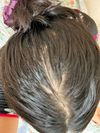
A 33-year-old man experienced diffuse thinning and hair shedding due to sleep deprivation and low testosterone. After starting hCG treatment, he noticed hair regrowth on his temples.
Pelage secured $120 million for PP405, a non-hormonal topical hair loss treatment, sparking debate on its potential as a breakthrough. Concerns about finasteride's side effects persist, with some suggesting alternatives like topical finasteride or dutasteride.
A person with hair loss due to seborrheic dermatitis saw improvement after treating the condition and using 5mg oral minoxidil, topical minoxidil, collagen, biotin, and vitamins. They are asking if the progress is real, and others have noted the oral minoxidil as a significant treatment.
A 31-year-old experiencing rapid hair loss is considering whether to shave their head or use treatments. They were prescribed B12, topical finasteride 0.1%, and minoxidil 10% but are unsure about the correct dosage and potential side effects.
Longitudinal partial follicular unit transplantation involves extracting part of the donor follicular unit, allowing the donor area to be overharvested without noticeable hair loss. The conversation questions if this method is practiced in clinics or if it's theoretical, and whether it relates to hair cloning or multiplication.
A 26-year-old is using 5% minoxidil twice daily and 1 mg finasteride every other day, along with biotin and collagen supplements, for hair regrowth. They apply minoxidil to the temples and crown and experienced initial shedding in the first month.
User doing PRP with exosomes for hair loss, sees possible regrowth after two treatments. Another user suggests providing before and after pictures for better assessment.
Pelage, backed by Google Ventures, is seen as a promising company potentially finding a cure for hair loss using stem cell activation. There is skepticism and optimism among users, with some awaiting results from ongoing trials.
The user shared their 9-month progress using exosomes and topical minoxidil for hair loss, concluding that minoxidil was more effective for them than exosomes. They plan to continue using minoxidil and have started finasteride while managing dandruff with salicylic acid.
Younger generations now view receding hairlines as baldness, increasing the use of treatments like minoxidil and finasteride. Social media and changing beauty standards have intensified focus on hairlines, altering perceptions of baldness.
A 19-year-old tried oral minoxidil and finasteride for hair loss but experienced side effects like fatigue, dry eyes, and lack of motivation, leading to discontinuation. Suggestions included trying topical treatments, dutasteride, or accepting hair loss.
The conversation discusses hair regrowth progress using Minoxidil, Biotin, Finasteride, and Ketoconazole, with microneedling stopped after 8 months. The user is questioning the effectiveness on temple areas after 1.7 years of treatment.
The user has been using Finasteride and Minoxidil for hair loss but has seen no progress. Suggestions include trying Dutasteride, increasing Minoxidil dosage, or considering a hair transplant.
LeBron James likely uses hair transplants and possibly hair fibers or sprays to maintain his hairline, but his crown remains problematic. Despite his wealth, he hasn't fully resolved his hair loss, leading to speculation about his treatments and choices.
Using a combination of micro-needling and exosome injections as a potential treatment for male pattern baldness, which could result in 50% or more regrowth.
OP uses 1mg finasteride, 2.5mg minoxidil, and 10mg biotin daily, along with a biotin, caffeine, and saw palmetto shampoo. OP noticed results after 5 months, with occasional heart palpitations from minoxidil.
A 36-year-old had a hair transplant with 6,500 grafts 7 months ago, took 1.25mg of finasteride every other day for 5 months, and recently switched to 1mg daily along with 5% minoxidil spray. They are considering a touch-up transplant and are seeking advice on their progress and future expectations.
The user has been using a topical spray containing finasteride and minoxidil for six months but is experiencing increased hair shedding and concerns about its effectiveness. Suggestions include switching to oral finasteride and minoxidil, consulting a dermatologist, and checking for underlying health issues like thyroid function and nutrient deficiencies.
The user has been using a daily topical spray of finasteride and minoxidil, along with occasional microneedling, to address hair loss since August 2023, and is considering switching to oral medication for convenience and cost reasons. Despite progress, they are exploring options like increasing microneedling frequency or potentially undergoing a hair transplant to address a stubborn spot.
Scalp micropigmentation as a treatment for hair loss, and the importance of choosing a reputable practitioner to get a natural look. Different treatments such as laser removal were also discussed in relation to long-term maintenance.
The conversation is about experiencing hyper-trichosis from taking oral Castor Oil. The user reports increased hair growth on the stomach and legs but is not concerned as it is harmless and will stop when the treatment stops.
Age-linked hair loss is linked to disappearing collagen. Treatments discussed include minoxidil, finasteride, RU58841, tretinoin, microneedling, and collagen supplements.
Exosomes, cetirizine, melatonin, latanoprost, and caffeine are discussed as potential hair loss treatments. There is skepticism about the effectiveness of exosomes, especially in topical form, but some users report positive results.
The user tried minoxidil 5% for 3 years with little improvement, then switched to a 15% minoxidil with 0.1% finasteride solution once daily and started using pyrilutamide, resulting in significant hair regrowth over time. They are considering a hair transplant but are continuing with topical treatments to maximize hair growth first.
A 21-year-old shares their one-year progress using finasteride for hair loss, experiencing initial shedding but eventual regrowth, especially on the crown. They consider switching to dutasteride due to continued hair loss at the front temple and mid-scalp areas.
A 19-year-old trans man has been using Finasteride 1mg for a little over two months and is concerned about worsening hair loss, noting a fuzzy and soft hairline and crown. The user is upset as the hair loss appears worse than before starting the treatment.
The conversation discusses hair loss treatments, specifically the use of dutasteride, finasteride, and other methods like PRP, laser, and mesotherapy. Despite these treatments, the user is experiencing hair loss, and others suggest consulting a dermatologist, considering alternative treatments, and addressing potential scalp inflammation.
The conclusion of the conversation is that the user should consider using treatments such as finasteride, minoxidil, and RU58841 to potentially reverse their hair loss. Other suggestions include using hair loss concealers and maintaining a healthy diet.
A 29-year-old female is experiencing severe hair loss and bald patches, seeking advice on shampoos, conditioners, hair masks, or topical medications. A user suggests starting an oral supplement.