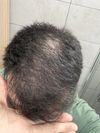
A user is frustrated about early balding despite older male relatives retaining hair into old age. Another user plans to start finasteride soon to address their hair thinning.
A user reports significant hair regrowth after 3 months using finasteride, minoxidil, microneedling, Nizoral shampoo, biotin, and vitamins. They apply minoxidil twice daily, dermaroll twice a week, and use Nizoral shampoo twice a week.
A user had a bad reaction to Finasteride, experiencing anxiety and fatigue, and is seeking alternative hair loss treatments since they can't use Finasteride or Minoxidil. Suggestions include trying low doses of Finasteride, making a topical version, or using other treatments like Alfatradiol, but the user is hesitant to use Finasteride again and is considering a hair transplant.
This conversation is about a user who has been using Minoxidil to treat hair loss for two weeks, and experienced an intense shed. The replies offer advice on how to manage their shedding, such as shaving their head or using Finasteride, and encouragement that the results will be worth it in the end.
This conversation was about a user's progress pictures from using minoxidil and microneedling to treat hair loss. Other users suggested finasteride as an additional treatment, while cautioning that the drug could have permanent side effects.
A user's personal hair loss progress with treatments, including finasteride (1.25mg), minoxidil, needling, and Nizoral; and advice from other users on how to perform the needling correctly.
Use retin-a cream and maintain a good skincare routine to counteract skin issues caused by topical minoxidil. Taking sublingual minoxidil can also be beneficial.
A user successfully regrew their hair over 8 months using topical minoxidil, finasteride, a healthy lifestyle, and derma stamping. They emphasize the results are genuine and not from hair transplants.
The conversation is about whether topical finasteride and minoxidil need to be applied directly to the affected areas of the scalp or if they can be spread through bloodvessels. It also asks how long topical finasteride remains on a pillow.
The user checked iron, ferritin, B12, zinc, testosterone, DHT, and estrogens to understand hair loss causes and the effects of dutasteride. They also noted increased heart rate and paleness with oral minoxidil.
The conversation discusses skepticism about the effectiveness of scalp tension theory and scalp massagers for hair regrowth, contrasting it with treatments like finasteride and minoxidil, which have more user-reported results. Participants question the belief in scalp tension theory, suggesting it may be a marketing tactic, while others argue for a multifactorial approach to hair loss.
The conversation discusses avoiding caffeine after Platelet-Rich Plasma (PRP) treatment for hair loss because caffeine is a vasoconstrictor, which can reduce blood flow and hinder the healing process that PRP aims to promote.
Minoxidil 5%, finasteride 1 mg, and L-arginine are discussed for male pattern baldness. L-arginine may help with blood flow but its effectiveness for hair loss is uncertain.
The conversation discusses a user's plan to inject NAD+ and GHK-Cu into their scalp to improve hair health, with concerns raised about the risks of infection and necrosis. Alternatives like finasteride, dutasteride, microneedling, oral minoxidil, and scalp massages are suggested.
Oral minoxidil can cause a stronger heartbeat, which may lessen over time, but if it persists or worsens, consulting a professional is advised. Reducing the dose or switching to a topical form might help.
Quitting caffeine likely won't affect hair follicles, and it might improve nutrition, which can help hair health. The user is using finasteride and oral minoxidil for hair loss.
The user has been using oral Dutasteride, RU58841, and Minoxidil for three years without success and is considering adding topical Finasteride or Dutasteride to target DHT both locally and systemically. Other users suggest sticking to a consistent treatment plan, exploring different combinations, and considering other factors like potential misdiagnosis or inconsistent medication use.
The conversation discusses microneedling for hair loss, with the original poster experiencing pinpoint bleeding after using needles of 1.25mm and 0.5mm, possibly due to adding GHK-Cu to their treatment regimen. They are inquiring if others bleed at similar depths.
Fluridil, also known as Topilutamide or Eucapil, is discussed as a treatment for hair loss. It is noted as an androgen receptor antagonist, not a vasodilator.
The conversation discusses whether topical caffeine is effective for hair loss, with some users questioning its role due to its vasoconstrictive and vasodilative properties, while another suggests that temporary vasoconstriction might be beneficial by promoting angiogenesis. Specific treatments mentioned include caffeine shampoo, which one user believes is ineffective.
This conversation discussed the potential for a hair loss treatment alternative to minoxidil, with many users debating the economic and health implications of such an option. Some suggested that finasteride could be used as an alternative, while others argued that this would ultimately not benefit pharmaceutical companies due to their reliance on planned obsolescence.
The user experienced hair thinning and used microneedling, DHT blocking shampoo, and Biotin DHT blocking oil to address it, avoiding finasteride and minoxidil unless necessary later. They reported mild improvement but received mixed feedback, with some suggesting other conditions or treatments like ciclopirox shampoo.
Finasteride, a hair loss and prostate drug, may also benefit heart health. Some users discuss the potential negative effects of DHT on the heart and the balance between hair loss treatments and heart health.
A person noticed increased hair thinning after changing their workout routine from cycling to weightlifting, which also coincided with a rise in testosterone levels. They are considering stopping intense workouts, switching to yoga, cutting out caffeine, and re-evaluating after a few months to see if it improves their hair condition.
A 40+ year-old male used finasteride and minoxidil sprays daily, later adding a PEMF hat to his routine, resulting in noticeable hair regrowth in the crown area after 6 months. He plans to continue the treatment and update at 12 months.
The user reported hair recovery on the scalp after 4 months using finasteride and 5% topical minoxidil, with anxiety as a side effect. Reducing caffeine intake helped manage anxiety, which may be linked to minoxidil's effects.
Finasteride and minoxidil significantly improved a user's hair loss, starting at age 17, leading to a full head of hair by age 19 without side effects. The user prefers oral minoxidil over topical due to better results and less hassle.
A 35-year-old is seeking advice on hair loss treatments, considering minoxidil, finasteride, and possibly a hair transplant in Turkey. They have previously tried microneedling for a year.
The user has seen significant hair regrowth after 9 months of using minoxidil and 1mg of finasteride. There is discussion about scalp issues like folliculitis and potential treatments, as well as concerns about finasteride's side effects.