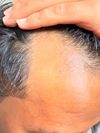
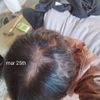
The user has accepted their hair loss and uses finasteride and minoxidil, with past use of RU58841 and dutasteride. They seek advice on supplements to slow down graying hair.
A hair transplant of 3361 grafts, 11.5 months after the procedure, that resulted in a very natural looking NW1 hairline; the person who underwent this procedure has not experienced any hair loss and is expecting to have no future hairloss either.
A 35 year old male who has seen good results from Finasteride and microneedling, with minimal side effects. Replies to the post ask about the device used for microneedling, discuss the progress made, and offer encouragement.
Onion juice helped with hair loss but was smelly and inconvenient. The user now uses dutasteride and minoxidil, finding them more effective and practical.
A hair transplant without using finasteride or similar medications may lead to unnatural results and further hair loss. Financially capable individuals are advised to stabilize hair loss with medication before considering a transplant.
The user is concerned about whether their hair styling is causing thinning or if it's natural. They are considering treatments like Minoxidil, finasteride, or RU58841 for hair loss.
The conversation discusses purchasing experimental hair loss treatments KX-826, AHK-Cu, and PTD-DBM, with the user already using Minoxidil and having side effects from Finasteride. Concerns about the legitimacy of certain suppliers and the authenticity of products like pp405 are also mentioned.
A 25-year-old man had a 3500 graft hair transplant on the frontal region and is happy with the results after 8 months. He has been on minoxidil and finasteride, switched to dutasteride, added ketoconazole shampoo for seborrheic dermatitis, and is considering a second transplant for the mid scalp/crown.
The user mixes their own RU58841 solution and found that increasing the ethanol content improved absorption and reduced scalp itching. A study on minoxidil showed that penetration increased with higher ethanol concentrations, reaching maximum penetration at 90% ethanol.
The conversation discusses using 1.5mm microneedling to improve responses to Minoxidil for hair loss. One user humorously suggests more aggressive microneedling.
A 35-year-old shared a 2-month update on their hair transplant of 3153 grafts, noting redness, itching, and some pimples, while using finasteride for over 12 years to maintain hair. Users discussed the effectiveness and timing of starting finasteride, with some suggesting consulting a doctor for young individuals considering the treatment.
Pelage Pharmaceuticals is developing PP405, a topical treatment for hair growth, currently in Phase 2a trials. There is skepticism about the company's claims, and no fast-tracking approval timeline has been detailed.
KX-826 Pyrilutamide 1% is launching soon, and users are discussing its potential benefits and drawbacks compared to other treatments like Minoxidil and finasteride. Some users are skeptical about its effectiveness, while others are hopeful it will be a safer alternative.
A 22-year-old has been using dutasteride (0.5 mg daily) for over a year but is experiencing increased hair shedding, scalp inflammation, and burning, and cannot use minoxidil due to side effects. Suggestions include consulting a dermatologist, trying oral minoxidil, microneedling, rosemary oil, caffeine shampoo, and considering other treatments like PRP or red light therapy.
The user has scheduled a hair transplant after stabilizing hair loss with finasteride and minoxidil, considering additional dermarolling. They are advised to use 2500-3000 grafts conservatively for temple filling without lowering the hairline too much.
The conversation discusses Breezula, a hair loss treatment, and its Phase 3 clinical trial recruitment at 50 locations. Specific treatments mentioned include Minoxidil, Finasteride, and RU58841.
Microneedling for hair loss is discussed, with users suggesting different frequencies and needle lengths, such as 1.5mm every 3 to 6 weeks or 1.0mm weekly. Some users recommend less frequent sessions to avoid scalp damage and soreness.
CB-03-01 is a topical anti-androgen with low absorption, offering potential as a side-effect-free alternative to Finasteride/Dutasteride for hair loss. It's in stage 2 clinical trials for acne and showing promise for male pattern baldness.
Kevin Mann avoids dutasteride because it comes in gelatin capsules, which he avoids as a vegan, and he is satisfied with finasteride's results. He prefers finasteride due to more long-term research and follows the principle of "if it ain't broke, don't fix it."
Treatments for hair loss, including microneedling (dermarolling and dermapen) and the use of minoxidil, finasteride, and RU58841. It provides detailed information about cost and usage of the various treatments, as well as potential side effects.
A user shared progress photos after 37 days of using 0.5mg dutasteride for hair loss at age 17. The discussion focuses on the effectiveness of this treatment.
A user received a prescription for Dutasteride 0.5 in Europe and asked about the brand. Replies confirmed the brand's quality and suggested using the cheapest gelatin capsule form.
A 29-year-old experiencing slow hair loss is considering treatments like Fluridil, CB0301, and Pyrilutamide, and has been prescribed Minoxidil and Finasteride but prefers to avoid Finasteride. They are seeking advice on whether these treatments are worth trying.
Diffuse thinning can result in varied regrowth, with some users experiencing better results at the hairline and others at the crown. Treatments mentioned include finasteride, minoxidil (oral and topical), RU58841, microneedling, and dermarolling.
The user is using a solution of 5% minoxidil and 0.1% finasteride with micro-needling and is considering adding 1mg oral finasteride. They notice small hairs on their forehead and are questioning if these indicate potential regrowth.
The user had a hair transplant and is asking when they can resume microneedling their forehead, which they did previously once a week with positive results on their crown. They are currently on a treatment regimen that includes oral finasteride, oral and topical minoxidil, ketoconazole shampoo, and black castor oil for moisturizing.
A user shared their 88-day progress using 1.25mg finasteride, topical minoxidil, and weekly 1mm microneedling, noting improvement from NW 4.5 to around NW 3. Another user complimented the progress.
A user underwent a 3750 graft hair transplant in Turkey, initially promised 4500 grafts, and is satisfied with the results despite some concerns about donor site size and crown coverage. The user has been on medications like finasteride and minoxidil for about four months and may consider a second transplant in the future.
The user shared 60-day progress using 5% topical minoxidil, 1mg finasteride, and recently started microneedling with a derma stamp. Users commented on the difficulty of seeing changes due to hair length and even thinning.
People with diffuse thinning and retrograde hair loss are discussing treatments like finasteride, minoxidil, and dutasteride, with some reporting improvements and others experiencing issues like scalp inflammation and increased sebum. Suggestions include addressing scalp inflammation, considering gut health, and possibly using topical antiandrogens or micro-needling.