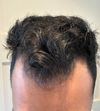
The conversation discusses hair loss treatments, specifically mentioning Minoxidil, finasteride, and RU58841. It also references Epibiotech's hair multiplication and cell therapy as potential solutions.
The conversation is about someone planning to use cb-03-01 for hair loss because they experience side effects with other treatments like finasteride, minoxidil, and RU58841. They have not found progress pictures online and are considering sharing their own experience with cb-03-01, which is expensive.
The conversation is about the potential effectiveness of a hair loss treatment called pyrilutamide. One person has been using it since September and reports positive results.
User experienced significant hair regrowth using 1.25mg Finasteride daily and Nizoral once a week for 15 months. Noticeable results appeared after 6 months, with no side effects reported.
PP405 shows promise in hair regrowth, potentially outperforming existing treatments like finasteride and minoxidil, with significant results in just four weeks. The treatment is still in early stages, with further trials needed to determine its long-term effectiveness and optimal dosage.
Pelage Pharmaceutical raised $120 million to continue research on PP405, a promising hair loss treatment that showed a 20% increase in hair density in 31% of men during a Phase 2a trial. The treatment was well-tolerated, with no systemic absorption, and Phase 3 trials are planned for 2026.
Hair loss without a white bulb may indicate mechanical damage, anagen effluvium, alopecia areata, or traction alopecia. Seeking a specialist is recommended, but access can be difficult in smaller areas.
A user shared their 10-week progress using Minoxidil and 1mg Finasteride daily, reporting no side effects and increased sex drive. Replies praised the noticeable improvement in hair thickness and hairline definition.
A 19-year-old male experienced significant hair loss, initially thought to be male pattern baldness (MPB), and used minoxidil and briefly finasteride. After realizing the issue was telogen effluvium (TE), he improved his diet and supplemented with vitamins, which led to substantial hair regrowth.
A man, 35, shows 3-month hair regrowth progress using 0.4mg oral finasteride, 1.0mg minoxidil, topical minoxidil once daily, weekly dermastamping at 1.5mm, and ketoconazole shampoo. He experienced initial worsening, has no side effects, and received positive feedback on his early results.
A 35-year-old man shows 4-month hair regrowth using Minoxidil, Finasteride, Biotin, a derma stamp, Mane Root Activating Shampoo, and Nizoral Shampoo. He has no side effects from the treatment.
A user shared progress pictures 1.5 months after a hair transplant of 3500 grafts, using oral finasteride, topical finasteride, minoxidil, and vitamins. They are concerned about potential shock loss and the thinning appearance.
The user is experiencing hair loss, initially diagnosed as Telogen Effluvium due to stress, but is concerned it might be Androgenetic Alopecia (AGA). A suggestion was made to consider using Minoxidil or Finasteride if the condition worsens.
The conversation is about choosing an anti-androgen for hair loss treatment, with options being alfatradiol and pyrilutamide. Alfatradiol is considered a better choice due to its established use, while pyrilutamide is more experimental.
A user started taking finasteride 1mg/day for hair loss but hasn't seen results yet. They also take vitamins and asked about adding minoxidil and the effectiveness of LLLT.
User shared a 2-year progress update on hair regrowth using 1mg finasteride and 2.5mg oral minoxidil daily. They switched from topical to oral minoxidil for ease of use and showed significant improvement.
Hope Medicine's announcement of the HMI-115 Phase II clinical trial for androgenetic alopecia in China; other related trials have been conducted or are ongoing in different countries, including Australia, US, and Europe. There is speculation that the product may be accepted across borders without additional testing.
The conversation discusses using 0.1% Alfatradiol compounded by a pharmacy for hair loss treatment. It also mentions Minoxidil, finasteride, and RU58841 as other treatments.
Oral minoxidil can cause multiple facial hairs to grow from one follicle, known as Pili Multigemini, leading to ingrown hairs and zits. Users report increased facial and body hair growth, with some experiencing fewer issues after switching to dutasteride.
A 45-year-old male successfully slowed hair loss using Nizoral and low-level laser therapy (LLLT) but cannot use Minoxidil, finasteride, or dutasteride for medical reasons. He seeks suggestions for hair regrowth options.
The conversation discusses the delay in the PP405 Phase 2 study results, now expected by the end of 2025, and skepticism about research practices. There is also mention of optimism for Amplifica's AMP303 and a topical treatment in early testing.
The conversation discusses a user's plan to inject NAD+ and GHK-Cu into their scalp to improve hair health, with concerns raised about the risks of infection and necrosis. Alternatives like finasteride, dutasteride, microneedling, oral minoxidil, and scalp massages are suggested.
Pyrilutamide, a potential topical treatment for male pattern baldness, and the user's anticipation of its Phase 2 trial results. Several users discussed their experiences with Finasteride and RU58841, while others voiced skepticism about the efficacy of Pyrilutamide.
A 26-year-old is starting a hair loss treatment using 1mg oral finasteride daily, 5% topical minoxidil foam twice daily, 2% ketoconazole shampoo weekly, and microneedling once a week. They noticed worsening hair loss over the past year and are seeking advice.
People are discussing JXL-069 (PP405) for hair loss, with some experimenting with a 0.05% topical gel. Concerns about safety and efficacy persist due to limited testing and lack of official approval.
A user experienced hair thinning after taking Accutane and having a B12 deficiency. They are currently using minoxidil and beclomethasone dipropionate lotion for treatment.
A user is testing clascoterone (Winlevi) on their scalp for hair loss and has noticed a reduction in scalp sebum after one month. They are also using other unspecified treatments and plan to provide an update after the second month.
A user shared a 1.5-year hair loss treatment progress using 1mg Finasteride and 5% Minoxidil, planning to switch to oral Minoxidil and considering adding RU58841. They saw gradual improvement, suspecting Finasteride as the main contributor since they might not respond to topical Minoxidil.
The progress of Phase I of HMI-115, a potential hair loss treatment, which consists of Minoxidil, finasteride, and RU58841. The estimated completion date is June.
A 27-year-old male with diffuse hair loss, including the donor area, did not respond to finasteride, dutasteride, or minoxidil. He suspects his hair loss may be linked to a mild connective tissue disorder, possibly affecting the structural support of hair follicles, rather than being purely hormonal.