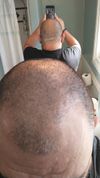
Using PRP or Exosome treatments alongside Finasteride/Dutasteride and Minoxidil may not significantly enhance results. Dutasteride and oral Minoxidil are considered more effective options.
PP405 shows promise for hair follicle reactivation with minimal side effects. Users recommend continuing Minoxidil and Finasteride until more results are confirmed.
Finasteride, Minoxidil, Bioneer CosmeRNA, Technoderma, Kintor, Hope, Breezula, and Follicum treatments showed increases in hair count, with Technoderma showing the highest increase at 24.3 hairs/cm². Amplifica has not yet published results.
Veradermics' new hair loss treatment, VDPHL01, is likely a modified release oral minoxidil, which has received $75 million in funding for clinical trials. Despite skepticism about investing in a known treatment, some believe it could offer improved efficacy and reduced side effects.
A user reported significant hair regrowth after 3 months using 1mg oral finasteride, 1ml 5% topical minoxidil, and microneedling, along with biotin, vitamin D, iron, and zinc supplements. They are optimistic about continued progress despite initial skepticism.
PP405 is suspected to be a scam, with users doubting its legitimacy and effectiveness. Many recommend using proven treatments like finasteride and minoxidil.
PP405 may induce new hair growth but cannot revive completely dead follicles, and its effectiveness on hairlines is uncertain. It is expected to be available by mid-2028, but users are advised to manage expectations and consider using other treatments like minoxidil and finasteride.
PP405 is likely a scam, with concerns about its legitimacy and safety, as it may cause unintended tissue growth. Users suggest sticking to known treatments like finasteride and minoxidil.
A 27-year-old male experiencing hair loss post-Covid is considering PRP (platelet-rich plasma) therapy. He's seeking personal experiences about the process, particularly regarding pain levels, despite his dermatologist's assurance of using local anesthesia.
A 21-year-old experiencing itchy and burning scalp with hair loss was diagnosed with MPB and scalp inflammation. They were prescribed Ketoconazole, Prednisone, Clindamycin, and Finasteride, and are considering trying antihistamines, dietary changes, and "nopoo" to alleviate symptoms.
The conversation is about the anticipated release date of phase II results for a hair loss treatment called GT20029 and the cautious optimism surrounding it due to past disappointments with similar treatments. Users expect an update in the next few months.
The conversation is about adding crushed bicalutamide or spironolactone to a topical mix with finasteride and minoxidil to suppress testosterone in hair follicles, similar to what RU58841 does. The user cannot obtain RU58841 in their country and is seeking advice on this alternative approach for hair loss treatment.
PP405 might take 3-4 years to be available, but some claim Everychem offers a similar product, though its effectiveness is debated. Users discuss the risks of using untested grey market products and the potential for adverse effects.
An experiment to determine the effectiveness of Pyrilutamide in reducing hair loss, using a regimen of Minoxidil and Finasteride, with promising results. The conversation also suggests comparing this to RU58841 as an alternative.
The conversation is about a user obtaining a compounded treatment for hair loss, including 0.1% latanoprost, 0.2% melatonin, and 1% cetirizine. The user also uses 2.5 mg dutasteride, 5 mg minoxidil, and RU58841 daily, and is at Norwood 2.
PP405 is a potential hair loss treatment, but its safety and effectiveness are uncertain. Users advise caution and suggest waiting for more data before purchasing unverified versions.
Exploring treatment options for male pattern baldness, including minoxidil, finasteride, and RU58841, with a focus on Eucapil, a topical agent. The post also discusses research from various sources about the efficacy of these treatments.
Pyrilutamide is being used effectively for hair loss with no side effects, and the user is seeking a cheaper bulk supplier. Users discuss the difficulty of finding affordable, trustworthy sources, with some suggesting potential suppliers.
Norwood 7 hair loss is often excluded from trials to ensure treatments appear more effective and to reduce costs. Some believe treatments effective for Norwood 5 could work on Norwood 7, but companies prioritize market readiness.
The conversation discusses the potential availability of GT20029 for hair loss treatment, with one user noting promising Phase 1 results and inquiring about gray market access. Another user humorously suggests it will take 50 years to become available.
The conversation discusses Breezula, a hair loss treatment, and its Phase 3 clinical trial recruitment at 50 locations. Specific treatments mentioned include Minoxidil, Finasteride, and RU58841.
VDPHL01 shows faster and stronger hair growth compared to standard minoxidil, with no major side effects reported. Users discuss combining it with other treatments like dutasteride and finasteride for better results, while expressing skepticism about the effectiveness of PP405.
The user is experiencing irritation from using PG with RU58841 and is seeking alternative solutions like K&B in the UK. They report redness, itchiness, and flaky skin from the current treatment.
The user plans to pause finasteride for two months to test its effects on mood and productivity, then switch to Pyrilutamide while monitoring hormone levels. Concerns are raised about potential hair loss and the effectiveness of Pyrilutamide compared to finasteride.
PP405 shows promise in stimulating new terminal hair growth by activating dormant follicles, with no systemic adverse effects observed in a short-term trial. However, long-term efficacy remains unproven, and further trials are needed to confirm its potential as a hair loss treatment.
A potential new treatment for hair loss, Pyrilutamide, and the discussion of whether or not people should still be taking traditional treatments like Minoxidil and Finasteride with it.
The conversation is about the effectiveness of a hair loss treatment product containing 0.01% Latanoprost, with the user considering trying it as a vehicle for RU58841. The user questions whether the dosage is too low to be effective.
Setipiprant and bimatoprost are being discussed as potential future treatments for hair loss. Some individuals have started testing setipiprant before FDA approval, but no progress updates are available yet.
Breezula (clascoterone) is expected to be available by late 2026, showing good long-term results with minimal side effects. KX-826 (pyrilutamide) acts faster but is still in earlier development stages.