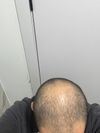
This conversation is discussing the use of minoxidil and finasteride to treat hair loss, with humorous comments thrown in. People are also suggesting drinking minoxidil as a remedy for baldness.
This conversation discussed the potential for a hair loss treatment alternative to minoxidil, with many users debating the economic and health implications of such an option. Some suggested that finasteride could be used as an alternative, while others argued that this would ultimately not benefit pharmaceutical companies due to their reliance on planned obsolescence.
The conversation discusses a user's hair growth routine involving scalp massages, dermastamping, and rosemary oil, with mixed opinions on its effectiveness. Some users suggest proven treatments like minoxidil and finasteride, while others debate the merits of alternative methods.
The conversation revolves around the psychological impact of hair loss and various treatments. Participants discuss using Minoxidil (Min) and Finasteride (Fin), hair transplants, and therapy for mental health. Some also recommend immediate action at the first signs of hair loss and joining supportive communities.
A user who had two hair transplants and is still concerned about their crown area, despite other people reassuring them that it looks normal. The advice given was to use Minoxidil, Finasteride, SMP, and to consider speaking with a therapist.
The user has been using minoxidil and finasteride for 3.5 months and has seen a 20% improvement in hair density. They are advised to continue treatment and consider switching agents or adjusting dosages if needed.
A 20-year-old is dealing with male pattern baldness and considering finasteride despite concerns about side effects. Users recommend treatments like minoxidil, dutasteride, and lifestyle changes, stressing early intervention.
PP405 shows promise for hair follicle reactivation with minimal side effects. Users recommend continuing Minoxidil and Finasteride until more results are confirmed.
The conversation is about someone's 13-month hair regrowth progress using 0.5 mg Dutasteride daily, 5% Minoxidil twice daily, Biotin tablets, and Sebizole shampoo. They are happy with the results.
One study suggests a 0.2% caffeine concentration is nearly as effective as 5% minoxidil for hair loss, while other findings indicate that concentrations between 0.001% and 0.005% are more effective, with 0.001% being the most effective. There is no clear consensus on the optimal caffeine concentration for hair loss treatment.
Minoxidil, finasteride, and RU58841 are discussed as treatments for hair loss, with excitement around a new drug, PP405, and a reformulated oral minoxidil in trials. Concerns about cost, side effects, and long-term use are also mentioned.
The user is considering buzzing their long hair to better assess the effects of finasteride, which they have been using for over two months, and is concerned about maintaining their unique appearance. They are also curious if dyeing short hair could cause any issues.
The user has been using 2mg minoxidil and 1mg finasteride daily for over a year, with inconsistent use for two months, and is experiencing a shedding phase. Suggestions include adding dutasteride, micro-needling, and considering a shorter haircut to manage appearance during shedding.
A dermatologist prescribed Betnovate scalp, a corticosteroid, for a 21-year-old male's hair loss due to DHT. The individual is considering using Nizoral shampoo, topical finasteride, a derma roller, and minoxidil, but is unsure about the effectiveness of two other products suggested by the dermatologist.
A 3-month update on a microneedling-only project to treat hair loss, which has not had significant results in terms of thicker hair but may have seen some acceleration in hair growth and an increase in vellus hairs. The user plans to continue the journey for 6 months before making any changes, such as adding minoxidil or finasteride.
A user reports significant hair regrowth in 11 days using 1mg finasteride daily and 2ml minoxidil daily, and questions if they can maintain their hair with just minoxidil and a good shampoo. They express concern about potential side effects of finasteride.
The user experienced hair regrowth with dutasteride but later lost progress despite using minoxidil foam and dermastamping. Suggestions included reducing dermastamping frequency, conducting blood tests, and considering oral minoxidil or different brands of dutasteride.
The conversation humorously discusses the exaggerated effects of taking a 500mg pill of dutasteride, with users joking about extreme side effects like excessive hair growth and loss of sensation. It also mentions personal experiences with finasteride and the potential high bioavailability of dutasteride in liquid form.
The user had high DHT levels after 8 months on dutasteride, questioning the drug's authenticity. They got dutasteride from a legitimate source and will update on progress.
The "DHT itch" is real and likely due to inflammation at the hair follicle, exacerbated by increased testosterone or androgens. Treatments mentioned include dutasteride, minoxidil, finasteride, and various topical solutions.
The conversation discusses androgen receptor degraders for hair loss, highlighting their potential advantages over traditional AR blockers like RU58841 and pyrilutamide. Concerns about the safety and cost of these treatments are also mentioned.
The user experienced significant hair regrowth in 2.5 months using a combination of minoxidil, finasteride serum, oral minoxidil 2.5 mg, vitamin E, and biotin. Other users praised the results and discussed the dosage of oral minoxidil.
TDM-105795 showed promising hair growth results, with higher efficacy than placebo and minimal side effects. It activates dormant hair follicle stem cells and may maintain gains without immediate loss, unlike minoxidil.
The conversation is about a 53-year-old man's struggle with hair loss and the various perspectives on balding. It also mentions the use of finasteride as a hair loss treatment.
User Salty-Peace-577 experienced hair regrowth after 3 months on 0.5mg oral Finasteride and 2.5mg oral Minoxidil. Others in the conversation expressed surprise at the quick results and discussed the effects of these treatments.
Discussing a regimen to improve the user's hairline, with treatments proposed including minoxidil, rectal microneedling, IV drip of minoxidil, laser removal, PRP injection, topical minoxidil, divine protein shakes, stem cell injections, and keto shampoo.
The user experienced sensitivity and side effects from finasteride and Saw Palmetto, leading to swollen and sensitive breasts, and decided to stop finasteride after two weeks. They are now trying Saw Palmetto, Biotin, and Ashwagandha, while others in the conversation discuss their own experiences with hair loss treatments like minoxidil and finasteride.
Hair loss approaches: 1) using treatments like Minoxidil, Finasteride, RU58841, vitamins, and transplants, or 2) accepting hair loss, trying minimal treatments, and shaving head. Users share experiences and preferences between options.
Peppermint oil may accelerate hair growth, but its effectiveness for regrowing hair or restoring a receding hairline lacks evidence from human studies or personal experiments. Some online examples exist, but they may be biased by product sales.
A user shared their 6-month progress on finasteride but stopped due to financial issues, seeking advice on whether to continue. Replies strongly advised resuming finasteride to maintain progress, with suggestions for affordable options.