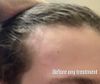
The conversation is about hair loss treatments, including dermarolling, Minoxidil, Finasteride, and RU58841. Users discuss their experiences, side effects, and application methods for these treatments.
A pharmacy student proposed a hair loss treatment using minoxidil, finasteride, clascoterone, and tretinoin, aiming for high effectiveness with minimal side effects. Reactions were mixed, with some questioning its feasibility and others showing interest.
Extended-release minoxidil shows promise for hair regrowth, potentially adding 30 new hairs per cm, but concerns about side effects like increased body hair and shortness of breath remain. Users discuss combining it with finasteride or dutasteride for better results, while some express skepticism about it being a complete cure.
The conversation discusses hair loss treatments, specifically the use of oral minoxidil and finasteride, and the potential for hair regrowth. Many suggest considering a hair transplant for the persistent bald spot, while others recommend additional treatments like derma rolling and microneedling.
PTD-DBM therapy for hair loss is being developed by Dr. Kang-Yell Choi, with human testing planned in South Korea. Some clinics in the U.S. offer PTD-DBM/valproic acid therapy, but it hasn't completed trials yet.
CHK-Cu (copper peptide) and C-60 (branched carbon chain) are discussed as potentially more effective than minoxidil for hair regrowth. Some users are skeptical about the claim that DHT isn't the root cause of hair loss, and others are trying these products to see if they work.
IGFBP‐rP1 shows potential for treating androgenic alopecia by influencing hair cycle transitions. Increasing IGF-1 levels may have similar effects to Minoxidil and 5-AR inhibitors in reducing hair loss.
The user experienced good crown progress in 3 months using finasteride, collagen, vitamins B, C, D, zinc, and dermarolling. They are pleased with the results after a hair transplant on the front and mid scalp.
The conversation is about recommendations for Copper Tripeptide-1 solutions to enhance hair loss treatment, with a focus on using Reviv Hair Serum alongside LLLT therapy. The user also discusses using Minoxidil, RU58841, and other compounds to manage hair shedding and improve hair thickness.
The conversation is about a user experiencing positive hair regrowth results using 1mg of dutasteride, 10% minoxidil, and occasional microneedling, after unsatisfactory results with finasteride. Other users express interest in switching to dutasteride and share similar sentiments about finasteride.
Kintor's phase III trial for pyri (KX-826) showed promising safety and efficacy results, with no drug-related sexual dysfunction reported. Users discussed their experiences with pyri, Minoxidil, Dutasteride, and concerns about the validity of the study results.
A user humorously asks if transplanted hair would grow in prison without finasteride after a hypothetical bank robbery. Replies include jokes and advice, with some mentioning the importance of managing hair loss and the potential consequences of prison time.
The conversation discusses hair regrowth improvement due to zinc, biotin, and D3 supplements, highlighting that hair loss can result from deficiencies, not just androgenetic alopecia. The user emphasizes that treatments like finasteride are not the only solutions.
Hair loss recovery using estrogen and anti-androgen treatment for 18 months showed significant improvement. However, results vary and alternative treatments like RU58841 and Dutasteride may work without systemic feminization.
DLQ01, a prostaglandin F2α analog, shows promise for hair growth by directly stimulating PGE2/PGF receptors without needing conversion, and can be combined with minoxidil and retinoids like tretinoin for enhanced effectiveness. Minoxidil's efficacy may be reduced by COX-1 inhibitors, but using prostaglandin analogs like Latanoprost or Bimatoprost can help maintain its effectiveness.
The user has been using finasteride for 6.5 years and oral minoxidil for 10 months, experiencing slight regrowth on the temples but still has a thin crown. They are considering trying RU58841 and a derma stamp/pen for further treatment.
The user experienced tiny vellus hairs from 0.5mg finasteride and 2.5mg minoxidil over 9 months. Topical minoxidil, alfatradiol, and RU58841 applied twice daily for 1.5 months significantly improved temple hair regrowth.
A 45-year-old man experienced positive hair regrowth using a combination pill of 5mg minoxidil, 1.1mg finasteride, and 1mg biotin over three months. He reported minimal side effects and prefers this treatment over hair transplants.
Use finasteride or dutasteride with minoxidil for at least a year to improve hair density before considering a hair transplant. A transplant might be needed if medications don't provide sufficient regrowth.
A user is using minoxidil for hair loss and considering adding finasteride but their dermatologist advised waiting to see if minoxidil works alone. They are thinking about taking saw palmetto (serenoa repens) and biotin as alternatives and are asking for others' experiences and potential side effects.
A 22-year-old is experiencing hairline recession after switching from topical to oral finasteride, despite using minoxidil. They are considering returning to topical finasteride or trying dutasteride for better results.
OP used oral Dutasteride and Minoxidil but saw significant improvement only after adding PRP treatments. PRP sessions every 4 months maintained the results, though it is expensive.
The conversation discusses a hair loss treatment routine involving daily minoxidil, finasteride, micro-needling, rosemary oil, and biotin supplements. The user shares personal experiences, noting no side effects from finasteride and emphasizing the importance of a healthy lifestyle in preventing hair loss.
Hair loss treatments Fin and Minoxidil failed for user. Suggested alternatives are 75mg oral spiro and RU58841, but concerns about low testosterone and self-esteem were raised.
The conversation discusses personal experiences with hair loss treatments, specifically Minoxidil and Finasteride, with some users regretting not starting treatment earlier and others experiencing side effects. Some users are considering or have switched to topical formulations due to side effects from oral medications.
The post discusses a DIY Dutasteride Mesotherapy procedure for hair regrowth, supplemented with oral Minoxidil. The user describes the process, including preparation, equipment used, and initial results, expressing excitement for future outcomes.
A 26-year-old male experienced hair regrowth and increased density after 6 months using oral finasteride and minoxidil tablets, along with a derma pen, multivitamins, omega-3, creatine, and L-citrulline. He plans to add RU58841 soon and is hopeful for further improvement.
A user's experience with early balding and their regimen of finasteride, minoxidil, microneedling, vitamin D, and biotin to treat it. Another user asked if the minoxidil had helped with regrowth before they started using it.