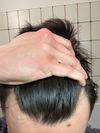
Latanoprost at 0.1% concentration is used to increase hair counts, often mixed with Minoxidil and Finasteride. Users report noticeable results in about 3 months.
The user is using finasteride 1mg every other day and seeks a topical solution to complement it, excluding minoxidil. They are considering various combinations of ingredients like finasteride, dutasteride, and tofacitinib, with options for nourishing oils and other additives.
Dutasteride raises scalp testosterone by 99%, which may not be ideal for those sensitive to all androgens. Some argue finasteride's balancing act might be better, while others believe dutasteride is superior for hair regrowth.
A user shared their positive experience with the telehealth service DocBright, highlighting its affordability and effectiveness in prescribing finasteride, oral minoxidil, and ketoconazole. They noted the service's unique ability to provide a prescription at age 17 but criticized the unprofessional communication with the dermatologist.
A 33-year-old male has been using finasteride, minoxidil, ketoconazole shampoo, and recently added dutasteride, a minoxidil+tretinoin+azelaic acid solution, and derma stamping to treat hair loss for 5 months. There is confusion about the order of progress pictures, making it difficult to assess the treatment's effectiveness.
A 27-year-old male is using a hair loss treatment regimen including topical minoxidil, oral finasteride, dermarolling, ketoconazole shampoo, and mesotherapy with dutasteride and vitamins. He is considering switching to oral dutasteride as recommended by his doctor and questions the necessity and cost of mesotherapy.
The user received trichotest results indicating finasteride is ineffective for them, and they plan to use dutasteride mesotherapy and add cetirizine to minoxidil. They seek advice on incorporating dutasteride into their regimen.
The conversation is about seeking recommendations for clinics in Los Angeles that offer dutasteride mesotherapy for hair loss treatment. The user is asking for experiences and suggestions from the community.
A user shared their positive experience with a hair transplant performed by Dr. Timothy Carman, using 1100 grafts via FUT surgery, and reported satisfaction with the results and minimal scarring. The user continues to use minoxidil and finasteride for hair maintenance.
A user asked if anyone who didn't respond to minoxidil saw improvement after adding tretinoin. One person replied they saw hair growth on their hairline after using a combination of minoxidil, finasteride, and tretinoin, suggesting tretinoin may have made them respond to minoxidil.
The user is experiencing hair regrowth using finasteride, minoxidil, and KX-826. They regret not starting treatment earlier but are now seeing progress.
The conversation humorously discusses hair loss treatments, including minoxidil and finasteride, with a satirical suggestion of using fence castration as a natural finasteride for male deer. Participants joke about the side effects and effectiveness of these treatments.
Hair loss treatments, specifically minoxidil (Minoxidil) and finasteride (Fin). The conversation includes comments about non-responders, the possibility of becoming a responder with grapefruit juice, disappointment, and acceptance of baldness.
The user is happy with the progress in hair density after using a regimen of oral Dutasteride, topical Minoxidil, Tretinoin cream, Ketoconazole shampoo, and an LLLT helmet. They reported no side effects and noted that Dutasteride and Tretinoin were particularly effective.
OP used oral minoxidil (2.5 mg) and dutasteride (0.5 mg) for 12 months with successful hair regrowth. Consistency in treatment is emphasized, and switching from finasteride to dutasteride is suggested for better results.
The conversation humorously discusses hair loss treatments, mentioning Minoxidil, finasteride, and RU58841. It jokingly credits a person for the potential success of a treatment called GT20029.
RU58841 is discussed as a treatment that stops scalp itching when used with finasteride or dutasteride. The user is considering trying RU58841 due to persistent itching despite using the "big 3" treatments.
The user switched from finasteride to dutasteride and from oral to topical minoxidil, noticing better hair regrowth with the new regimen. They experienced no side effects from dutasteride and found topical minoxidil more effective than oral.
The user is experiencing severe hair thinning and is using multiple treatments including topical finasteride, minoxidil, tretinoin, latanoprost, oral minoxidil, dutasteride, saw palmetto, and derma wounding. They are considering adding RU58841 and are contemplating a hair transplant and exosomes due to frustration with current results.
The user experienced side effects like shallow breathing, loss of libido, and erectile issues after using topical finasteride with minoxidil for hair loss. They are considering whether to continue the treatment despite these side effects.
A 31-year-old male experienced side effects from various hair loss treatments, including finasteride and dutasteride, and is considering mesotherapy with dutasteride as a last resort. Another user tried mesotherapy for four months without significant change but experienced no side effects.
Considering a hair transplant, using Pyrilutamide, the potential availability of CosmeRNA, and the significance of taking Minoxidil and Finasteride for long-term results.
The conversation is about a user trying a new hair loss treatment, Ruxolitinib, alongside their existing regimen of finasteride, minoxidil, ketoconazole shampoo, and microneedling. They plan to apply Ruxolitinib to their temples daily for 1-2 months.
The conversation discusses using Sandalore for hair loss treatment, with a focus on finding the correct concentration for a topical lotion. The consensus is to start with a 0.1% concentration due to potential scalp irritation at higher levels.
The user is exploring hair loss treatments and is interested in procyanidin B2 and annurca apples but has concerns about the effectiveness and availability of supplements. They cannot use Dutasteride or Finasteride and are considering Minoxidil with microneedling.
The user resumed using topical finasteride after a two-week break and will update on side effects like water retention and gynecomastia in a month. They are also starting DIM and zinc.
A 30-year-old male is considering switching from topical to oral minoxidil after two months of use on his temples, while also using dutasteride every other day. A user suggests oral minoxidil might be more effective but warns of potential side effects like fluid retention and lower blood pressure.
A trans man experiencing hair loss after starting testosterone treatment has seen positive results using topical minoxidil and finasteride, though his hair remains thin. He is considering continuing his current treatment and exploring additional options like microneedling and Breezula, while acknowledging the impact of testosterone on hair loss.