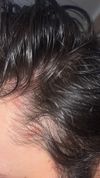
The conversation humorously discusses hair loss treatments, including minoxidil and finasteride, with a satirical suggestion of using fence castration as a natural finasteride for male deer. Participants joke about the side effects and effectiveness of these treatments.
The conversation is about making homemade topical finasteride by crushing pills and mixing them with ethanol and propylene glycol or minoxidil. Users discuss sourcing options and share experiences with DIY solutions.
The potential of using Verteporfin to prevent hair loss scars and possible regrowth, with two doctors currently testing it, although the price of a 15mg bottle is expensive.
The conversation discusses skepticism about the effectiveness and formulation of a $10 RU58841 gel from a Korean brand, questioning if ethanol is used to hold the active compounds. Concerns are raised about the feasibility of selling it at such a low price.
A user inquired about safely ingesting topical 5% Minoxidil due to the unavailability of oral Minoxidil in their country. They seek advice on diluting it to match the equivalent of 1mg oral Finasteride.
The conversation provides scientific sources on hair loss treatments like finasteride, minoxidil, and others, aiming to help individuals make informed decisions about their treatment options. It also discusses phytochemicals as alternative treatments due to concerns about side effects from drug-based therapies.
Minoxidil can be effectively delivered through nanoemulsions containing eucalyptol or oleic acid, enhancing its diffusivity and targeting hair follicles. This contradicts the advice against mixing minoxidil with oils in topical formulations.
The conversation is about the effectiveness of Minoxidil formulations with different alcohol and propylene glycol (pg) ratios. The user finds that a formulation with 20% pg and 80% ethanol dries faster but is concerned about absorption time.
Sulforaphane, found in broccoli sprouts, promotes hair growth by degrading DHT. Users discuss its potential benefits and joke about unconventional application methods.
The user has been using Minoxidil for 15 years and recently started using a topical Finasteride spray, noticing an increase in small, thickening hairs after two months. They experienced side effects with oral Finasteride but only minor ones with the spray, and still have more than half the bottle left after two months of use.
A user shared their natural hair regrowth routine that includes using a peppermint oil and coffee shampoo, applying liquid silica, taking vitamin D and magnesium supplements, exercising regularly, and maintaining a healthy diet. They believe this routine has stopped their hair loss and improved hair thickness without using pharmaceuticals.
P-1075 is a more potent hair growth agent than Minoxidil, but it poses significant heart risks, making it unsafe for use. Despite promising results in macaques, concerns about its cardiotoxicity in rats have halted its development.
A user discusses using a mix of 10% CBD oil and emu oil for hair regrowth, seeking help to apply 3-4 mg daily. They mention needing 0.5-1ml to cover their buzzed scalp.
The conversation discusses using estradiol and its derivatives for hair loss without causing feminization. Users mention alternatives like alfatradiol, topical 17b-Estradiol, and DIM (Diindolylmethane).
The user is experiencing scalp irritation and hair thinning, possibly due to stress, with red patches on the face and dry skin. They are considering seeing a dermatologist and have used tea tree and rosemary oil.
The conversation discusses hair loss treatments, specifically comparing rosemary and Redensyl, with the original poster already using finasteride and minoxidil. Users also mention using topical melatonin, caffeine, geranium, rosemary oil, jojoba, coconut, and argan oil for hair and scalp care.
The conversation discusses using pumpkin seed oil and rosemary oil for hair thinning, with skepticism about their effectiveness compared to pharmaceutical options like finasteride and minoxidil. Some users suggest trying natural treatments, while others emphasize the proven success of pharmaceuticals.
The user regrets not using medication after a failed hair transplant and is now using a combination of minoxidil, finasteride, derma rolling, oils, and ketoconazole shampoo to try to improve hair regrowth. They are seeking feedback on progress and considering further treatment options.
The conversation is about a user considering switching to a 4 in 1 spray containing Minoxidil, Caffeine, Melatonin, and Tretinoin for hair loss after using a finasteride and minoxidil spray. The user recently switched to oral finasteride and is contemplating whether to continue using the remaining finasteride and minoxidil spray.
A user asked if microneedling, massages, and essential oils can prevent further hair loss in the crown area without using drugs. The response indicated that without a 5-alpha-reductase inhibitor, hair loss will likely continue.
Rosemary oil is being used as an addition to minoxidil and finasteride for hair health, with mixed opinions on its effectiveness. Some users report positive results, while others see no benefit or experience adverse effects.
The conversation is about a topical spray containing finasteride, minoxidil, and tretinoin, with users discussing its effectiveness compared to more established brands. One user mentions using a product with 5% minoxidil, 0.15% finasteride, and 0.15% tretinoin.
The conversation is about a hair loss treatment regimen using high concentrations of natural ingredients: pumpkin seed oil, saw palmetto, rosemary and peppermint essential oils, and caffeine. The user also practices microneedling, scalp massage, and takes Nutrafol.