Search
for
Sort by
Community Join
540-570 / 1000+ resultscommunity Best way to limit scalp irritation with topical fin?
The user is experiencing scalp irritation from a compounded treatment of finasteride, minoxidil, and tretinoin. They are considering switching to a non-alcohol, propylene glycol-free formula with a lower tretinoin percentage to reduce irritation.
community deeper understanding of microneedling
community Peppermint oil and/or dermarolling???
The conversation is about someone experiencing hair thinning at the temples and seeking alternative treatments to Minoxidil due to side effects. They are inquiring about the effectiveness of peppermint oil and dermarolling for hair growth.
community Balding (i guess?) 22 yr old male with seborrheic dermatitis
A 22-year-old male experiencing hair thinning and loss, possibly due to seborrheic dermatitis or low vitamin D, is cautious about using minoxidil or finasteride due to heart palpitations and high blood pressure. Suggestions include using ketoconazole shampoo to control inflammation and focusing on treating the dermatitis first.
community spironolactone pills to topical
Crushing spironolactone pills and combining them with minoxidil for topical application may be effective for hair loss, with the addition of finasteride suggested. Adding rosemary and peppermint oils can help mask the unpleasant smell.
community Peppermint, rosemary and Minoxidil topic preparation. DIY
A user is seeking a recipe to create a topical solution using Minoxidil tablets, rosemary, peppermint, and possibly coconut oil. They are asking for specific amounts and mixing instructions.
community Shedding again on oral minoxidil, any advice would be really appreciated!
User started oral minoxidil 2.5mg in September 2022, experienced initial shedding, then reduced shedding, but now shedding increased again after 8 months. User is a 43-year-old female also on Spironolactone, seeking advice.
community Why is minoxidil (topical) growing new hair literally only here? Nothing new on my scalp only my forehead lmao
Minoxidil is causing hair growth in unexpected areas like the forehead, eyebrows, and body, rather than the scalp. Users discuss the effects of both topical and oral minoxidil, with some also using finasteride and experiencing varied results.
community Experience using natural oils (rosemary, peppermint) for hair regrowth?
The conversation is about someone using finasteride for hair loss and considering adding peppermint oil to their regimen. One person replied that they tried peppermint oil for about a month with no results.
community Dut/Minox/Needling to Dut/Oral Minox/Tretinoin/Needling
The user had been using Minoxidil and Dutasteride with micro-needling but experienced hair loss after switching Minoxidil brands. Their doctor prescribed oral Minoxidil and Tretinoin, but the pharmacist suggested isotretinoin might be a more cost-effective alternative.
community Feels like it’s working. Diffused thinning. 1 month of topical .3% fin and .6% min, .025% tret, and weekly microneedling
A 43-year-old from Thailand shares progress after 1 month using topical finasteride, minoxidil, tretinoin cream, and weekly microneedling for diffused thinning. Users compliment his appearance and suggest he doesn't need treatment.

community Finasteride, Minoxidil, and Needling since march, still losing hair?
The user is experiencing hair loss despite using finasteride, minoxidil, and needling since March. They suspect needling too deeply might be an issue and have adjusted the depth recently.
community Do you guys believe oral minoxidil causes faster aging of the face? (By mechanism like bloating, dark circles, and inhibition of collagen)
Oral minoxidil may cause facial bloating and dark circles, making some users feel they look older. Some consider reducing the dosage or switching treatments due to these side effects.
community Has anyone tried latanoprost+microneedle?
Microneedling combined with latanoprost may convert vellus hairs to transitional or terminal hairs. The user suggests using oral minoxidil to increase vellus hair, then applying a high concentration of latanoprost with microneedling for conversion.
community Hives/Rash from Kx 826 Pyrilutamide???
OP developed hives after using Kx 826 (Pyrilutamide) 1% twice daily for 3 weeks. The hives appeared on the arms, chest, and groin area.
community Anybody have any remedies for an irritated scalp with treatment?
The user is experiencing scalp irritation after increasing their finasteride and minoxidil dosage with tretinoin and is considering reducing application frequency. They seek advice on managing the irritation.
community Oral Minoxidil - Week by week progress thread.
The user shared their experience with liquid Minoxidil, which initially worked well but caused severe skin irritation, leading them to stop. They are now trying oral Minoxidil and plan to document their progress weekly.
community The (many) benefits of buzzing during treatment
Buzzing hair can improve mental health and make applying treatments like Minoxidil and microneedling easier. It helps with self-acceptance and reduces the impact of hair loss on appearance.
community due to medication, age, over use of color and heat, my hair began to fall out and break. I shaved my head (35F) and I’m horrified at myself now
A woman experienced significant hair loss due to medication, hair coloring, and heat damage, leading her to shave her head and feel distressed. She is considering using wigs and possibly oral minoxidil to manage the situation while her hair regrows.
community DHT Itch flareups and information
community Rosemary Oil experiment 4 months in
A user experimented with applying pure rosemary oil to a single hair strand twice daily, observing increased thickness and pigmentation, but questioned if the oil or the application method caused the change. Some users noted rosemary oil might be as effective as 2% minoxidil for hair growth, though others warned about potential harm from using undiluted oil.
community Hydrocortisone helps with itch
Hydrocortisone helps relieve scalp itchiness, possibly caused by minoxidil. Users discuss its effectiveness for managing this side effect.
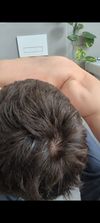
community Brutal shedding after switching to oral min
Switching from topical to oral minoxidil caused heavy shedding and thinner, brighter hair. The user is seeking advice on whether hair can recover to its previous state.
community Topical minoxidil on scalp causing dry skin on face?
The user started using 5% liquid minoxidil on their scalp and noticed increased facial dryness and faster facial hair growth. They plan to reduce the application to once a day to see if it helps with the dryness.
community Carnitine Tartrate + Potassium chloride + Niacin
The post discusses using Carnitine Tartrate, Potassium Chloride, and Niacin to reduce hair shedding, with the user experiencing significant improvement. The user also suggests considering a ketogenic/paleo diet for those with insulin resistance-related hair loss.
community WTF is this little white guy doing on the middle of my forehead?
A humorous discussion about random, long hairs appearing on the body, with no connection to hair loss treatments like Minoxidil, finasteride, or RU58841. Participants share personal anecdotes about these unusual hairs.
community CAUTION: My Experience with RU58841
The user experienced concerning side effects like throat irritation, shortness of breath, chest pain, and testicle pain after using RU58841 for hair loss, despite also using finasteride and minoxidil. Other users shared mixed experiences, with one advising to stop using RU58841 due to similar side effects, while another reported significant hair loss reduction without side effects.
community New hair growing in small clusters
The user is experiencing hair regrowth in small clusters using oral minoxidil, oral finasteride, a red light cap, and Nizoral 2% shampoo. They are hopeful for continued improvement and thicker hair.
community 5MG MIN Crazy hypertrichosis on eyebrows and forehead emerging? How to manage?
Minoxidil use led to excessive eyebrow and forehead hair growth, prompting grooming advice like waxing, tweezing, and shaving. Some suggested reducing dosage or considering electrolysis for permanent hair removal.