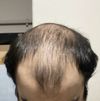
A 25-year-old shared their 3-month progress using a combination of 1mg finasteride and 5% minoxidil for hair loss. The images show noticeable improvement in hair density.
The conversation discusses using GHK Cu + AHK Cu peptides combined with topical dutasteride and minoxidil for hair regrowth. It mentions negative side effects of finasteride and promotes a specific copper peptide serum.
Switching from liquid to foam Minoxidil to avoid scalp irritation, with a method to melt the foam for easier application. Users discuss alternatives and personal experiences with Minoxidil, including issues with propylene glycol and different application methods.
User reports 12-week progress with HIMS spray, Minoxidil, micro-needling, and biotin. Notable baby hairs on crown and temples, hoping for further improvement.
PP405 from Everychem is likely fake and potentially harmful, with concerns about its stability and the risk of using the wrong MPC inhibitor, which could damage hair follicles. The real PP405 was studied under strict conditions, and DIY attempts are discouraged due to unknown formulation and quality control.
A user who was part of an ongoing trial for a prolactin blocker and had regrowth, but the progress photos were not shared due to negative reactions from other users. Treatments mentioned include HMI-115, Minoxidil, Finasteride, and RU58841.
A 44-year-old man experienced significant hair regrowth after switching from topical to 1.25mg oral minoxidil and 0.5mg daily finasteride, with no side effects. He noticed hair thickening after two months and credits the oral form's effectiveness.
Bhringraj oil showed better hair regrowth results than minoxidil in mice, but its effectiveness in humans is uncertain. Users discussed using bhringraj oil, coconut oil, and microneedling for hair regrowth, with some reporting slow but noticeable improvements.
The user has been using oral finasteride for over a year and recently added GHK-CU for two months, seeing progress but seeking further improvement, especially on the hairline. They discuss sourcing GHK-CU, its effects, and the importance of third-party testing, while considering additional treatments like dutasteride and hair transplants for better results.
Hope Medicine's announcement of the HMI-115 Phase II clinical trial for androgenetic alopecia in China; other related trials have been conducted or are ongoing in different countries, including Australia, US, and Europe. There is speculation that the product may be accepted across borders without additional testing.
SCUBE3 and GT20029 are potential treatments for hair loss, with SCUBE3 stimulating hair growth and GT20029 protecting against DHT. A combined approach using SCUBE3, finasteride or dutasteride, and later GT20029 could provide a comprehensive treatment for androgenetic alopecia.
A user's experience with the Big 3 (minoxidil, finasteride and RU58841) hair loss treatment along with dermarolling. The dermaroller pin was 1.5mm used once per week and drew some blood but not a lot.
The user experienced significant hair growth using Hims chewable tablets containing finasteride and minoxidil but switched to a topical spray due to side effects from finasteride. The user reported improved side effects after switching to the topical form and noted continued hair growth progress.
The user experienced hair loss and started using minoxidil (5%) and finasteride (0.5 mg daily) with inconsistent application but still saw noticeable improvements by the end of January. They use the liquid form of minoxidil.
Minoxidil is extremely toxic to cats, even in small amounts, and can be fatal. Switching to oral minoxidil is safer for cat owners, but precautions should still be taken to prevent exposure.
Peptides, specifically GHK-Cu, are being considered for hair growth benefits, such as increasing blood flow to the scalp and preventing hair follicle shrinkage. A user reported starting GHK-Cu after hearing it made a friend's hair thicker.
The post is an update on the user's hair loss journey. They have a strong hair follicle that has remained unaffected by hair loss for almost 3 years. The user is starting finasteride and using ketoconazole, alfatradiol, and oral castor oil for hair maintenance.
The conversation discusses a user's plan to inject NAD+ and GHK-Cu into their scalp to improve hair health, with concerns raised about the risks of infection and necrosis. Alternatives like finasteride, dutasteride, microneedling, oral minoxidil, and scalp massages are suggested.
The user observed that stopping nicotine and caffeine improved their scalp health while using oral finasteride. However, relapsing with caffeine and nicotine caused scalp tightness and inflammation.
Minoxidil is highly toxic to pets, particularly cats and dogs, and there is a call for proper labeling to warn pet owners. Despite some skepticism about the effectiveness of petitions, many agree that awareness and caution are necessary to prevent accidental poisoning.
Cecred hair drops, containing keratin and biotin, are questioned for their effectiveness compared to proven treatments like minoxidil. Users express skepticism, suggesting deceptive marketing and the possibility of undisclosed use of other treatments like finasteride.
The conversation discusses hair loss treatment using finasteride, minoxidil chews, 0.5 dermarolling, 2% ketoconazole, and a silk bonnet. The user reports positive progress and plans to continue the regimen.
Minoxidil is highly toxic to cats and can be fatal with minimal exposure. Users suggest switching to oral minoxidil or taking precautions to prevent pet exposure.
User is impressed with 3-month progress using Hims oral finasteride, minoxidil, and biotin. Encouragement to view hair loss treatment as a long-term strategy.
The conversation discusses a finding that a caffeine solution is as effective as 5% Minoxidil for hair loss. Specific treatments mentioned include caffeine solution and Minoxidil.
The conversation humorously discusses a visit to the Everychem laboratory, with a focus on hair loss treatments like Minoxidil, finasteride, and RU58841. The tone is satirical.
A user shared their 3-month progress using oral minoxidil, finasteride, and topical minoxidil for hair loss. Another user commented on the significant improvement, hoping for similar results.
A 24-year-old male with androgenetic alopecia is using a treatment of Dutasteride 0.5 mg, oral Minoxidil 2.5 mg, L-cysteine, and a Ketoconazole/Caffeine/CBD shampoo. He's considering using a dermaroller to improve results, taking biotin and iron vitamins, and quitting nicotine due to its potential link to hair loss.
The user shared progress pictures showing hair improvement after using topical minoxidil 5%, finasteride 1%, caffeine 1%, biotin 1% for three months, and dutasteride 2.5 mg for two months. The user is happy with the results and has not mentioned any side effects.