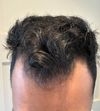
Minoxidil alone gave one user only short fuzzy hair after a year. They're now trying a 0.5 microneedling roller and seeking opinions on its effectiveness after using minoxidil.
Lab-grown hair using iPSCs is being explored, but practical applications are limited. Finasteride is suggested as the only current effective treatment.
A 22-year-old is experiencing hair thinning and is using oral finasteride and minoxidil chewables, along with microneedling and anti-dandruff shampoo, to manage it. Despite experiencing significant shedding, they remain hopeful for regrowth in the coming months.
A user shared a video suggesting that 0.5mm microneedles are most effective for hair growth. Other users mentioned different microneedle lengths and advised consulting a dermatologist for personalized treatment.
A 19-year-old male with no family history of androgenetic alopecia (AGA) is experiencing hair loss and considering using a topical minoxidil and finasteride mixture. Despite low vitamin D levels and normal DHT serum levels, he seeks confirmation of AGA before starting treatment.
A 17-year-old shares their hair loss treatment, using oral finasteride, dutasteride, stemoxydine, alfatradiol, and a placebo product, but cannot use minoxidil due to an allergic reaction. Others discuss similar treatments and question the use of dutasteride at a young age.
The conversation discusses potential hair loss treatments, including Setipiprant, Bimatoprost, and Follicept. The user encourages signing up for Follicept, which may come to market soon.
A 26-year-old is starting a hair loss treatment using 1mg oral finasteride daily, 5% topical minoxidil foam twice daily, 2% ketoconazole shampoo weekly, and microneedling once a week. They noticed worsening hair loss over the past year and are seeking advice.
User starts Nuclear Stack treatment for hair loss, including Dutasteride, Minoxidil, RU58841, Derminator 2, and supplements. Seeks advice on storing and dosing RU58841.
A 51-year-old woman switched from Minoxidil to Maneup, a copper peptide treatment, experiencing initial hair loss but later regrowth with different hair texture. Users debated Maneup's effectiveness, with some considering it alongside finasteride.
The user has been using oral minoxidil and dutasteride for hair loss without success and is considering adding topical 17α-estradiol, Pyrilutamide, Clascoterone, or cetirizine. They have confirmed low serum DHT levels and are exploring additional treatments due to genetic sensitivity to DHT and prostaglandin D2.
Setipiprant trial for hair loss failed, showing no difference between placebo and treatment. Discussion also noted placebo users reporting side effects.
The conversation discusses hair loss caused by Trenbolone use, with suggestions to stop using it and consider treatments like Minoxidil, Dutasteride, and RU58841. It highlights that Minoxidil may temporarily regrow hair, but stopping Trenbolone is crucial to prevent further hair loss.
Using a combination of micro-needling and exosome injections as a potential treatment for male pattern baldness, which could result in 50% or more regrowth.
The conversation is about comparing the effectiveness of fluridil and clascoterone in preventing hair loss and inquiring about their use as standalone treatments. There is a question about the concentration of the fluridil brand for efficacy.
The user humorously describes trying various hair loss treatments, including minoxidil, finasteride, and RU58841, with a satirical twist involving psychedelic experiences and imaginary entities. They mistakenly used LSD instead of RU58841 and plan to continue experimenting with other substances.
ET-02, a PAI-1 inhibitor, is not proven to be more effective than Minoxidil for hair loss. Other treatments like finasteride, dutasteride, PP405, and AMP-303 are also discussed, focusing on cellular senescence and oxidative stress.
Choosing between two hair loss treatments, with a preference for a higher concentration of RU58841 and 5% minoxidil, avoiding oils like castor and argan that may hinder absorption.
The conversation is about using adenosine, finasteride, and minoxidil for hair loss treatment. The user ordered a 0.75% adenosine solution and is currently using finasteride 1mg and minoxidil 5%.
Microneedling for hair loss is discussed, with users mentioning using 0.6mm needles twice a week. Treatments like Minoxidil, finasteride, and RU58841 are implied but not directly mentioned.
2% fucoidan alleviated AGA symptoms, promoted hair growth, and increased hair density in mice. Fucoidan is considered safe for humans as a supplement and topical skincare product, with potential therapeutic effects against AGA.
GHK-Cu and AHK-Cu peptides show limited success for hair loss, with skepticism about their effectiveness and concerns about misleading claims. Users report better results when combined with treatments like finasteride, dutasteride, minoxidil, and other methods.
The conversation discusses a clinical trial for Setipiprant in the US, starting June 29th, with eligibility excluding recent users of minoxidil or finasteride. It encourages informed decision-making before signing up.
The user shared a 6-month update on their hair loss treatment using finasteride, minoxidil, Nizoral shampoo, and vitamin D. They reported progress but mentioned possible sexual side effects and recent shedding, seeking advice on adjusting their finasteride dose.
A user's 6 month hairline results from using dutasteride and microneedling, which resulted in successful regrowth of their thinning temples. Other users commented with similar experiences that were also achieved through the use of finasteride, dutasteride and minoxidil.
2 Deoxy D Ribose may promote hair growth and aid wound healing, potentially enhancing microneedling effects. Users discuss its combination with microneedling for better hair growth results.