Ordering Pyrilutamide from Minoxidilmax to use as an experimental topical treatment for hair loss, with discussion of the carrier used in trials and encouragement from other users.
Kintor Pharma completed enrolling subjects for a Phase III trial of KX-826 for male hair loss treatment. The trial includes a 24-week treatment period and a 4-week safety follow-up, with results expected in about 6-7 months.
The user is treating hair loss with dermarolling, a laser helmet, scalp massages, and Nizoral. They stopped using minoxidil and finasteride and are considering pumpkin seed oil and sulforaphane.
The conversation is about dealing with hair loss and exploring treatments like HRT, Minoxidil, and micro-needling. The user is considering wigs and possibly a hair transplant while expressing feelings of self-doubt and seeking support.
Low-Level Laser Therapy (LLLT) is seen as a safe and effective method for maintaining hair and promoting regrowth in androgenetic alopecia (AGA) and male pattern baldness (MPB), with devices like the HairMax LaserComb® and iRestore helmet being popular. Some users and professionals are skeptical about its long-term effectiveness and cost.
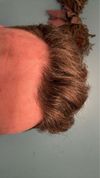
The user shared progress pictures showing hair growth after six months of using topical minoxidil twice daily, finasteride once daily, derma rolling every four days, and initially taking zinc and vitamin D. They also used scalp massaging techniques with minoxidil.
There have been no new effective hair loss treatments since finasteride, despite technological advancements. Current treatments include finasteride, minoxidil, and RU58841, with ongoing challenges and potential future solutions in research.
A user with diffuse thinning, currently using finasteride, biotin, minoxidil, and nizoral shampoo, is considering a topical solution called "82M" but is skeptical due to its high cost and lack of supporting research. They seek others' experiences with "82M."
Hair loss discussion with a focus on a single resilient hair, jokingly called "chad hair," that remains despite hairline receding. Some users suggest microneedling and hair follicle cloning as potential treatments.
A user shared progress pictures showing hair improvement over 85 days using 1mg finasteride daily, 1ml minoxidil nightly, and weekly microneedling. Another user commented on the positive results and shared their own treatment hopes.
Clascoterone solution is in Phase III trials for male androgenetic alopecia, with results expected in the second half of 2025. Commercialization is anticipated in about 2-3 years, but there are concerns about delays and market expectations.
The user, a 27-year-old male, has been treating early hair loss with topical finasteride and minoxidil, then switched to oral finasteride and dutasteride, but has seen no improvement and plans to add oral minoxidil. Despite treatment, hair loss has progressed from Norwood 1-1.5 to Norwood 3, with noticeable thinning, especially on the left side.
A Dutasteride Simulator predicts serum dutasteride, serum DHT, and scalp DHT levels using models from research papers. It simulates various dosing schedules to determine steady-state effects and visualizes outcomes, including hair growth-related scalp DHT suppression.
The conversation is about using Maxogen-X, a topical solution containing minoxidil, finasteride, tretinoin, and azelaic acid, for hair loss treatment. Users discuss their experiences, including initial shedding and the hope for thicker hair, while sharing progress updates.
The user has been using various hair loss treatments, including dutasteride, oral minoxidil, finasteride, RU58841, and dermarolling, but feels they may have lost hair and is considering a hair transplant. They are advised to stick to one treatment for 6-12 months to see results, as frequent changes may hinder progress.
Pelage is developing a topical hair follicle stem cell therapy, PP405, for non-scarring alopecias like androgenetic alopecia, with Phase III trials planned and a potential market launch by 2027. The treatment may not require continuous use after initial regrowth.
User questions credibility of a hair loss "cure" found by a non-expert and warns against wasting money on unproven supplements. Others discuss trying natural extracts and the importance of researching the enzyme 3ADH for potential hair growth benefits.
The conversation discusses how many male models and celebrities likely use finasteride to prevent hair loss, with some expressing surprise that it's not just good genetics keeping their hair intact. Specific treatments mentioned include finasteride and, in one query, minoxidil.
Kintor Pharmaceutical's KX-826 shows promising results for hair loss treatment. Users discuss the use of anti-androgens like spironolactone and RU58841, noting concerns about concentration and safety.
CB 03 01 (Breezula) was tried for hair loss but showed no significant improvement, with issues in dissolving and application. Finasteride and dutasteride remain the most effective treatments, while minoxidil is also used; CB's effectiveness is questioned, and topical alternatives like bicalutamide are considered.
A 26-year-old male showed hair improvement after 6 months of daily 0.5mg dutasteride and 5mg oral minoxidil. He thanked the tressless community and haircafe for their support.
The user experienced significant hair regrowth and reduced shedding after using finasteride, dutasteride, and topical minoxidil for six months, with no major side effects. The user emphasizes the importance of tracking progress and plans to continue the treatment indefinitely.
The conversation discusses hair loss treatment options, focusing on finasteride and its potential effects on gynecomastia. The user is considering finasteride while managing hormone levels with supplements like boron, vitamin D, zinc, magnesium, and P5P, and is advised to consult an endocrinologist for further evaluation.
The conversation confirms that to make a 5% RU58841 solution, 1.5 grams should be added to 30 mL of KB Solution. The discussion involves calculating the correct dosage for hair loss treatment.
A user shared a 6-month progress picture showing improvement in hair loss using biotin and minoxidil. They also mentioned dealing with stress, diet issues, and seborrheic dermatitis.
The user experienced hairline improvement using microneedling once a month with a 12-pin set at 1.5-2.0mm and taking Tru Niagen, alongside a heavily modified diet. They attribute the slow hairline improvement to environmental factors, particularly diet, rather than solely genetic factors.
Pyrilutamide, a potential topical treatment for male pattern baldness, and the user's anticipation of its Phase 2 trial results. Several users discussed their experiences with Finasteride and RU58841, while others voiced skepticism about the efficacy of Pyrilutamide.