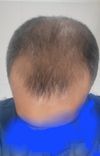
A 36-year-old man with androgenetic alopecia suspects copper and zinc deficiencies may be accelerating hair loss and is supplementing copper to address this. He is also monitoring blood sugar levels due to previous prediabetes concerns and plans to test for insulin resistance.
TDM-105795 showed better efficacy and safety in trials for hair loss, with a higher hair count improvement compared to GT20029 and HMI 115, but it's not as widely discussed. The user is questioning why this is the case.
The conversation discusses hair loss linked to BDNF-increasing nootropics like Semax and Lions Mane. Suggested topical treatments include capsaicin, beta-glucan, and ginseng to counteract TGF-B activation.
Finasteride, Minoxidil, Bioneer CosmeRNA, Technoderma, Kintor, Hope, Breezula, and Follicum treatments showed increases in hair count, with Technoderma showing the highest increase at 24.3 hairs/cm². Amplifica has not yet published results.
Winlevi (clascoterone 1%) is being discussed as a potential hair loss treatment. Users are considering its use despite concerns about its delivery method.
Pelage plans to release phase 2 results and start phase 3 trials for PP405 in 2050, but skepticism remains due to past delays and unfulfilled promises. Users express frustration over the lack of progress in hair loss treatments, mentioning Minoxidil, finasteride, RU58841, CB-03-01, and Fluridil.
The user is considering using P5P to reduce high prolactin levels and is questioning if oral minoxidil could be contributing to the issue. They are also debating whether to switch from oral to topical minoxidil.
Stevia microneedles increased minoxidil absorption and hair growth in mice. The conversation humorously questions the applicability of these results to humans.
The conversation discusses hair loss treatments, specifically Minoxidil, finasteride, and RU58841. The user seeks opinions on the effectiveness of these treatments.
Orient Bio is developing a PLGA formulated version of Cyclosporine A to stimulate hair growth without its immunosuppressant effects. Users discuss various treatments like Clascoterone, PP405, minoxidil, and tacrolimus, expressing hope for new developments and sharing personal experiences with these treatments.
The conversation is about the release timeline for clinical trial results and the availability of Breezula, a hair loss treatment. The user is not comfortable buying it as a research drug from China.
IGFBP‐rP1 shows potential for treating androgenic alopecia by influencing hair cycle transitions. Increasing IGF-1 levels may have similar effects to Minoxidil and 5-AR inhibitors in reducing hair loss.
An 18-year-old is using a high-dose hair loss treatment regimen including finasteride, minoxidil, dutasteride, and plans to add RU58841 and bimatoprost, despite warnings from others about the risks. The user is determined to reverse hair loss but acknowledges the potential dangers and does not recommend others follow their approach.
A potential treatment for hair loss that involves injecting fat into the scalp; the role of testosterone and estrogen in thinning fat tissue under the skin; research on using lard to treat androgenic alopecia, as well as PRP + ACELL/amniotic stem cell treatments; and ongoing clinical trials by doctors involved in the study.
Kintor Pharmaceutical's KX-826 shows promising results for hair loss treatment. Users discuss the use of anti-androgens like spironolactone and RU58841, noting concerns about concentration and safety.
A user started working with a leading hair cloning lab to address their hair loss. They have a computer science background and will assist with data science.
A 35 year old male who has seen good results from Finasteride and microneedling, with minimal side effects. Replies to the post ask about the device used for microneedling, discuss the progress made, and offer encouragement.
A user shared their 5-month progress in treating hair loss using HIMs topical finasteride and minoxidil, micro-needling with a 1.5mm needle, and RU-58841. The post includes progress pictures showing improvement from a NW7 hair loss stage.
The conversation discusses DIY cosmetic procedures like PRP, mesotherapy, and micro-needling, with some users experimenting with Minoxidil, finasteride, and RU58841 for hair loss. It highlights a community of mostly older women performing these treatments themselves.
RU58841 showed promise for treating androgenic alopecia but research was halted due to financial and organizational changes. There were no significant safety concerns reported in human trials.
The conversation discusses the comparison of Pyrilutamide Phase II US trial results with 1 mg finasteride for hair loss treatment. It mentions that the total hair count increase in the US trial was not as good as the China trial.
The conversation discusses using Minoxidil, finasteride, RU58841, and pyrilutamide for hair loss treatment. The user is considering adding a topical treatment and has not experienced side effects from current treatments.
A 31-year-old experiencing rapid hair loss is considering whether to shave their head or use treatments. They were prescribed B12, topical finasteride 0.1%, and minoxidil 10% but are unsure about the correct dosage and potential side effects.
Pelage Pharmaceuticals raised $120M for their hair loss treatment, PP405, showing strong investor confidence despite limited data. There is skepticism about its efficacy and long-term effects compared to treatments like GT20029.
A 23-year-old man with hair loss, despite using dutasteride, oral minoxidil, and RU58841, is considering bicalutamide for regrowth but is concerned about feminization. Alternatives like topical estrogen, JXL069, and spironolactone are discussed, with suggestions to explore thyroid levels and other potential underlying conditions.
The conversation discusses a hair loss treatment formulation containing cyclosporin, minoxidil, and tacrolimus, and mentions ongoing research on hair color reversal. The treatment showed high efficacy in restoring hair color in trials with 40 to 50 people.