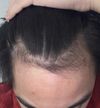
The user shared a 2-month update on using Minoxidil and dermarolling twice a month for hair regrowth. Another user asked if they are also taking finasteride.
A 17-year-old is experiencing rapid hair loss from NW1.5 to NW3 in six months and feels dermatologists are unhelpful. They are using Minoxidil (Rogaine) and seeking advice on application.
The user has been using topical minoxidil and finasteride for 1.5 years, which has thickened existing hair but left some areas thin. They suspect the treatment may be causing dandruff or seborrheic dermatitis and are seeking advice.
The conversation discusses starting topical finasteride for hair loss, with concerns about high dosages. It suggests starting with a lower concentration, like 0.1% or 0.3%, especially with liposomal versions.
The user achieved significant hair regrowth using 0.5mg oral Dutasteride, 2.5mg oral Minoxidil, topical Minoxidil twice daily, Ketoconazole shampoo twice a week, and weekly dermastamping with no side effects. Results were noticeable after 2-3 months, with the best results at 9 months.
The user has tried various hair loss treatments, including topilutamide, alfatradiol, pyrilutamide, and topical spironolactone, but experienced headaches. They are inquiring about the availability and legality of clascoterone in Spain.
The user experienced hair improvement over a year using finasteride, topical minoxidil, tretinoin, ketoconazole, and microneedling. The hair density and hairline have strengthened with this routine.
The user is experiencing increased hair shedding after one year of using oral dutasteride. They are seeking opinions on their DHT test results, which show levels below baseline.
The conversation discusses using minoxidil with retinol for hair loss treatment. Users share their experiences and opinions on the effectiveness of this combination.
Hair loss treatments RU55841, CB-03-01, and Eucapil were discussed, with concerns about needing increased dosages over time and potential side effects. A user suggested that CB's results could be due to various factors and that combining it with finasteride might slow down any upregulation.
A 23-year-old experienced hair regrowth using 1mg finasteride and 5mg oral minoxidil after initial shedding, but noticed hair loss after stopping minoxidil and starting vaping. They resumed oral minoxidil and finasteride, attributing hair loss to nicotine and stopping minoxidil, and are considering additional treatments like dutasteride.
Topical finasteride in a liposomal formulation reduces systemic absorption compared to ethanol solutions. The user is seeking sources for such products, noting that popular options like morr-f are not liposomal.
The conversation discusses the effectiveness of a multivitamin containing Zinc, Biotin, B12, B6, B2, B1, Vitamin D, and Iron for hair loss. The multivitamin is from a reliable but inexpensive brand in Brazil.
The conversation discusses hair loss treatments, with users mentioning dutasteride (Dut) as effective and wishing for more accessible dosages. They also debate the components of the "big 3" treatments, which now include Dut, RU58841, and oral minoxidil, with finasteride and minoxidil being consistently mentioned.
The user is considering switching from an expensive topical hair loss treatment containing 8% Minoxidil, 0.3% Finasteride, Retinoic Acid, and Hydrocortisone to a cheaper Kirkland brand Minoxidil. They are concerned about the effectiveness of the lower concentration and the absence of additional ingredients.
The user discusses experiencing side effects from topical finasteride but not from oral finasteride, seeking advice on this issue. They mention a gradual increase in oral finasteride dosage with no side effects.
Using a blunt tip syringe is an effective method for applying liquid topicals like minoxidil and RU58841, especially for those with thick or long hair experiencing diffuse thinning. The user found significant hair regrowth and increased density after using these topicals for less than three months.
The conversation discusses a patent filed by Shiseido for cloning Dermal Papilla (DP) cells to treat hair loss. The method involves using viral vectors to maintain the cells' growth-inducing properties, differing from Replicel's approach with Dermal Sheath Cup (DSC) cells.
Increasing the dutasteride dose to 2.5 mg may significantly reduce DHT and promote hair regrowth, with similar side effects to lower doses. Some users combine dutasteride with minoxidil and finasteride for better results, but there are concerns about long-term effectiveness and availability.
A user shared their 2-month progress using 1mg finasteride daily, 5% minoxidil with 0.1% finasteride topically twice a day, and Vitamin D3 weekly. They experienced initial side effects like weaker erections and mood swings, which resolved after one month.
OP shared a 1-month progress update on using a topical solution with dutasteride, minoxidil, and tretinoin for hair loss. Users noted regrowth and discussed tretinoin's availability.
A user shared progress pictures showing hairline improvement after 2 years of using topical Minoxidil, 1mg oral Finasteride, and sporadic microneedling. Another user praised the progress and shared mutual encouragement.
The user added Dutasteride to their routine, which reduced hair loss, and is considering reintroducing Pyril at a lower dose of 0.5 ml to save costs. It is suggested that 0.5 ml can still be effective if spread properly.
The user is considering using 2.5mg of oral minoxidil daily and 5% topical minoxidil every other day on their hairline, in addition to their current regimen of 1mg finasteride and RU58841. They are seeking advice on the safety and effectiveness of this combination.
Dutasteride once a week may be a cost-effective alternative to daily finasteride for reducing DHT levels, with potential benefits for those seeking a lighter approach to hair loss treatment. Some users combine dutasteride with finasteride, minoxidil, and dermarolling for improved results.
A user discusses using topical dutasteride 0.025% once a week for hair maintenance, alongside fortified minoxidil, RU58841, and Reviv Hair Serum. They seek feedback on the effectiveness of this regimen.
RU58841 may pose cancer risks due to its antiandrogen properties and lack of long-term safety data. Using it is considered a high-risk experiment with unknown potential for harm.
Switching from finasteride to dutasteride can reduce scalp DHT levels more effectively. The discussion includes using minoxidil, finasteride, and RU58841 for hair loss treatment.