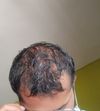
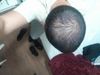
The conversation is about the effectiveness of topical melatonin for hair loss. No specific treatments were discussed, only a sarcastic suggestion to go to tropical places and eat coconuts.
The conversation discusses a medical service that provides prescriptions for a compounded hair loss treatment containing high concentrations of Minoxidil, Finasteride, and other ingredients. The user is seeking feedback on the service and inquiring about the cost and uniqueness of the compound cream.
User reports 3-month progress using daily 1mg finasteride, 0.5ml minoxidil (2x daily), 0.5ml dutasteride, and derma rolling 0.5mm 1-2 times per week. They see increased density on crown and top of head, slight progress in corners and temples, and recently added cosmerna.
The user experienced hair shedding after increasing minoxidil from 5% to 7% with latanoprost, possibly causing telogen effluvium. They are on HRT with Lupron, Estradiol, and Raloxifene, and are concerned about the shedding's duration.
AH-001 is a new topical treatment designed to degrade androgen receptors, targeting the root cause of androgenetic alopecia without the side effects of oral treatments like finasteride. It has shown a strong safety profile and good local tolerability in early trials.
Minoxidil and finasteride are being considered for hair loss due to seborrheic dermatitis and male pattern baldness. The user is also using ketoconazole and zinc pyrithione shampoo.
A user experienced side effects from finasteride and switched to using GHK-Cu for hairline improvement, noticing some positive changes after three months. They used a 2mg daily dose via subcutaneous injections and reported increased hair density and baby hairs, though results were not dramatic.
Hope Medicine received a $28M investment for HMI-115, a monoclonal antibody in phase II trials for treating androgenetic alopecia. Some users are skeptical about its effectiveness, while others find the investment and trial results encouraging.
The conversation is about a user's 3-month hair regrowth progress using finasteride, minoxidil, and a 0.5mm dermaroller, with recent addition of caffeine shampoo. Users are responding positively and inquiring about application methods.
The user is concerned about post-hair transplant care, specifically regarding the use of a bandana, minoxidil, and tretinoin. They are advised to consider finasteride and possibly adjust the minoxidil dosage.
The user experienced significant hair regrowth using topical Minoxidil and Finasteride but had to stop due to high liver enzyme levels. They plan to pause treatment for a month to see if their liver values return to normal.
The conversation is about managing a hair loss routine using Minoxidil twice daily, Tretinoin cream once daily at night, and microneedling once daily at night. The user is seeking advice on how to incorporate these treatments effectively without overlapping too much at night.
The conversation discusses whether gt20029 could cure complete baldness, mentioning verteporfin as a realistic treatment. Other treatments like Minoxidil, finasteride, and RU58841 are implied to be less promising.
Tazarotene may be more effective than tretinoin when combined with topical minoxidil for hair loss due to its selective binding to RAR-beta and gamma, though it can cause irritation. Tazarotene's potency can lead to indirect inflammatory reactions despite potentially causing less irritation than tretinoin.
A 26-year-old with extreme male pattern baldness saw hair regrowth after 6 months using Minoxidil, Finasteride, microneedling, Nizoral, a vitamin complex, biotin, and a shampoo with baicapil. Continuation of treatment is necessary to maintain results; stopping may lead to hair loss, making a hair transplant a potential future option.
Probiotics like L. reuteri ATCC PTA 6475 and B. longum BB536 may improve hair growth and density by reducing inflammation and reversing DHT damage. The user is trialing these probiotics personally, ordering them from the U.S. to Canada, and plans to continue if no adverse effects occur.
The conversation is about the effectiveness and production of GT20029, a drug being developed as a topical androgen receptor degrader for hair loss, and whether it can fully degrade androgen receptors or only partially. It also discusses the drug's potential unique working mechanism and synthesis by a company called Anagen.
The user has been using a topical solution of minoxidil 5% and finasteride 0.025% daily, along with dermastamping every two weeks and ketoconazole shampoo twice a week for four months. The treatment is for hair loss.
Men discussing hair loss treatments, including bicalutamide, cyproterone acetate, dutasteride, minoxidil, and RU58841. They share experiences and concerns about side effects like infertility, liver health, and feminization.
The user is using Dutasteride and Minoxidil for hair loss and is considering a shorter buzz cut to manage the appearance of thinning at the crown. They are unsure if a #1 buzz cut would look better than a #3 while waiting for the treatment to take effect.
A 35-year-old man underwent a hair transplant with Dr. Patty at HairTran Clinic in Bangkok, receiving 4,037 grafts primarily for his crown area. The procedure cost 188,700 THB, with an additional 12,000 THB for optional PRP treatment, and he plans to update with progress pictures in a year.
The user shared progress pictures showing improvement in hair loss after 4 months of using Minoxidil and plans to start Finasteride. They received advice to stay consistent and consider oral Minoxidil.
Exosomes, cetirizine, melatonin, latanoprost, and caffeine are discussed as potential hair loss treatments. There is skepticism about the effectiveness of exosomes, especially in topical form, but some users report positive results.
The conversation discusses a comparison table for a spray combining Minoxidil and Finasteride for hair loss treatment in the UK. Specific treatments mentioned are Minoxidil (Min) and Finasteride (Fin).
The user has been using a topical combination of finasteride, minoxidil, and dermastamping for three months to address hair loss. They are considering adding tretinoin and are discussing the effectiveness of topical versus oral treatments.
Essential oils like rosemary, thyme, lavender, and cedar wood in a carrier oil may effectively treat alopecia areata and potentially male pattern baldness by stimulating the scalp similarly to minoxidil. The user plans to try this routine and share results.
The conversation discusses the potential risks and considerations of purchasing raw Clascoterone powder from Made-In-China to create a DIY topical solution for hair loss. Concerns include fake products, low purity, and contamination, with a request for experiences and advice on reliable suppliers.
The conversation is about the correct method of applying tretinoin and minoxidil together for hair loss, including which to apply first, waiting times, and frequency of use. It also questions whether the approach to using tretinoin on the scalp should be similar to its application on the face.
The conversation discusses the potential availability of GT20029 for hair loss treatment, with one user noting promising Phase 1 results and inquiring about gray market access. Another user humorously suggests it will take 50 years to become available.
The conversation discusses using tretinoin as an additional treatment for hair loss alongside minoxidil, with plans to test its effectiveness by applying it to only one side of the scalp. The user intends to start this experiment after using minoxidil for a year.