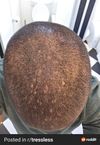
The individual has experienced a sore, stiff, and itchy scalp with hair loss for 4.5 years, and has noticed increased thinning and miniaturized hairs, especially at the temples. They have tried ketoconazole shampoo without success and are considering finasteride for treatment.
A 27-year-old Asian male is treating hair loss with 1mg oral finasteride, topical minoxidil twice daily, and 1.5mm microneedling weekly. The discussion is about his progress with these treatments.
A user is concerned about hair loss and acne from a one-week course of 70 mg/day oral prednisolone for severe tinnitus. They are asking if these side effects are common.
The user experienced microinflammation on the crown after using mometasone furoate (Nasonex) nasal spray. They are seeking information on the relationship between this corticosteroid and hair loss.
GHK-Cu injections led to unexpected temple hair growth for someone who had been using minoxidil and finasteride for over a decade. The user plans to continue using GHK-Cu and experiment with a DIY AHK-Cu serum.
Clascoterone is seen as a promising topical treatment for hair loss, similar to finasteride but without side effects, though concerns exist about its long-term effectiveness. Other treatments discussed include topical minoxidil, ketoconazole, microneedling, and oral options like dutasteride and minoxidil.
Hair loss treatments discussed include microneedling, minoxidil, tretinoin, finasteride, dutasteride, pumpkin seeds, saw palmetto, and scalp massage. The consensus is that finasteride or dutasteride is necessary for significant regrowth, while other methods may only slow hair loss.
An 18-year-old male is experiencing significant hair shedding, particularly from the back of his head, despite normal blood test results except for slightly low vitamin D. A dermatologist prescribed minoxidil for receding temples, but the cause of the shedding remains unclear.
The user is experiencing white flakes on their scalp despite using anti-dandruff shampoos and oils for six weeks. A suggestion was made to try ketoconazole at higher concentrations, as it might be seborrheic dermatitis, which can lead to hair loss if untreated.
The conversation discusses creating a topical catalase solution with phosphate buffered saline, glycerin, and polysorbate 20 for hair loss treatment. The user seeks advice on preparing this solution.
Minoxidil is extremely toxic to cats, even in small amounts, and can be fatal. Switching to oral minoxidil is safer for cat owners, but precautions should still be taken to prevent exposure.
A 20-year-old male has been experiencing hair loss for three years due to a vitamin D deficiency and has seen no improvement after 3.5 months of taking supplements. Another person suggested that if the hair loss follows a pattern, it might be regular baldness rather than due to the deficiency.
Microneedling once a week at 1mm caused bumps, possibly scars, in the treated area. The user is considering cleaning the skin before microneedling to prevent this issue.
Carnosic acid in rosemary extract may enhance skin repair and promote hair follicle regeneration. It could be used alone or with verteporfin for scarless healing after dermal wounding.
The conversation is about the correct way to do microneedling for hair loss, with some users suggesting the user is pressing too hard and causing too much bleeding, while others think the amount of blood is fine. Specific treatments mentioned include microneedling, with advice to disinfect the roller and possibly use a shorter needle length.
A 32-year-old male with diffuse thinning and seborrheic dermatitis has been using finasteride for 8 months without improvement. He is considering COQ10 + PQQ supplements for scalp inflammation and hair loss.
The conversation discusses concerns about the potential risk of cancer from creating new hair follicles through microneedling, due to stem cell division. Specific treatments mentioned include microneedling, caffeine-containing anti-hair loss shampoos, and other unspecified topicals.
The conversation discusses hair loss and treatments like finasteride, minoxidil, and ketoconazole shampoo. Users suggest scalp massages, warm showers, and other methods to address scalp tension and tight spots, with some mentioning the potential effects of medications like escitalopram and probiotics.
A 25-year-old experiencing hair thinning all over the body and head, despite using minoxidil and having low vitamin D levels, is advised to seek a second opinion from a dermatologist specializing in hair loss. The likely diagnosis is diffuse alopecia areata, which may require treatment with a JAK inhibitor.
User noticed receding temples, used minoxidil and microneedling with positive results. Added saw palmetto and eucapil, experienced shedding and thinner hairline, but no side effects.
A 24-year-old male experienced unexpected hair growth and improved skin and nails after adding daily vegetable juices, including carrot, spinach, celery, and beet, to his diet. He is not using any other treatments like minoxidil, finasteride, or RU58841.
The user noticed miniaturized hair at the front of their hairline and is not on any medication. They are concerned if this is a sign of a receding hairline or something normal.
A 21-year-old is experiencing aggressive hair loss and dandruff, possibly due to seborrheic dermatitis, and is using pumpkin seed oil, scalp massages, and anti-dandruff shampoo as treatments. They are hesitant to use prescribed Finasteride and Minoxidil and have noticed some improvement after stopping Serenoa capsules.
The conversation is about a user trying a new hair loss treatment, Ruxolitinib, alongside their existing regimen of finasteride, minoxidil, ketoconazole shampoo, and microneedling. They plan to apply Ruxolitinib to their temples daily for 1-2 months.
The conversation discusses using ecklonia cava as a natural alternative to finasteride for hair loss. Users share their experiences and opinions on its effectiveness.
The user experiences scalp inflammation, especially when oily, despite using treatments like dutasteride, oral minoxidil, RU58841, and nizoral. They recently started cetirizine and are considering benzoyl peroxide wash for relief.
The user experienced hair thinning from chromium and alpha lipoic acid supplements, which stopped after discontinuing them. Someone mentioned this could be telogen effluvium, a temporary condition.
OP asks if face copper peptides from Sephora can be used on the scalp for hair benefits. User233 suggests AHK-CU is mainly for hair, but GHK-CU can also be used.
Pelage is recruiting for phase 2 trials, showing promise for treating bald regions. The discussion highlights its potential effectiveness based on its mechanism of action.