Search
for
Sort by
Community Join
420-450 / 1000+ resultscommunity 19 | 4-5 months Fin & Min update
A user who has been using finasteride and minoxidil for 4-5 months with 5000 IU of vitamin D daily to treat their hair loss, resulting in impressive progress. Other users have given advice about adding Vitamin K2 to the regimen.
community Trialing the probiotics BB536, PTA 6475 so you don’t have to
Probiotics like L. reuteri ATCC PTA 6475 and B. longum BB536 may improve hair growth and density by reducing inflammation and reversing DHT damage. The user is trialing these probiotics personally, ordering them from the U.S. to Canada, and plans to continue if no adverse effects occur.
community Progress since March 2023-MINOX 10%/FINA 0.1%/BIOTIN 0.2%/ LATANO 0.005% SOLN COMPO
User shared progress pictures showing significant hair regrowth using a compounded solution of Minoxidil 10%, Finasteride 0.1%, Biotin 0.2%, and Latanoprost 0.005%. They reported no side effects and are satisfied with the results.
community Adipocyte lipolysis activates epithelial stem cells for hair regeneration through fatty acid metabolic signaling
Fatty acid metabolic signaling can activate epithelial stem cells for hair regeneration. Oleic and palmitoleic acids showed the best results, but practical application on humans remains uncertain.

community Seeking Analysis: Receded Temple Closeups for Scarring or AGA Signs
The conversation is about analyzing receded temple closeups for signs of fibrosis, scarring, or androgenetic alopecia (AGA). Specific treatments like Minoxidil, finasteride, or RU58841 are not mentioned in the conversation.
community Diffuse thinner- 2 months progress. Oral Fin,Min, topical RU
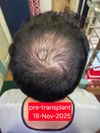
community 7 month crown transplant progress update | minoxidil since Jan, finasteride since June
A 28-year-old male shares his 7-month progress after a crown hair transplant, using topical minoxidil foam, finasteride, and microneedling. He seeks feedback on whether his crown's progress is typical and if further thickening is expected between months 7 and 12.
community Anyone try Ell-Cranell or Eucapil?
Ell-Cranell and Eucapil are discussed as hair loss treatments, with Ell-Cranell being a weak estrogen and DHT inhibitor that may reduce hair loss without systemic side effects. Alfatradiol is the active ingredient in these products.
community HLT Megathread on HMI-115 (key takeaways in comments)
HMI-115, a newly discovered hair loss treatment that could potentially be effective for those with diffuse thinning and telogen effluvium. It is based on prolactin receptor antagonist signaling and has already undergone Phase I trials in women, with potential commercialization by 2027.
community Fin EOD, topical min 1x day, keto 2x a week, Vitamin D3 + Zinq - Some progress, i hope for more. Temples gotton better too, lots of babyhairs everywhere.
The user reports progress in hair regrowth using finasteride every other day, topical minoxidil once daily, ketoconazole twice a week, and Vitamin D3 with zinc. They note improvement in temple areas and the appearance of baby hairs.
community How's your progress on kx-826 (pyrilutamide)?
People are discussing their experiences with kx-826 (pyrilutamide) for hair loss, using concentrations of 0.5% and 0.9%. They are sharing personal results and progress with this treatment.
community 5 Month Finasteride Update & Caboki Hair Fiber Review
Hair loss discussion includes treatments like hinoki tree oil and procyanidin b2. Experiences and effectiveness of these treatments are shared.
community 2 months Dutasteride - hyperresponder?
OP experienced significant hair growth after switching from topical treatments to oral Dutasteride, alongside using CJC/Ipamorelin and Cialis. They stopped using topical Minoxidil and Finasteride, attributing the hair growth to the new regimen.
community Why doesn’t Kevin Mann (Haircafe) use dutasteride, given that it’s more effective than finasteride?
Kevin Mann avoids dutasteride because it comes in gelatin capsules, which he avoids as a vegan, and he is satisfied with finasteride's results. He prefers finasteride due to more long-term research and follows the principle of "if it ain't broke, don't fix it."
community Locklabs + Dutasteride Formula
The conversation discusses the effectiveness and value of a Locklabs pill containing finasteride, minoxidil, biotin, and a low dose of dutasteride for hair loss. The user is uncertain if the .1mg dutasteride dosage is sufficient and worth the cost.
community My (F, 31) crown hair growth with topical minoxidil and finasteride. Photos taken 5 months apart
A 31-year-old woman experienced crown hair growth using a topical solution of finasteride (0.1%) and minoxidil (5%) over five months. She applies the solution once daily, improved her fitness, and takes vitamin D and magnesium supplements.
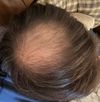
community Dutasteride and Minoxidil User Considering Microneedling vs HT for Crown
The user is considering microneedling versus a hair transplant (HT) for crown hair loss while currently using dutasteride and oral minoxidil. They are hesitant about microneedling due to potential scarring but are open to trying it before deciding on a hair transplant.
community PCOS female with significant receding and thinning; doctor won’t give me anything but Spiro and Spiro sucks
Female with PCOS experiences receding and thinning hair, wants dutasteride instead of spironolactone. Discusses desire to reduce DHT without losing libido.
community PP405 Update and My Take on Pelage
Pelage Pharmaceuticals raised $120M for their hair loss treatment, PP405, showing strong investor confidence despite limited data. There is skepticism about its efficacy and long-term effects compared to treatments like GT20029.
community Progress pictures of crow; been on treatment for 8 months
The user has been using a treatment regimen for hair loss for 8 months, including topical 5% minoxidil, 2.5 mg daily minoxidil, 5 mg finasteride every other day, and vitamins. They shared progress pictures showing little change in the crown area.
community Mystery compound found to be safe and effective at treating hair loss. Details in comments.
A compound called MTP3 from the Monoterpene family was found to be safe and highly effective at treating hair loss by inhibiting the FGF5 gene, but its identity is undisclosed for commercial reasons. No specific treatments like Minoxidil, finasteride, or RU58841 were discussed.
community Pyrludimide (KX-826) actual drug could work better than the cosmetic version
community Poor man's PP405? Can't help but keep on thinking about this...
Lactic acid is not effective for hair growth when applied topically. JXL069, finasteride, and minoxidil are suggested as alternative treatments.
community PLATELET-RICH PLASMA (PRP) HAIR LOSS TREATMENT - DOES IT WORK?
PRP treatment for hair loss shows some evidence of effectiveness, with HT surgeons using it post-op to promote growth. Microneedling is mentioned as a cheaper alternative.
community Shiseido filed for this patent in May 2019. Let's get some big brain discussion on this.
The conversation discusses a patent filed by Shiseido for cloning Dermal Papilla (DP) cells to treat hair loss. The method involves using viral vectors to maintain the cells' growth-inducing properties, differing from Replicel's approach with Dermal Sheath Cup (DSC) cells.
community New hairline who's dis? Pics included
The user shared positive progress in hair regrowth using dutasteride, topical minoxidil, and Keeps shampoo, with a unique minoxidil application schedule and glycolic acid exfoliation to maintain scalp health. They reported no side effects from dutasteride and are pleased with the results.
community Results from 4 months on 1mg daily fin + vitamin D3 daily + micro needle once every two weeks. Starting topical min this week.
OP saw positive results from 4 months of finasteride, vitamin D3, and microneedling. They plan to add rosemary and castor oil but decided against using minoxidil.
community 5 months of dutasteride and oral min, do these hairs look healthy?
The conversation discusses hair loss treatment progress using dutasteride and oral minoxidil over five months. The user is concerned about shedding and hopes the new hairs are healthy.
community Worth a go: Collagen, Chondrotin Sulfate, Hyaluronic Acid, and MSM
Collagen, chondroitin sulfate, hyaluronic acid, and MSM are used to improve hair appearance, making it fuller, thicker, and shinier. The user noticed significant hair improvement after resuming these supplements.