Search
for
Sort by
Community Join
90-120 / 1000+ resultscommunity Bloodwork Results. DHT and Testosterone Levels
The user shared their bloodwork results showing DHT at 17 ng/dl and testosterone at 287 ng/dl, with a slight Vitamin D deficiency. They are seeking opinions on these levels and have an upcoming dermatologist appointment.
community Testicular ultrasound is it necessary to do?
A 25-year-old male experienced increased testosterone and estradiol levels after starting finasteride for hair loss, leading his doctor to suggest a testicular ultrasound as a precaution. The user questions the necessity of the ultrasound, considering it potentially excessive, while others suggest it could be a useful precaution to rule out any issues.
community Got my bloodwork done today, I have been on fin for 7+ months. 21m
A user on finasteride for 7+ months shared bloodwork results, questioning if high DHT levels and testosterone could affect cholesterol. Replies suggest consulting a doctor and question the high testosterone levels.
community Low Testosterone after taking finastreide
A 19-year-old experienced significantly low testosterone levels after one month of taking finasteride. Suggestions included checking test units, retesting, and exploring other potential causes.
community Very high testosterone and estradiol on finasterid 1 mg. Am I cooked?
A 29-year-old male on 1 mg Finasteride for 3 months has experienced a significant increase in testosterone and estradiol levels, with no major side effects except slightly oilier skin and increased emotional sensitivity. The user is concerned about these hormonal changes and seeks advice, as their general practitioner is not knowledgeable about the issue.
community These are my blood tests and im on fin 0.625mg MWF
A user is concerned about low testosterone while using finasteride 0.625mg MWF and considers ashwagandha for stress. Others suggest exercise, magnesium, and not worrying about testosterone levels if no significant side effects are felt.
community [HELP!] TOPICAL FINASTERIDE BLOOD TEST DONE! [0.025% vs 0.015%]
User experienced good results with topical finasteride, noting reduced DHT and increased testosterone. They plan to revert to a lower dosage after observing slight libido reduction.
community My Estradiol Level on Finasteride
Finasteride has no effect on the user's estradiol levels, and body fat may influence aromatization. The user is on testosterone replacement therapy and uses everyday injections to manage high RBC count, with plans to measure DHT, DHEA-S, and pregnenolone levels.
community Does finasteride decrease free testosterone?
Finasteride may decrease free testosterone by increasing SHBG, potentially causing side effects like reduced libido and hormonal changes. Some find it effective for hair loss, while others experience negative effects.
community Somebody has gotta try this- HMI-115 reference anti-body
The potential of using a specific antibody, HMI-115, as a treatment for hair loss alongside traditional treatments such as minoxidil and finasteride. The user suggests trying either a 240 mg or 30 mg dose to see if it works.
community Blood Results (UPDATED) TOTAL T 1279 ng/dL- 2 Yrs on Fin / 1.5 Yrs on Dut
The user has been using a hair loss treatment regimen including RU58841, minoxidil, and dutasteride, but still experiences hairline recession and fatigue despite high testosterone levels. They are considering adjusting their dutasteride dosage due to concerns about libido and energy levels.
community 22m hormone test - 4months fin, test 3 weeks off fin.
A 22-year-old male has been using finasteride for 4 months without major side effects but is concerned about hormone test results showing low SHBG and high estrogen. He plans to consult a doctor and is considering alternatives like minoxidil or topical finasteride to avoid health issues.
community Thoughts on Pre-Finasteride Bloodwork? Normal/high Total and Free Testosterone, Low DHEA-S?
A 23-year-old male is considering starting Finasteride for hair loss after experiencing persistent shedding and hairline recession, with bloodwork showing normal testosterone levels but low DHEA-S and Vitamin D. He plans to discuss DHEA supplementation with his doctor and has already started Vitamin D supplementation.
community Interpreting pre-finisteride blood panels
The conversation is about someone planning to start finasteride for hair loss and wanting to interpret pre-treatment blood panels to assess the risk of side effects like gynecomastia. They list various tests to measure hormone levels and other health indicators.
community Help with blood test results (DHT 3x higher than max limit)
community Should i seek further blood tests given my levels?
The user is experiencing low libido and mood swings after starting a low dose of topical finasteride. They are considering further blood tests to investigate low testosterone levels and other hormonal factors.
community Dht bloodwork results. Currently on topical fin for 4 months.
JeremySoCa's DHT level was 29 ng/dl, considered low, and Estradiol was 26.1 pg/dl within the normal range. They are using topical finasteride for hair loss and had a thyroidectomy due to Graves' disease.
community My DHT levels on 1400mg testosterone per week and 0.5mg dutasteride daily
community Got Blood Work Lab Results for hormones. Need some help analyzing hormone values for Fin
The user got blood work to check hormone levels before starting Finasteride for hair loss and is seeking advice on interpreting the results. They are considering hormone levels in relation to potential side effects of Finasteride.
community Solvent for topical fin with low absorption
The conversation is about using distilled water as a solvent for topical finasteride to reduce systemic absorption. The user is considering avoiding ethanol and propylene glycol to achieve this.
community Hormone test results - anybody else have similar with fin/dut
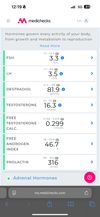
community Help me interpret my bloods
The user is concerned about high prolactin levels and low testosterone levels after stopping finasteride for three weeks. They are considering resuming finasteride but are worried it might further increase prolactin levels.
community Didn't track my progress much. I just found a photo that I took about 2 years ago when I started taking Fin.
The user took finasteride irregularly, averaging 0.58 mg per day, and recently started using minoxidil foam. They reported positive hair growth results with minimal side effects.
community can someone confirm the dosage math for making RU58841
The conversation confirms that to make a 5% RU58841 solution, 1.5 grams should be added to 30 mL of KB Solution. The discussion involves calculating the correct dosage for hair loss treatment.
community 5-month finasteride - diffuse thinning update
The user shared a 5-month update on using finasteride, minoxidil, and ketoconazole shampoo for diffuse thinning, along with supplements like B-Vitamins, D-Vitamins, Iron, and Beta carotene. They noted improvement in hair condition and encouraged others to check previous posts for more information.
community Estradiol blood test on fin. Doctor dont want to give me the test.
The user has been taking 0.5 finasteride for 10 months and wants to repeat blood tests, including estradiol. However, their doctor is reluctant to test estradiol, arguing it's typically low in men, and the user is considering seeking a second opinion.
community Serum DHT data wanted for insights into dutasteride efficacy. Please get in touch!
The conversation is about gathering serum DHT data from individuals taking dutasteride to investigate its efficacy, especially in cases with unexpectedly low DHT reduction. The aim is to explore potential genetic factors affecting drug metabolism.
community Pure Curiosity: Effects of increased testosterone blood levels because of Finasteride?
Finasteride may have positive effects by keeping testosterone levels higher, potentially maintaining youthfulness and physical performance as one ages. It could also help with conditions related to aging like andropause and sarcopenia without increasing estradiol levels.
community Bloodwork before/after starting Finasteride (5 months)
A user reported a significant increase in testosterone and estradiol levels after taking Finasteride for 5 months, with estradiol levels rising over 2000%. They plan to consult their doctor, suspecting a lab error, as they feel fine with no side effects.