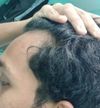
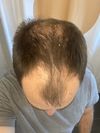
Body hair transplants may look better if kept very short. People with limited donor regions or waiting for Verteporfin or FAK Inhibitors could consider this option.
A user's experience with hair loss, their attempts to treat it using topical minoxidil and finasteride, and other suggested treatments such as oral minoxidil and finasteride. Replies included advice against wasting time or money on scalp massages or oils.
A 20-year-old male is unsure how to interpret his bloodwork results and whether he should take finasteride for hair loss. His bloodwork shows borderline high levels of albumin and testosterone, and high progesterone, but normal levels of other hormones.
MaBelen experienced hair growth with topical Minoxidil but it plateaued, and Finasteride and Spironolactone didn't help. They wonder if oral Minoxidil will work and if it loses effectiveness over time.
A 20-year-old is experiencing severe hair loss and is considering using dutasteride and finasteride, worried about potential side effects. They feel depressed and isolated due to hair loss, and are exploring options like hair transplants and hair systems but are hesitant about faking it.
The user reported significant hair regrowth after 8.5 months using Minoxidil, Finasteride, and initially Biotin, with a 50% reduction in the balding crown area. They are considering either a hair transplant for further improvement or embracing a bald look, feeling confident they could pull it off.
A 24-year-old woman with thinning hair is using Minoxidil, saw palmetto, biotin, rosemary oil, and ketoconazole. She seeks advice on whether to try finasteride or dutasteride, the effects of Minoxidil shedding, and the significance of her hair follicle condition.
A peptide-based hair loss treatment, PP405, reportedly increased hair density by 62% in 90 days, but these claims are unverified and met with skepticism. Users compared PP405 to Minoxidil and Finasteride, expressing doubts about its effectiveness without more evidence.
Federal funding for medical research in the U.S. has been halted, potentially delaying new treatments. Hair loss treatments like finasteride and minoxidil are unlikely to be impacted as they are typically funded by private companies.
RU58841 is discussed as a potential hair loss treatment, with comparisons to finasteride. There is interest in leaked trial data, but no official clinical validation or approval for RU58841.
Current hair loss treatments include finasteride, dutasteride, minoxidil, and derma rolling. New treatments like TDM-105795, GT20029, and others show promise but require more testing and time before approval.
Finasteride, minoxidil, and derma rolling are currently the best treatments for hair loss. New treatments like TDM-105795, GT20029, PP405, HMI 115, Tsuji, Scube 3, RU, JW0061, Topilutamide, and verteporfin show promise but have uncertain timelines.
A user shared progress pictures showing hair regrowth after using 1mg finasteride daily, minoxidil foam twice daily, and dermarolling once a week for a year. Some commenters are skeptical about the authenticity of the before and after photos, joking about changes in appearance and questioning if it's the same person.
The conversation revolves around how balding has made the original poster and others hyper-aware of other men's hairlines, often judging the severity of their hair loss and whether they've had treatments like hair transplants, minoxidil, or finasteride. Some participants express a need for therapy due to their obsession, while others joke about their newfound "expertise" in assessing hair loss.
The user experienced significant hair loss on the scalp, eyebrows, eyelashes, and pubic area, along with itchy, flaky skin and red patches. They have a history of eczema and dermatitis and suspect that stopping shampoo use and taking Ritalin may have contributed to the issue.
A 31-year-old experiencing male pattern hair loss is considering options to manage it before their wedding, including continuing oral finasteride despite dizziness, switching to topical finasteride, adding minoxidil, or getting a hair transplant. They are advised that switching to topical treatments might reduce dizziness and that a hair transplant should be considered once hair loss stabilizes.
The user is considering changing their hair loss treatment from topical minoxidil and oral finasteride to oral minoxidil and oral dutasteride, with suggestions to add microneedling and possibly red light therapy. They are also exploring the addition of a caffeine and adenosine mix to their regimen.
A 23-year-old male is experiencing aggressive hair loss despite using 1mg finasteride and 4.5mg minoxidil, with limited progress and side effects like fluid retention. Suggestions include trying dutasteride, microneedling with topical minoxidil, and considering hair systems or a transplant in the future.
The user has been using Dutasteride, Minoxidil, Ketoconazole, and RU58841 for hair loss but sees subpar results. Suggestions include adjusting treatments, considering a hair transplant, and addressing scalp inflammation.
The user is considering PRP with exosomes for hair loss after oral minoxidil and dutasteride failed to provide desired results. Despite suggestions for a hair transplant, the user is hesitant due to cost and complexity, and is unsure about other options.
The user has been using Dutasteride and oral Minoxidil for hair loss but hasn't seen desired results and is considering Advanced PRP with autologous exosomes. Some users suggest these treatments are scams, while others discuss increasing Dutasteride dosage or exploring other options like low-level laser therapy.
The user shared a 4-year hair loss treatment update using oral minoxidil and dutasteride, reporting significant hair regrowth and improved hair quality. They started with finasteride before switching to dutasteride and experienced fast results in the first year, with continued improvements in hair thickness over the past two years.
A 42-year-old is using 1.25 mg finasteride and 3 mg minoxidil for hair loss, noticing fine baby hairs after two months. Users suggest patience, considering dutasteride, and discuss potential side effects and hair transplant options.
A 23-year-old male is experiencing rapid hair thinning and receding hairline, feeling emotionally drained. He has tried GFC, PRP, ketoconazole shampoo, and supplements without improvement and is considering minoxidil, finasteride, and possibly a hair transplant.
A user is considering starting finasteride for hair thinning but is concerned about side effects like low libido and gynecomastia. They plan to consult a dermatologist and are advised to test DHT, testosterone, and estradiol levels.
A 30-year-old man is considering a crown hair transplant after experiencing thinning since 2022, despite using treatments like minoxidil, finasteride, dutasteride, RU58841, microneedling, and ketoconazole shampoo. Opinions vary, with some suggesting additional treatments or lifestyle changes, while others recommend waiting or focusing on maintaining current treatments.
The user experienced significant hair growth after using oral finasteride, topical minoxidil, and microneedling weekly for a year. They initially had low libido but resolved it by taking finasteride at night.
A 49-year-old is using minoxidil, finasteride, and supplement chews for hair growth, experiencing thick growth except on the top, and seeking advice on improving density. Suggestions include continuing treatment, considering additional options like oral minoxidil, ketoconazole shampoo, dermapen, and possibly a hair transplant, though cost is a concern.
A 39-year-old is starting a hair loss treatment with 1.25mg finasteride and 2.5mg oral minoxidil twice daily, sharing baseline pictures and hoping for significant results. Progress updates will follow.
A 22-year-old male with high estrogen levels is considering finasteride for hair loss but is concerned about potential side effects due to his hormone levels and family history of diabetes. Users suggest consulting a doctor, possibly an endocrinologist, and considering lifestyle changes like diet and exercise to address visceral fat and insulin resistance before starting treatment.