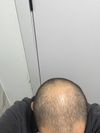
Minoxidil and dermarolling have shown significant hair regrowth in four months, especially at the crown and hairline. Users agree the progress is impressive for the short duration.
The user started using topical minoxidil and derma stamping for hair regrowth, along with multivitamins, biotin, and saw palmetto. Many suggest adding finasteride for better long-term results, but the user is hesitant due to potential side effects.
The conversation discusses hair loss treatments, specifically Regenera stem cells and exosomes from 'Cellgenic' umbilical cord donors. The user has been using topical minoxidil 5% and 0.001% estradiol for a year without seeing effects, and another user mentions the importance of microneedling.
The user has been using 3mg oral minoxidil, 1mg finasteride, microneedling, and topical 5% minoxidil for hair loss. They are unsure about the results, noticing some regrowth but feeling dissatisfied overall.
A man's successful hair regrowth after using finasteride, minoxidil, microneedling, hair supplements, and scalp massages. He noticed significant improvements and is excited about future progress.
MCL-1 is important for hair follicle stem cell survival, but its impact on human hair regrowth is unclear. Minoxidil and finasteride are the main treatments, with doubts about new discoveries leading to effective human solutions soon.
MCL-1 protein may help maintain hair follicles in the growth phase and prevent miniaturization. There is interest in experimental treatments like exosomes, peptides, or stem cell serums to upregulate MCL-1 for hair loss, especially for those not using minoxidil or finasteride.
RepliCel has purchased Trichoscience, and they have a video about hair multiplication. The conversation also mentions treatments like Minoxidil, finasteride, and RU58841.
The user has been using finasteride, minoxidil, and a dermastamp for over four months and is asking if there is noticeable hair regrowth. They are seeking opinions on whether their hair will look good when grown out.
PP405 and GT20029 are new hair loss treatments with different mechanisms from traditional options like Minoxidil and Finasteride. PP405 targets hair follicle stem cells to reactivate growth, while GT20029 works as an androgen receptor deleter, both requiring ongoing use for effectiveness.
The user is using topical finasteride 0.3% and minoxidil 5% for hair regrowth, along with dermal stamping, zinc, fish oils, and biotin. They report some regrowth and shedding, with no significant side effects.
The user has been using finasteride for 4 months with positive results, including thicker and darker hair. They are seeking advice on maximizing hair growth without minoxidil, using a routine that includes finasteride, rosemary oil, argan oil, topical melatonin, specialized shampoos, and vitamins.
Microneedling alone can stimulate hair growth and enhance the effectiveness of minoxidil. Combining microneedling with minoxidil is more effective than using minoxidil alone.
A naturally occurring sugar, 2-deoxy-D-ribose, in a hydrogel form, shows promise for hair regrowth similar to minoxidil in rats. The user plans to synthesize it for topical application, seeking input from others.
The conversation discusses a 4-month hair regrowth protocol that includes finasteride (1.25mg), RU58841, dermarolling, ketoconazole, minoxidil, peppermint oil, and fatty acids/oils. Progress pictures are shared to show the results of these treatments.
The user shared their experience with hair regrowth using a natural approach, including a good diet, multivitamins, pumpkin seed oil, and scalp massages, without using minoxidil or finasteride. They emphasize this method for those with stabilized hair loss around Norwood 1.5 - 2, noting satisfactory progress over a year.
The user is using 2.5mg Minoxidil, 0.5mg Finasteride, a dermastamp, and scalp massages for hair regrowth. There is some visible improvement, but patience is advised as significant results typically take around 6 months.
The user is experiencing hair regrowth using oral minoxidil, finasteride, dermastamping, and ketoconazole shampoo. Suggestions include adding pyrilutamide or considering dutasteride instead of finasteride.
The user has been using oral minoxidil 2.5mg and finasteride 1mg for 3 months and is unsure if they are experiencing hair regrowth or if it's an illusion. Some responses suggest it is regrowth, while others think it's an illusion due to angles and lighting.
A user shared their hair regrowth journey, using a treatment protocol that includes 1mg finasteride daily, 1ml minoxidil twice daily, 1.5mm microneedling weekly, oral castor oil, and ketoconazole shampoo. They also improved their diet, hydration, and took supplements, and have seen positive results after 3.5 months.
The user reported significant hair regrowth after seven months using topical minoxidil 5% combined with 0.1% finasteride and weekly micro needling. The community responded positively, noting visible improvement and discussing the effectiveness of topical versus oral finasteride.
Caffeine in hair care can support hair growth but is not a standalone solution; it's best used in combination with other treatments like minoxidil and finasteride. Some products combine caffeine with these treatments for enhanced effects.
A user shared their positive experience with hair regrowth using finasteride, genuine minoxidil, and dermastamping, noting significant improvement after switching from a fake minoxidil product. They advised others to verify the authenticity of minoxidil through a bleach test to avoid counterfeit products.
A 16-year-old started using topical finasteride, minoxidil, and dermapen for hair regrowth, along with natural DHT blockers. Advice given includes being patient and considering waiting until 18-21 to use finasteride.
A 20-year-old male experienced significant hair regrowth and reduced shedding after four months of using 2.5mg oral minoxidil, 1mg oral finasteride, and weekly 1.5mm derma stamping. He reported no side effects from the treatments and noted increased hair growth in other areas of his body.
The user reports significant hair regrowth using a topical solution of 5% minoxidil and 0.1% finasteride twice daily, along with derma rolling twice a week. They have not experienced shedding and are optimistic about continued hair growth.
The user has been using Minoxidil and Finasteride for four years, added microneedling, and is considering increasing microneedling frequency and possibly using Dutasteride. They are seeking advice on improving hair regrowth and better tracking progress.
A user who shared progress pictures of their scalp using a microscope camera, demonstrating the difference between healthy and miniaturized hair. Various explanations for the cause of this were discussed, such as DHT build-up in scalp sebum causing an autoimmune response leading to inflammation and eventual hair loss, with some suggesting a do-it-yourself treatment involving adding ascorbic acid powder to shampoo.
User noticed tiny dots on their head after using 0.5% dutasteride and 8% minoxidil, which others identified as developing hair follicles. Encouragement was given to continue the treatment.
The user is experiencing hair shedding after using minoxidil and is considering switching to dutasteride while planning to increase their oral minoxidil dose. They also use nicotine pouches, Vyvanse, and GHK-Cu, and have noticed thicker eyebrows and lashes from oral minoxidil.